Will obey high command decision: Siddaramaiah on pitch for three more DCMs in Karnataka
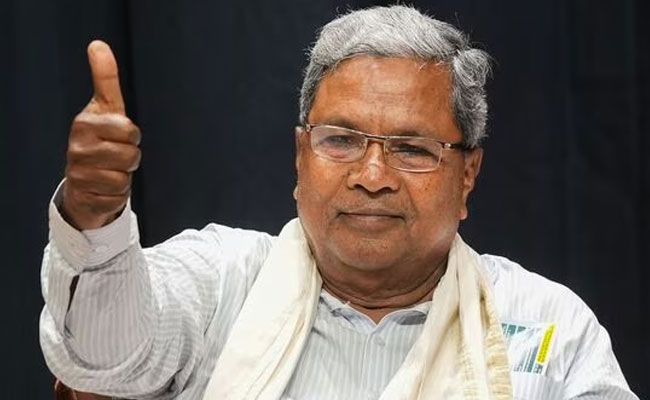
Kalaburagi (K'taka) (PTI): With voices from within his cabinet pitching for the appointment of three more deputy chief ministers in the state, Karnataka Chief Minister Siddaramaiah on Sunday said the high command would decide on it ultimately, and that he would comply with the decision.
Cooperation Minister K N Rajanna had on Saturday floated the idea of having three more DCMs in Karnataka and said he would discuss it with the Congress high command, keeping in mind the 2024 Lok Sabha polls.
Noting that it was the personal opinion of the minister, who will raise it before the party leadership, the chief minister on his part made it clear that he has no say on the issue and it is for the high command to decide.
"He (Rajanna) has expressed his opinion, but ultimately high command has to decide. The high command had said that one Deputy Chief Minister was enough and had appointed one. He (Rajanna) has said that he will speak to the high command on three more DCMs. Let him," Siddaramaiah said.
Speaking to reporters here, he said, "I don't have anything (to say). Ultimately high command has to make the decision. Whatever is the decision taken by the high command, I will obey it."
Rajanna had pitched for the three posts to be given to leaders from the Veerashaiva-Lingayat, SC/ST and minority communities.
Currently, D K Shivakumar from the Vokkaliga community is the only Deputy Chief Minister. He is also the state Congress President.
Rajanna's pitch for three DCMs comes despite the Congress decision at the time of cabinet formation that Shivakumar would be "the only" deputy CM -- amid stiff competition between him and Siddaramaiah for the chief minister's post after the Assembly election results came out in May this year.
It was said that it was one of the commitments that the Congress leadership had made to Shivakumar, while convincing him to give up his claim for the CM post and to take up the role of deputy chief minister.
Reacting to Rajanna's statement, Home Minister G Parameshwara, who was a DCM aspirant when the government was being formed in May, said on Saturday that there is nothing wrong in Rajanna asking for more DCMs.
Rajanna has said it with good intention, he had said. "Lok Sabha elections are coming and to take all communities into confidence, he has shared his opinion, but whether to implement it or not is left to the high command."
Parameshwara, a Dalit leader, who is the longest serving KPCC President, has served as DCM in the past, during Congress-JD(S) coalition government.
Let the Truth be known. If you read VB and like VB, please be a VB Supporter and Help us deliver the Truth to one and all.
AIITA welcomes Karnataka’s ban on obscene songs in school events
Bhatkal: The Karnataka unit of the All India Ideal Teachers Association (AIITA) has welcomed the Karnataka government’s decision to strictly ban school children from dancing to obscene songs during educational and cultural programmes in government, aided, and private schools across the state.
AIITA Karnataka State President M. R. Manvi congratulated the government for taking what he termed an important step to preserve the sanctity of education.
“Such decisions to safeguard the dignity of school children and uphold the values of education are the need of the hour. This rule should not be limited to government schools alone but must be strictly implemented in all private educational institutions as well,” he said.
He further urged the government to address other concerns within school programmes.
“The government should not only prohibit obscene dances in the name of school anniversaries, but also ensure that plays and dialogues that incite religious hatred are avoided. Schools should be centres of harmony, not platforms for spreading hatred,” he added.
According to a recent circular issued by the Department of School Education and Literacy, obscene dances are adversely affecting the mental health and moral values of students.
In this regard, schools have been advised to use songs that promote nationalism, positive thinking, the greatness of Kannada culture, and value-based traditions instead of inappropriate content during programmes.
The circular also emphasises that students should be dressed in decent attire.
AIITA also backed the department’s warning that disciplinary action would be taken against head teachers if such guidelines are violated. The association has further demanded that district Deputy Directors of Public Instruction strictly monitor the implementation of these rules.