Yediyurappa appoints districts in-charge Ministers, keeps Bengaluru with him
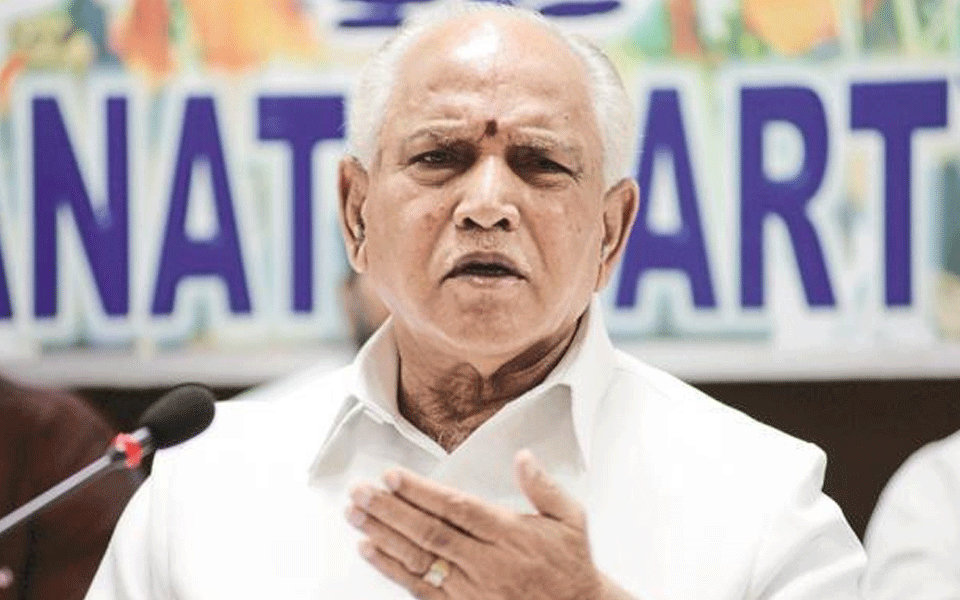
Bengaluru, Sep 16: Nearly a month after expanding his cabinet with the induction of 17 Ministers,Karnataka Chief Minister B S Yediyurappa on Monday named district in-charge ministers.
Interestingly,Yediyurappa has kept with him the charge of Bengaluru city, for which there was reportedly stiff competition between key ministers from the city, as both Deputy Chief Minister C S Ashwath Narayan and Revenue Minister R Ashoka were eyeing the post.
Sources said several city MLAs had recently requested Yediyurappa to keep the Bengaluru city in-charge with himself.
A separate Minister was appointed for Bengaluru city in the previous Congress and coalition governments headed by Siddaramaiah and H D Kumaraswamy respectively.
While Deputy Chief Minister Govind Karjol has been made in-charge of Bagalkote along with Kalaburagi, the other two Deputy Chief Ministers, Ashwath Narayan and Laxman Savadi have been made in-charge of Ramanagara and Chikkaaballapura and Ballari and Koppala respectively.
Senior Ministers K S Eshwarappa has been given Shivamogga along with Davangere, R Ashoka- Bengaluru Rural along with Mandya, Jagadish Shettar- Belagavi along with Hubballi-Dharawad.
While Sriramulu has been given the charge of Raichur and Chitradurga, Suresh Kumar has been made in-charge of Chamarajanagara.
Other district in-charge Ministers are V Somanna- Mysuru and Kodagu, C T Ravi- Chikkamagaluru, Basavaraj Bommai- Udupi and Haveri, Kota Srinivas Poojary- Mangaluru, J C Madhuswamy- Tumakuru and Hassan, C C Patil- Gadag and Vijayapura, H Nagesh- Kolar, Prabhu Chavan- Bidar and Yadgir, and Shashikala Jolle- Uttara Kannada.
More than three weeks after he was sworn in as the Chief Minister after the fall of coalition government headed by Kumaraswamy in July, Yediyurappa had expanded his cabinet on August 20 by inducting 17 Ministers.
On August 26, he had allocated portfolios to the new Ministers and also appointed three Deputy Chief Ministers for the first time in the state.
Cabinet expansions and allocation of portfolios had given rise to some discontent within the BJP, as several senior leaders and Ministers felt they were sidelined.
The appointment of Laxman Savadi,who is not a legislator, as the Deputy Chief Minister was seen as the main reason for their discontent.
Yediyurappa has kept 16 Minister posts vacant to accommodate some more BJP members and from among those 17 disqualified former legislators who helped him come to power.
The then Assembly Speaker Ramesh Kumar had disqualified 17 Congress-JD(S) MLAs under the anti-defection law, which they have challenged in the Supreme Court.
If they get relief from the apex court, some of them would be inducted into the cabinet as per the arrangement agreed upon, BJP sources said.
Let the Truth be known. If you read VB and like VB, please be a VB Supporter and Help us deliver the Truth to one and all.
AIITA welcomes Karnataka’s ban on obscene songs in school events

Bhatkal: The Karnataka unit of the All India Ideal Teachers Association (AIITA) has welcomed the Karnataka government’s decision to strictly ban school children from dancing to obscene songs during educational and cultural programmes in government, aided, and private schools across the state.
AIITA Karnataka State President M. R. Manvi congratulated the government for taking what he termed an important step to preserve the sanctity of education.
“Such decisions to safeguard the dignity of school children and uphold the values of education are the need of the hour. This rule should not be limited to government schools alone but must be strictly implemented in all private educational institutions as well,” he said.
He further urged the government to address other concerns within school programmes.
“The government should not only prohibit obscene dances in the name of school anniversaries, but also ensure that plays and dialogues that incite religious hatred are avoided. Schools should be centres of harmony, not platforms for spreading hatred,” he added.
According to a recent circular issued by the Department of School Education and Literacy, obscene dances are adversely affecting the mental health and moral values of students.
In this regard, schools have been advised to use songs that promote nationalism, positive thinking, the greatness of Kannada culture, and value-based traditions instead of inappropriate content during programmes.
The circular also emphasises that students should be dressed in decent attire.
AIITA also backed the department’s warning that disciplinary action would be taken against head teachers if such guidelines are violated. The association has further demanded that district Deputy Directors of Public Instruction strictly monitor the implementation of these rules.