Yediyurappa says will not allow Karnataka bandh against Maratha body, warns of action
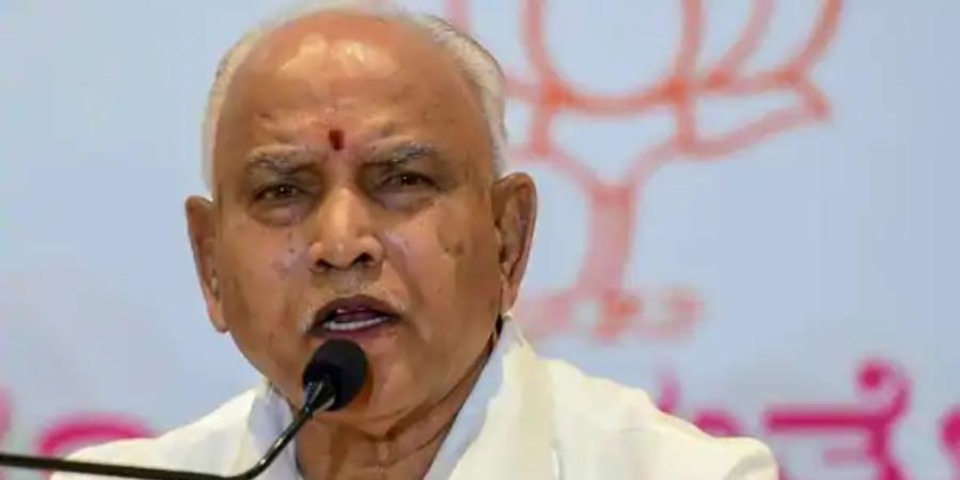
New Delhi: Karnataka Chief Minister B S Yediyurappa on Wednesday said his government will not allow the "forced bandh" called by some pro-Kannada outfits on December 5 against its decision to set up the Maratha Development Board.
Yediyurappa, who arrived in the national capital this afternoon to discuss with top BJP leadership the expansion of his cabinet, warned of action if the bandh is called.
"We have set up the board for the welfare of Maratha communities living in the state. Marathas are also Hindu followers," the chief minister told reporters here.
"We will take strict action if the forced bandh is called," he said.
The government's decision to set up the Maratha Development Board comes ahead of the announcement of bypolls to the Belagavi Lok Sabha constituency, as well as Basavakalyan and Maski assembly constituencies, which have a sizeable Marathi-speaking population.
Yediyurappa also lashed out at Maharashtra Deputy Chief Minister Ajit Pawar for "unnecessarily stoking" the border dispute between the two states.
He said the Mahajan Commission's decision is final.
Pawar had on Tuesday said Maharashtra's all-round growth and incorporating Belgaum (Belagavi), Karwar and Nipani into the state were dreams of Shiv Sena founder Bal Thackeray.
"Let's resolve to fulfil Balasaheb's dream," he had said.
Karnataka and Maharashtra have been at loggerheads for decades over the border issue.
Maharashtra lays claim to the border district of Belagavi on linguistic grounds.
Karnataka has built the Suvarna Vidhana Soudha, modeled on the Vidhana Soudha, the state legislature building in Bengaluru, in Belagavi to assert its claim that the district is an integral part of the state.
The legislative assembly's session is held in Suvarna Vidhana Soudha once a year.
Let the Truth be known. If you read VB and like VB, please be a VB Supporter and Help us deliver the Truth to one and all.
Allen, Raghuvanshi, Green power KKR to 29-run win over GT
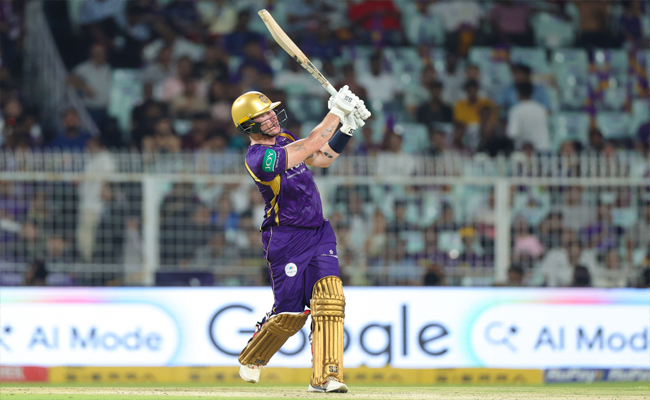
Kolkata (PTI): Finn Allen blasted a 35-ball 93, while Angkrish Raghuvanshi hit an unbeaten 44-ball 82 as Kolkata Knight Riders kept their playoff hopes alive with a 29-run win over Gujarat Titans in the IPL match here on Saturday.
Sent in to bat, Allen went on a six-hitting spree, smashing 10 maximums and four boundaries to add 95 off 41 balls with Raghuvanshi (82).
Raghuvanshi then shared another 108 off 53 balls with Cameron Green (52 not out) to power KKR to a challenging 247 for 2.
In reply, GT could manage 218-4, riding on skipper Shubman Gill's 49-ball 85 and a 35-ball 57 from Jos Buttler. Opener Sai Sudarsan was retired hurt but returned to make a 28-ball 53 not out.
Sunil Narine (2/29) claimed two wickets and Saurabh Dubey snapped one for KKR.
For GT, Mohammed Siraj (1/50), Sai Kishore (1/38) were the wicket-takers.
Brief Score:
KKR: 247 for 2 in 20 overs (Finn Allen 93, Angkrish Raghuvanshi 82 not out, Camero Green 52 not out; Mohammed Siraj 1/50).
GT: 218 for 4 in 20 overs (Shubman Gill 85, Sunil Narine 2/29).