Yediyurappa's media advisor Mahadeva Prakash resigns
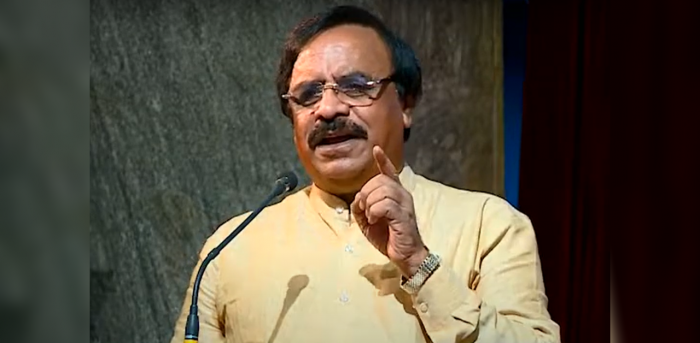
Bengaluru: Karnataka Chief Minister B S Yediyurappa's media advisor Mahadeva Prakash has resigned, making it the second such high profile exit from his close quarters within a month.
In his letter addressed to Yediyurappa dated November 18, Prakash cited "personal reasons" for his resignation.
Prakash, a senior journalist, who was appointed in August 2019 after the BJP government came to power, thanked Yediyurappa for giving him an opportunity to serve as the Chief Minister's media advisor.
Recently another senior journalist M B Maramkal was removed as the chief minister's political advisor.
Media reports had cited Maramkal's alleged fallout with Yediyurappa's family members as the reason for his removal.
Let the Truth be known. If you read VB and like VB, please be a VB Supporter and Help us deliver the Truth to one and all.
Allen, Raghuvanshi, Green power KKR to 29-run win over GT
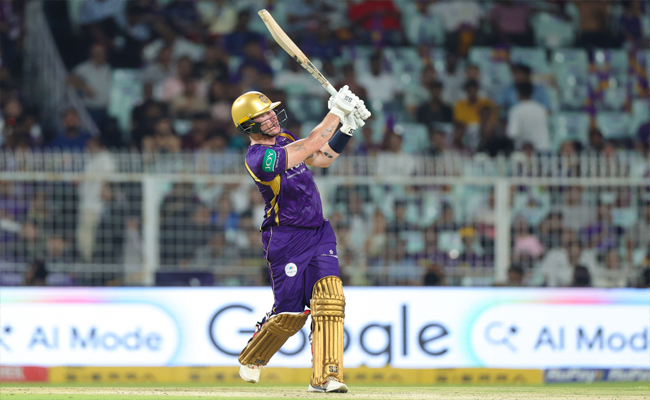
Kolkata (PTI): Finn Allen blasted a 35-ball 93, while Angkrish Raghuvanshi hit an unbeaten 44-ball 82 as Kolkata Knight Riders kept their playoff hopes alive with a 29-run win over Gujarat Titans in the IPL match here on Saturday.
Sent in to bat, Allen went on a six-hitting spree, smashing 10 maximums and four boundaries to add 95 off 41 balls with Raghuvanshi (82).
Raghuvanshi then shared another 108 off 53 balls with Cameron Green (52 not out) to power KKR to a challenging 247 for 2.
In reply, GT could manage 218-4, riding on skipper Shubman Gill's 49-ball 85 and a 35-ball 57 from Jos Buttler. Opener Sai Sudarsan was retired hurt but returned to make a 28-ball 53 not out.
Sunil Narine (2/29) claimed two wickets and Saurabh Dubey snapped one for KKR.
For GT, Mohammed Siraj (1/50), Sai Kishore (1/38) were the wicket-takers.
Brief Score:
KKR: 247 for 2 in 20 overs (Finn Allen 93, Angkrish Raghuvanshi 82 not out, Camero Green 52 not out; Mohammed Siraj 1/50).
GT: 218 for 4 in 20 overs (Shubman Gill 85, Sunil Narine 2/29).