Zameer Ahmed blames Union government for petrol price hike in Karnataka
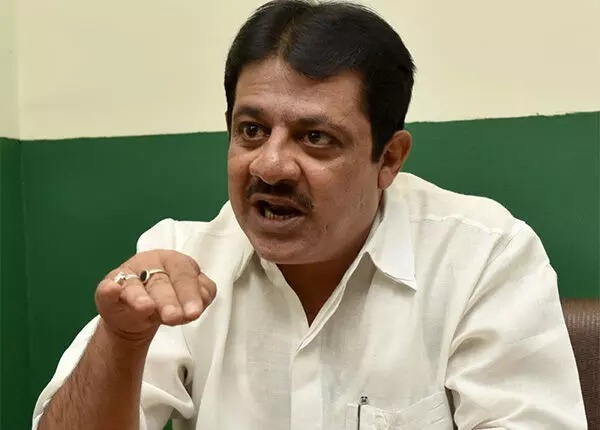
Bengaluru: Zameer Ahmed Khan, Minister for Housing and Minority Welfare, stated that the BJP-led NDA government was responsible for the price hike in petrol and diesel in the state. He was addressing the media in Bengaluru on Monday.
Addressing reporters, Khan said that the central government charged Rs 32.98 per liter of petrol and Rs 31.83 per liter of diesel as excise duty. He criticized BJP leaders for not raising their voices about this issue.
He highlighted that during the UPA government, excise duties on petrol and diesel were significantly lower, at Rs 9.48 and Rs 3.56 per liter, respectively. At that time, petrol was priced at Rs 68.31 per liter and diesel at Rs 48.63 per liter. Under the current BJP government, petrol prices have surged to Rs 106 per liter, despite a decrease in crude oil prices from Rs 97.68 per barrel during the UPA era to Rs 77.64 per barrel now.
Khan questioned why petrol and diesel prices have not decreased despite the lower crude oil prices. He also pointed out that during the tenure of the Basavaraj Bommai government in Karnataka, petrol prices crossed Rs 100 per liter, and cooking gas prices soared from Rs 419 to Rs 903.
Questioning the BJP leaders' silence on the price hikes by the Union government, Zameer Ahmed challenged them to come to an open discussion on the issue.
Let the Truth be known. If you read VB and like VB, please be a VB Supporter and Help us deliver the Truth to one and all.
Youth Congress demands Pradhan's resignation over NEET question paper leak
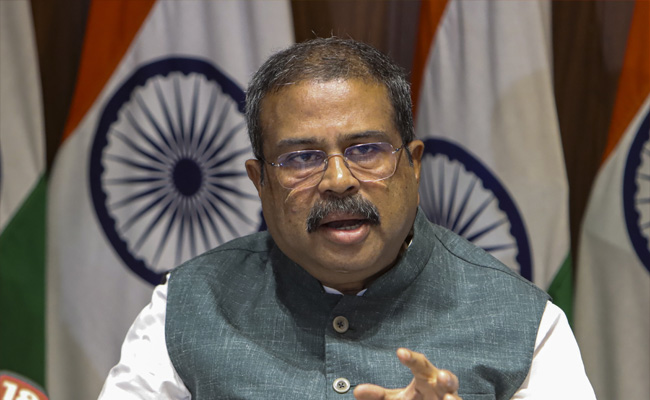
Bhubaneswar (PTI): Youth Congress activists on Friday staged a protest here demanding the resignation of Union Education Minister Dharmendra Pradhan over the NEET question paper leak.
Holding posters, banners and party flags, the Youth Congress activists took out a protest rally in Bhubaneswar from the state Congress office to Master Canteen Square and burnt effigies of Pradhan and Prime Minister Narendra Modi.
The education system has collapsed during the tenure of the BJP-led NDA government, Youth Congress leader Laxmipriya Nayak alleged.
During the past 12 years of Modi's rule, there have been 89 paper leaks and 48 examinations retested, she claimed.
"About 2 crore youths have been affected by the question paper leaks in the last 7-10 years. And, 24 lakh students have been affected by the recent NEET question paper leak incident," another protester, Shilpishree Harichandan, claimed.
"The Union government is playing with the future of the youths of the country. So, Pradhan has no moral right to continue in his position. He should step down," Harichandan said.
The National Testing Agency (NTA) had cancelled the NEET-UG exam, held on May 3, after a paper leak. The Union education minister on Friday announced that the NEET-UG re-exam will be conducted on June 21.