Zero takers in Karnataka for PM-KUSUM’s most lucrative solar scheme: Report
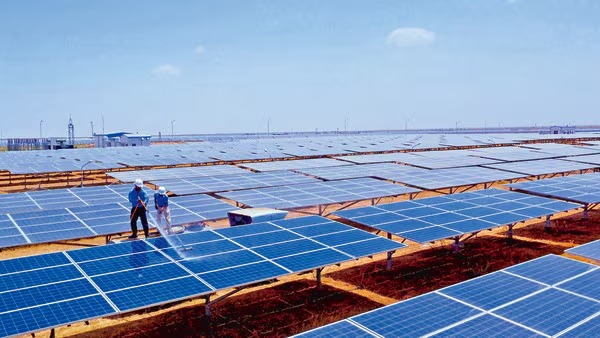
Mangaluru: Karnataka has failed to generate any demand under Component A of the PM-KUSUM scheme, the most lucrative part of the initiative that allows farmers to set up solar power plants of up to 2 MW on their land and sell surplus electricity to distribution companies.
Despite the potential for a steady income stream and the promotion of clean energy, the component has seen no uptake in the state, even six years after the scheme’s launch, as reported by The New Indian Express on Monday.
Launched in 2019, the Pradhan Mantri Kisan Urja Suraksha evam Utthaan Mahabhiyan (PM-KUSUM) scheme aims to reduce agriculture’s dependence on diesel, provide reliable solar power for irrigation, and improve farmers' income. The scheme is divided into three parts: Component A for decentralised solar plants, Component B for off-grid solar pumps, and Component C for solarising grid-connected agricultural pumps, including feeder-level solarisation.
A statement in Lok Sabha by Shripad Yesso Naik, Minister of State for New and Renewable Energy and Power, cited by TNIE, highlighted that while Components B and C have seen some progress in Karnataka, the overall implementation remains uneven and significantly below the sanctioned targets.
As of July 2025, Karnataka had been sanctioned 41,365 solar pumps under Component B, but only 2,388 have been installed. Similarly, under Component C (Feeder Level Solarisation), 6.28 lakh pumps were approved, but only 23,133 have been solarised. No demand has been raised for individual pump solarisation under Component C, underscoring underutilisation.
Despite these setbacks, some districts have shown a better adoption rate. Tumakuru leads the state with 6,160 grid-connected solar pumps, followed by Chikkaballapur (5,364) and Ramanagara (3,788). However, key agricultural districts like Belagavi, Kalaburagi, and Mysuru report almost negligible uptake, highlighting the inconsistency across the state.
On a national scale, Karnataka's performance remains modest, with 23,761 farmers benefiting from the PM-KUSUM scheme. This number pales in comparison to states like Maharashtra (7.27 lakh farmers), Gujarat (1.95 lakh), and Rajasthan (1.56 lakh), which have fully harnessed the potential of the scheme..
Let the Truth be known. If you read VB and like VB, please be a VB Supporter and Help us deliver the Truth to one and all.
Congress using hijab issue to pacify minority anger, alleges Karnataka LoP R Ashoka
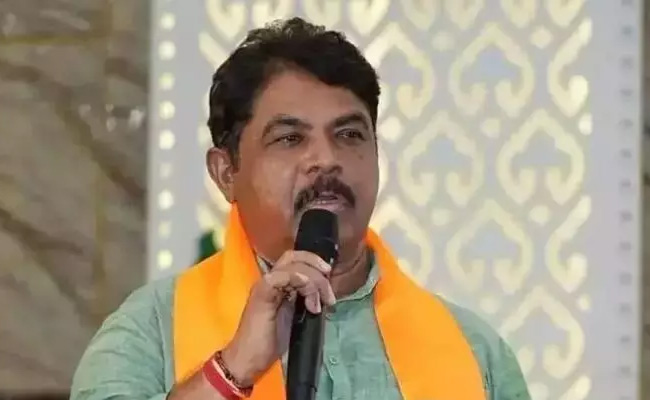
Bengaluru: Leader of Opposition in the Assembly R. Ashoka has accused the Congress government of using the hijab issue to placate what he described as discontent among minority voters after the Davanagere by-election.
In a post on X on Wednesday, Ashoka alleged that the state government, instead of addressing issues such as price rise, corruption, farmers’ distress and law and order, was attempting to retain its minority vote base by reviving the hijab issue.
Referring to the 2022 dress code introduced by the BJP government, which prohibited hijab in schools and colleges, Ashoka said the Karnataka High Court had upheld the policy and emphasised the importance of discipline in educational institutions.
He questioned the Congress government’s move to revisit the issue and asked whether setting aside the court-backed policy to benefit one community could be described as secularism.
Ashoka further alleged that while the government was willing to permit hijab, it continued to prohibit saffron shawls.
He accused the government of dividing students on religious lines rather than treating schools and colleges as spaces of equality.
Drawing a comparison with Mamata Banerjee’s government in West Bengal, Ashoka claimed that excessive appeasement politics had harmed the state and warned that the Congress in Karnataka could face a similar political response.
He said voters in Karnataka would teach the Congress a lesson for what he termed “vote-bank politics” and for compromising constitutional and judicial principles.