AIIMS-Delhi designated as WHO network site for pandemic preparedness
_vb_27.jpeg)
New Delhi (PTI): AIIMS, Delhi has now become one of the WHO global network sites for pandemic preparedness and emergency response under the Global Influenza Surveillance And Response System (GISRS).
The World Health Organisation (WHO), during the Covid crisis, had started the global network of Unity Study sites which conducts investigations and studies rapidly in the event of a pandemic, or epidemic of an emerging or re-emerging pathogen.
The network will ensure response readiness for rapid evaluation of critical tools to supplement routine surveillance systems to address specific questions, particularly in the early stages of a pandemic or an epidemic, Dr Puneet Misra, Professor of Community Medicine at AIIMS, said.
Unity Studies are standardization research protocol developed by WHO that may be implemented during inter pandemic period as well as any future pandemic of respiratory pathogen, Dr Misra explained.
The Unity Study protocols aim to rapidly gather evidence to facilitate evidence-based public health policy. These protocols advocate standardized and uniform method of data collection on epidemiological exposure, and collection of biological specimens, he said.
"This approach permits rapid sharing of data in a format that can be easily aggregated, tabulated and analysed across many different settings globally for timely public health response," Dr Misra said.
The COVID-19 pandemic was a global public health emergency, he said.
Although the health systems had the experience of dealing with infectious outbreaks and epidemics in past, but at time of Covid, WHO realised the need of generic protocols for standardised data for public health measures at global level to make processes and systems in place to deal with a public health emergency of such magnitude and be alert for any future outbreak, Dr Misra underlined.
The COVID-19 pandemic demonstrated that the unity protocol studies added value, and that they could be implemented both in high as well as in low-to-middle income countries.
Within the WHO South-East Asia Region (SEARO), which comprises 11 member countries, only five sites have been selected for establishing Unity Study site.
"AIIMS, Delhi, is privileged and proud to be one of the five sites designated as network site for Pandemic Preparedness and Emergency Response from the World Health Organization under the leadership of Dr Puneet Misra, Professor of Community Medicine," a statement issued by the hospital said.
Importantly, this centre will continue to function even in non-pandemic periods, contributing to broader public health actions, capacity building, and preparedness activities, ensuring that the systems remain robust and ready to respond effectively whenever needed, the statement added.
Let the Truth be known. If you read VB and like VB, please be a VB Supporter and Help us deliver the Truth to one and all.
Confident we are going to win Kerala: Shashi Tharoor
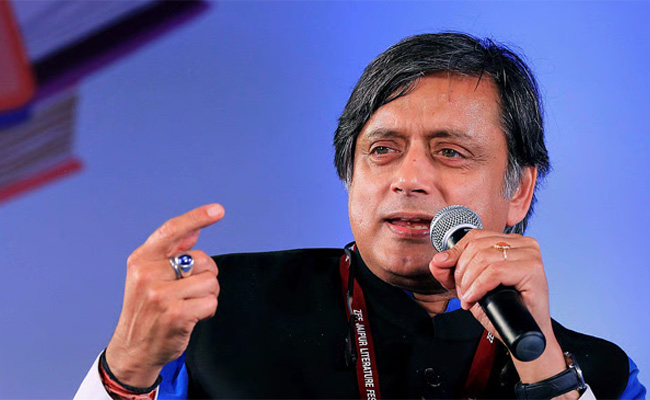
New Delhi (PTI): Congress leader Shashi Tharoor on Thursday expressed confidence in the victory of the United Democratic Front (UDF) in Kerala, saying the Congress-led alliance will win more than 75 seats out of the total 140 in the state.
Tharoor, who hails from Kerala, said he was not surprised to see the results of the exit polls, most of which predicted a victory for the UDF that has been out of power for 10 years in the state.
"We have been on the ground. I have campaigned in 59 constituencies across 12 districts out of 14. I was very confident we are going to win.
"Everything that I have picked up from not just my party colleagues and workers but also from other observers, media and others have always convinced me that we were going to score a comfortable win of above 75 seats. And all the (exit) polls have confirmed the same thing," he told reporters here.
The Thiruvananthapuram MP said he was not surprised to see the results of the exit polls but in general he was not a big fan of exit polls in India.
"Because ours is not purely a homogenous society. We have to take into account gender issue, caste issue, class issue, regional disparities. You never get a convincingly large enough sample to give an accurate poll and now there is the additional complication that we have heard about in West Bengal this year that many people are unwilling to answer the questions of the pollsters," he said.
The Congress leader said normally, it used to be below 10 per cent that people said that they would not answer.
"Even if you are a reputable exit pollster, in Bengal, one polling company has said 60 per cent of people refused to answer. So, what is the worth of a poll where 60 per cent of your respondents have not answered," he said.
Several exit polls on Wednesday predicted a comeback by the Congress-led UDF in Kerala after 10 years, dethroning the CPI(M)-led Left Democratic Front (LDF).
Polling for the 140-member Kerala assembly was held on April 9. Results of assembly elections in West Bengal, Tamil Nadu, Assam, Puducherry, besides Kerala, will be announced on May 4.