Air pollution could reduce life expectancy in Indians by nine years: Report
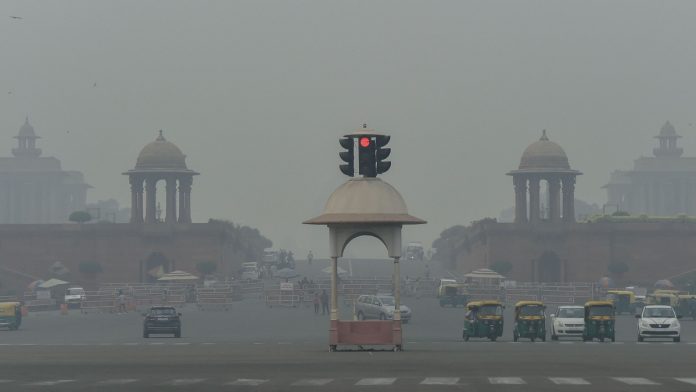
New Delhi, Sep 1: India's air pollution levels have expanded geographically over time and increased so much in Maharashtra and Madhya Pradesh that an average person is now losing an additional 2.5 to 2.9 years of life expectancy, according to a new report.
India is the most polluted country in the world, with more than 480 million people or about 40 per cent of its population living in the Indo-Gangetic plains in the north where pollution levels regularly exceed those found anywhere else in the world by an order of magnitude, stated the University of Chicago's Air Quality Life Index (AQLI) report.
The study by the varsity's Energy Policy Institute ascertains how much longer a person can live if they breathe clean air.
Residents of northern India are on track to lose more than nine years of life expectancy if pollution levels of that of 2019 persist as the region experiences the most extreme levels of air pollution in the world, it said.
In 2019, India's average particulate matter concentration was 70.3 microgram per cubic meter ( g/m3 ), the highest in the world and seven times the World Health Organisation's guideline of 10 g/m3, the report said.
It said that alarmingly India's high levels of air pollution have expanded geographically over time.
"Compared to a couple of decades ago, particulate pollution is no longer a feature of the Indo-Gangetic plains alone. Pollution has increased so much in the states of Maharashtra and Madhya Pradesh. For example, the average person in those states is now losing an additional 2.5 to 2.9 years of life expectancy, relative to early 2000," the report said.
For Bangladesh, India, Nepal and Pakistan, the AQLI data reveals that the average person would live 5.6 years longer if pollution were reduced to meet the WHO guidelines, it said.
"Due to South Asia's high population and pollution concentrations, the region accounts for 58 per cent of total life years lost due to particulate pollution exceeding the WHO guideline," it said.
The benefits of clean air policy are even greater in the Indo-Gangetic plains, where 480 million people regularly breathe pollution levels that exceed those found in Europe and North America by an order of magnitude, the report said.
Bangladesh, India, Nepal and Pakistan account for nearly a quarter of the global population and consistently rank among the top five most polluted countries in the world, it said.
As a result, South Asia accounts for 60 per cent of the person-years that are expected to be lost globally due to pollution levels exceeding the WHO guideline, the University of Chicago's report said.
"Average life expectancy across these four countries would be 5.6 years higher if pollution concentrations complied with the WHO guideline," it said.
In India and Pakistan, the number of vehicles on the road has increased about four-fold since the early 2000s while in Bangladesh, India, Nepal, and Pakistan combined, electricity generation from fossil fuels tripled from 1998 to 2017, the report said.
Crop burning, brick kilns, and other industrial activities have also contributed to rising particulates in the region, it said.
The AQLI, the report said, particulate pollution is the world's greatest threat to human health.
"South Asia is consistently the most polluted region, with the people there seeing their lives shortened by an average of 5 years relative to what it would be if the region met the WHO guideline and even more in the most polluted parts of the region like northern India," the report said.
Let the Truth be known. If you read VB and like VB, please be a VB Supporter and Help us deliver the Truth to one and all.
US VP JD Vance says Lebanon not part of ceasefire, calls it ‘misunderstanding’

Budapest/Washington: US Vice President J D Vance has said that Lebanon was never included in the ceasefire understanding with Iran, describing the confusion as a “legitimate misunderstanding”.
Speaking to reporters before departing from Hungary, Vance said, “I think the Iranians thought that the ceasefire included Lebanon and it just didn’t. We never made that promise.”
He stressed that the United States had not included Lebanon in the scope of the ceasefire at any stage.
His remarks come amid continued Israeli strikes in Lebanon, where more than 200 people were reported killed, even as ceasefire talks between Iran and the US move forward.
Vance said Israel had “offered … to check themselves a little bit in Lebanon because they want to make sure that our negotiation is successful”.
He warned that if Iran allows the situation in Lebanon to affect the negotiations, it could derail the talks.
“If Iran wants to let this negotiation fall apart in a conflict where they were getting hammered over Lebanon, which has nothing to do with them and which the United States never once said was part of the ceasefire, that’s ultimately their choice,” he said.