Cambridge University kicks off vaccine race to fight all coronaviruses
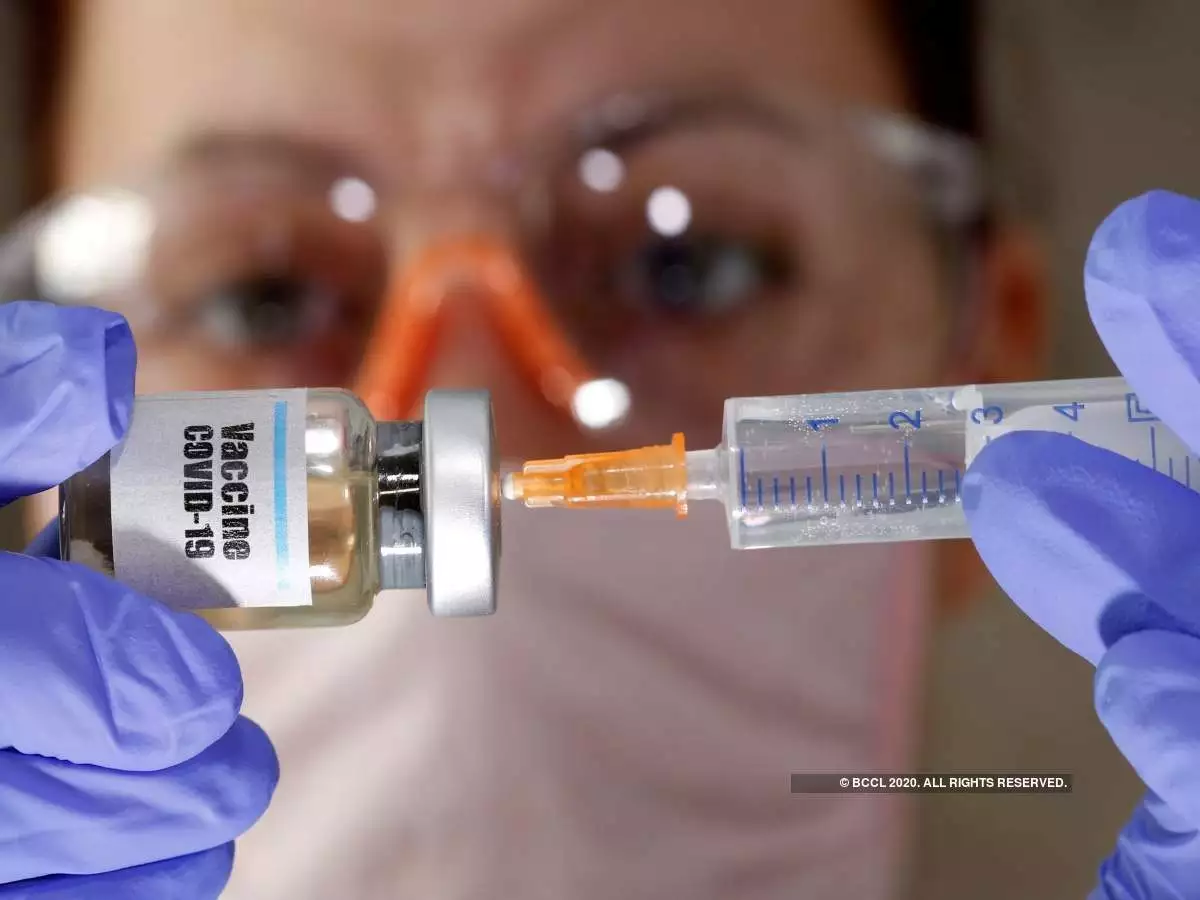
London: The University of Cambridge on Wednesday confirmed plans to begin trials of a potential new vaccine not only against COVID-19 but all coronaviruses that may spill over from animals to humans in the future.
The new vaccine candidate, DIOS-CoVax2, uses banks of genetic sequences of all known coronaviruses, including those from bats, believed to be the natural hosts of many relatives of human coronaviruses.
A vaccine that clears all trials can then be delivered pain-free without a needle into the skin through a spring-powered jet injection.
Our approach involves 3D computer modelling of the SARS-CoV-2 [Covid-19] virus' structure. It uses information on the virus itself as well as its relatives SARS, MERS and other coronaviruses carried by animals that threaten to spill-over' to humans again to cause future human epidemics, said Professor Jonathan Heeney, head of the Laboratory of Viral Zoonotics at the University of Cambridge, and founder of DIOSynVax a Cambridge spin-out company.
We're looking for chinks in its armour, crucial pieces of the virus that we can use to construct the vaccine to direct the immune response in the right direction. Ultimately we aim to make a vaccine that will not only protect from SARS-CoV-2, but also other related coronaviruses that may spill over from animals to humans, he said.
Prof Heeney said his team's strategy involves targeting those domains of the virus' structure that are absolutely critical for docking with a cell, while avoiding the parts that could make things worse.
What we end up with is a mimic, a synthetic part of the virus minus those non-essential elements that could trigger a bad immune response, he added.
His team have developed libraries of computer-generated antigen structures encoded by synthetic genes that can train the human immune system to target key regions of the virus and to produce beneficial anti-viral responses.
These immune responses include neutralising antibodies, which block virus infection, and T-cells, which remove virus-infected cells.
This so-called laser-specific computer generated approach is able to help avoid the adverse hyper-inflammatory immune responses that can be triggered by recognition of the wrong parts on the coronavirus' surface.
Most research groups have used established approaches to vaccine development because of the urgent need to tackle the pandemic. We all hope the current clinical trials have a positive outcome, but even successful vaccines are likely to have their limitations they may be unsuitable for vulnerable people, and we do not know how long their effects will last for, for example, said Dr Rebecca Kinsley, Chief Operating Officer of DIOSynVax and a postdoctoral researcher at the University of Cambridge.
Our approach using synthetic DNA to deliver custom designed, immune selected vaccine antigens is revolutionary and is ideal for complex viruses such as coronavirus. If successful, it will result in a vaccine that should be safe for widespread use and that can be manufactured and distributed at low cost, she said.
DIOS-CoVax2, which hopes to go into human trials by later this year, is the latest vaccine candidate to be backed by the UK government with 1.9 million pounds in funding as part of a collaboration between DIOSynVax, which is contributing an additional 400,000 pounds to the trial, the University of Cambridge and the University Hospital Southampton NHS Foundation Trust.
The team say their proposed new vaccine can be freeze-dried as a powder and is therefore heat stable, meaning that it does not need to be cold-stored. This makes transport and storage much more straightforward, particularly important in low and middle income countries, and it can be delivered through PharmaJet Tropis intradermal Needle-free Injection System, which delivers the vaccine in less than a 1/10th of a second jet injection.
Professor Saul Faust, Director of the NIHR Southampton Clinical Research Facility, said: It is especially exciting that the clinical trial will test giving the vaccine through people's skin using a device without any needles as together with stable DNA vaccine technology this could be a major breakthrough in being able to give a future vaccine to huge numbers of people across the world.
The news comes as the University of Oxford revealed that its trials of a potential vaccine against COVID-19 being developed with AstraZeneca could be put before regulators this year if scientists are able to gather enough data.
The Oxford vaccine, as it is commonly known, showed early promise in the first human trial when it produced an immune response, underlining its position as one of the leading candidates in the race to help vaccinate humans against the deadly novel coronavirus.
Let the Truth be known. If you read VB and like VB, please be a VB Supporter and Help us deliver the Truth to one and all.
89 killed as storm, rain batter UP; relief work underway
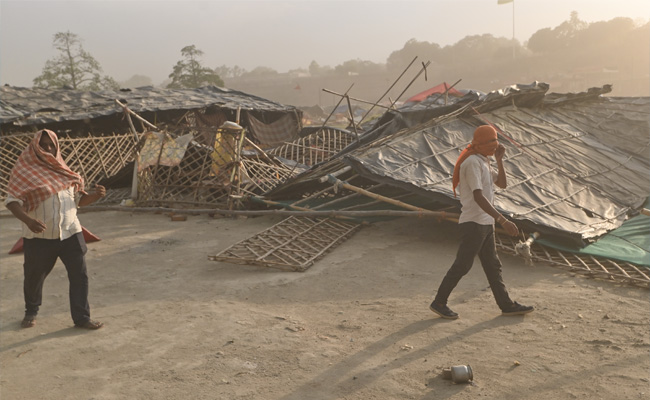
Lucknow (PTI): At least 89 people were killed after a strong storm and heavy rain pounded several districts of Uttar Pradesh, uprooting trees and electric poles and damaging houses, according to the Relief Commissioner's office.
Chief Minister Yogi Adityanath took cognisance of the loss of lives and damage caused by the unseasonal rain, thunderstorms and lightning on Wednesday and directed officials to ensure relief reaches the affected families within 24 hours.
In a post on X on Thursday, the Relief Commissioner's office said, "Due to bad weather on May 13, including storms, rain, hailstorm and lightning, reports of 89 deaths, 53 injured persons, 114 livestock losses and damage to 87 houses have been received in the state, which has been taken cognisance of by the Hon'ble Chief Minister."
It said the chief minister has directed all divisional commissioners and district magistrates to verify the incidents "with full sensitivity" and ensure financial assistance is distributed to affected families within 24 hours while establishing direct communication with them and extending other necessary help.
The Relief Commissioner's office said it is continuously monitoring the situation through direct coordination with district officials and necessary funds are being made available to districts.
According to a list issued by the Prayagraj district administration, seven deaths were reported in the Handia area, four in Phulpur, three in Soraon, two in Meja and one in Sadar due to the storm and rain.
In Bhadohi, district administration sources said at least 16 people died in storm-related incidents.
Additional District Magistrate Kunwar Virendra Kumar Maurya said trees and electric poles were uprooted in several areas while many houses were damaged in the storm.
Fatehpur Additional District Magistrate Avinash Tripathi said nine people were killed and 16 injured in storm-related incidents in the district.
"Eight people, including five women, died in Khaga tehsil, while a woman died after a wall of a house collapsed in Sadar tehsil," he said.
In Pratapgarh, four people died in separate incidents of wall and cemented shed collapses and lightning strikes amid strong winds and rain, officials said.
Superintendent of Police Deepak Bhukar said Bhim Yadav (25) died after he was trapped under the debris of a cemented shed that collapsed in Ojha Ka Purwa village in the Lalganj Kotwali area.
He said Bhushan Pandey (56) died after a wall collapsed in Sari Swami village under the Baghrai police station area.
Bhukar said Shanti Devi (46) of Narangpur village and Lal Bahadur (44) of Chhatrapur Shivala Raghna village also died in storm-related incidents.
In Kanpur Dehat district, two persons died in rain-related incidents, the officials said.
Police sources said a 19-year-old woman, Ruchi, died after being struck by lightning in Bhauthari village under the Rasulabad area while standing under a neem tree with goats during heavy rain. Several goats also died in the incident.
A 60-year-old man standing nearby was injured, they added.
Additional District Magistrate (Finance and Revenue) Dushyant Kumar said reports regarding human and livestock losses have been sought from local officials and financial assistance will be provided as per government rules.
In Deoria, Komal Yadav (62), a resident of Bhimpur Gaura village, died after being struck by lightning, district administration sources said. Two others were injured in the incident.
In another incident, Ramnath Prasad (65), a resident of Neruari village, died in a lightning strike.
In Sonbhadra district, Madhav Singh (38) died after being trapped under a tree uprooted during the rain and the storm.
Adityanath directed the district magistrates and officials of various departments to visit the affected areas and provide all possible assistance to the victims and their families.
He also instructed the officials to remain alert and ordered the revenue and agriculture departments, along with insurance companies, to conduct a survey of the damage and submit a report to the government.