Washington, April 12: NASA's Transiting Exoplanet Survey Satellite, or Tess aimed at detecting planets outside our solar system, is set to launch on a SpaceX Falcon 9 rocket from Florida on April 16.
The mission is scheduled to launch no earlier around 4.02 a.m. on April 17 (India time) from Cape Canaveral Air Force Station, NASA said on Wednesday.
Tess is NASA's next step in the search for exoplanets, including those that could support life.
Once in orbit, Tess will spend about two years surveying 200,000 of the brightest stars near the Sun to search for planets outside our solar system.
Tess will find the most promising exoplanets orbiting relatively nearby stars, giving future researchers a rich set of new targets for more comprehensive follow-up studies, including the potential to assess their capacity to harbour life.
With the help of a gravitational assist from the Moon, the spacecraft will settle into a 13.7-day orbit around Earth, NASA said in an earlier statement.
Sixty days after the launch and following tests of its instruments, the satellite will begin its initial two-year mission. Four wide-field cameras will give Tess a field-of-view that covers 85 per cent of our entire sky.
Within this vast visual perspective, the sky has been divided into 26 sectors that Tess will observe one by one.
The first year of observations will map the 13 sectors encompassing the southern sky, and the second year will map the 13 sectors of the northern sky.
The spacecraft will be looking for a phenomenon known as a transit, where a planet passes in front of its star, causing a periodic and regular dip in the star's brightness.
NASA's Kepler spacecraft used the same method to spot more than 2,600 confirmed exoplanets, most of them orbiting faint stars 300 to 3,000 light-years away
Let the Truth be known. If you read VB and like VB, please be a VB Supporter and Help us deliver the Truth to one and all.
US VP JD Vance says Lebanon not part of ceasefire, calls it ‘misunderstanding’
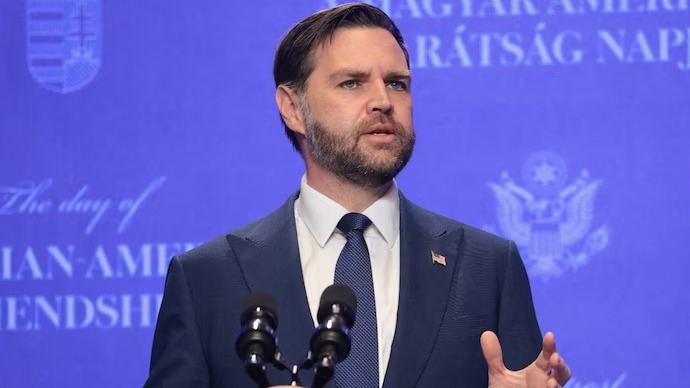
Budapest/Washington: US Vice President J D Vance has said that Lebanon was never included in the ceasefire understanding with Iran, describing the confusion as a “legitimate misunderstanding”.
Speaking to reporters before departing from Hungary, Vance said, “I think the Iranians thought that the ceasefire included Lebanon and it just didn’t. We never made that promise.”
He stressed that the United States had not included Lebanon in the scope of the ceasefire at any stage.
His remarks come amid continued Israeli strikes in Lebanon, where more than 200 people were reported killed, even as ceasefire talks between Iran and the US move forward.
Vance said Israel had “offered … to check themselves a little bit in Lebanon because they want to make sure that our negotiation is successful”.
He warned that if Iran allows the situation in Lebanon to affect the negotiations, it could derail the talks.
“If Iran wants to let this negotiation fall apart in a conflict where they were getting hammered over Lebanon, which has nothing to do with them and which the United States never once said was part of the ceasefire, that’s ultimately their choice,” he said.