Why and How Congress would get 110+ Seats
- Among the pre poll surveys two surveys looked most trust worthy- CSDS – Loknithi and Rajdeep Sardesai’s channel. According to CSDS the likely seat Congress would get jumped from 90 in April to 100+ in May. This increase was predicted while Modi was busy with his rallies. (Those who are in the know, know why CSDS is credible).
- Though Rajdeep Sardesai is not pro BJP he had predicted that BJP would win in both 2014 LS elections and UP assembly elections in 2017. Presently he predicts that Congress would get 106-118 seats in Karnataka. Moreover his exit poll base is much bigger (around 70000)
- Though C-Four seems pro Congress, its exit poll base too is significantly large (27000). Even if we deduct around 5% vote share it predicts, even then the outcome seem to favour Congress.
- The polling percentage is highest in 2018 in the post independent era. For this kind of record voting either there should be a visible wave or women must have voted in large numbers as they did in 2013.
- If Modi wave were to be factor, then the voting in cities should have been significantly higher. As the data in other districts do not provide city based voting percentage, let us take Bangalore as an indicator. The polling in Bangalore is 10% less than what it was in 2013. It suggests that those who were influenced by Modi did not feel like voting!!
- If that is true then, higher polling must be due to the voting by women, backward communities and minorities. In 1978 when similar polling occurred (71.8 ) Congress led by Devaraj Urs had registered a massive victory.
The present scenario is akin to that. According to India today, over 48% Dalits and 80% Muslims have supported Congress. In 2013, where Muslim voters were over 40% BJP had won 6 out of 15. This time Modi & co must have contributed for a greater polarization of Muslim votes.
Generally 70% of the voters vote for their traditional favourite party. Hence we should look for the trends in voting pattern. We have only CSDS data regarding this (of April-May) that trend seems to favour Congress.
If someone wants to debate this logically, a discussion is worth it! I am subject to correction. But merely stating that Today’s Chanakya or C-Four predicts so does not prove anything.
If results prove this wrong, then
- The polling did not happen according to this logic
- EVMS should be doubted.
- The methodology and inference of the surveys must be faulty.
My analysis does not mean that I am pro Congress. This is an attempt to understand an electoral exit poll survey scientifically. Anyway, we have our role cut out.. Whoever wins, we may have to function as a vigilant opposition!

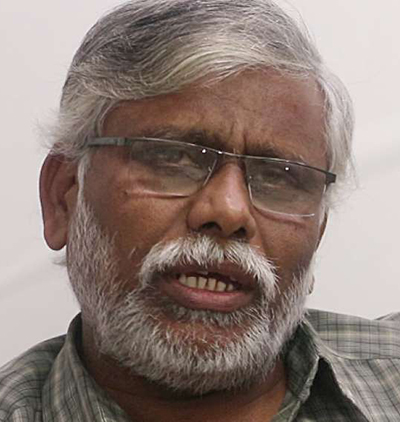
DR. H.V. VASU
SHIVASUNDAR
Let the Truth be known. If you read VB and like VB, please be a VB Supporter and Help us deliver the Truth to one and all.
US VP JD Vance says Lebanon not part of ceasefire, calls it ‘misunderstanding’

Budapest/Washington: US Vice President J D Vance has said that Lebanon was never included in the ceasefire understanding with Iran, describing the confusion as a “legitimate misunderstanding”.
Speaking to reporters before departing from Hungary, Vance said, “I think the Iranians thought that the ceasefire included Lebanon and it just didn’t. We never made that promise.”
He stressed that the United States had not included Lebanon in the scope of the ceasefire at any stage.
His remarks come amid continued Israeli strikes in Lebanon, where more than 200 people were reported killed, even as ceasefire talks between Iran and the US move forward.
Vance said Israel had “offered … to check themselves a little bit in Lebanon because they want to make sure that our negotiation is successful”.
He warned that if Iran allows the situation in Lebanon to affect the negotiations, it could derail the talks.
“If Iran wants to let this negotiation fall apart in a conflict where they were getting hammered over Lebanon, which has nothing to do with them and which the United States never once said was part of the ceasefire, that’s ultimately their choice,” he said.