15-year-old Indian-American Gitanjali Rao named TIME magazine’s first-ever ‘Kid of the Year'
Indian American Gitanjali Rao is a young scientist and inventor
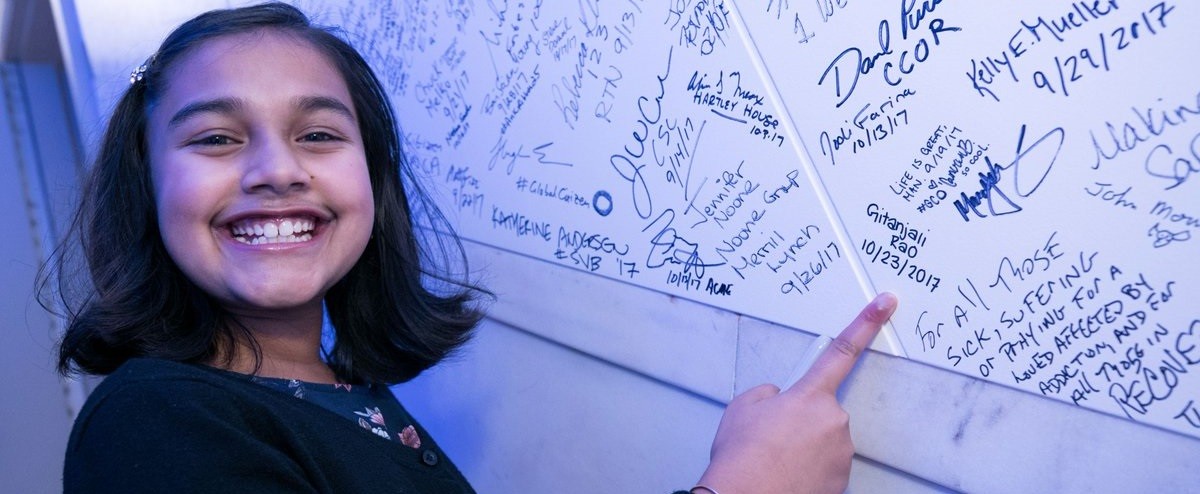
New York, Dec 3: 15-year-old Indian-American Gitanjali Rao, a "brilliant" young scientist and inventor, has been named by TIME magazine as the first-ever ‘Kid of the Year' for her “astonishing work using technology to tackle issues ranging from contaminated drinking water to opioid addiction and cyberbullying”.
The world belongs to those who shape it. And however uncertain that world may feel at a given moment, the reassuring reality seems to be that each new generation produces more of what these kids have already achieved: positive impact, in all sizes, Time said.
Rao was selected from a field of more than 5,000 nominees as TIME's first-ever Kid of the Year. She was interviewed by actor and activist Angelina Jolie for the TIME special.
Observe, brainstorm, research, build and communicate, Rao told about her process during a virtual talk with Jolie from her home in Colorado.
She spoke about her astonishing work using technology to tackle issues ranging from contaminated drinking water to opioid addiction and cyberbullying, and about her mission to create a global community of young innovators to solve problems the world over.
Even over video chat, her brilliant mind and generous spirit shone through, along with her inspiring message to other young people: don't try to fix every problem, just focus on one that excites you, Time said.
If I can do it, she said in the interview, anybody can do it.
Rao said her generation is facing many problems that they have never seen before.
But then at the same time, we're facing old problems that still exist. Like, we're sitting here in the middle of a new global pandemic, and we're also like still facing human-rights issues. There are problems that we did not create but that we now have to solve, like climate change and cyberbullying with the introduction of technology, she said.
I think more than anything right now, we just need to find that one thing we're passionate about and solve it. Even if it's something as small as, I want to find an easy way to pick up litter. Everything makes a difference. Don't feel pressured to come up with something big, she said.
When asked when she knew that science was her passion, Rao said she always wanted to put a smile on someone's face. That was my everyday goal, just to make someone happy. And it soon turned into, How can we bring positivity and community to the place we live?
Rao added that she doesn't look like "your typical scientist. Everything I see on TV is that it's an older, usually white man as a scientist. It's weird to me that it was almost like people had assigned roles, regarding like their gender, their age, the colour of their skin.
"My goal has really shifted not only from creating my own devices to solve the world's problems, but inspiring others to do the same as well. Because, from personal experience, it's not easy when you don't see anyone else like you. So I really want to put out that message: If I can do it, you can do it, and anyone can do it," she said.
She said when she was in second or third grade, she started thinking about how she can use science and technology to create social change. She said she was 10 when she told her parents that she wanted to research carbon nanotube sensor technology at the Denver Water Quality Research Lab.
When asked by Jolie if Rao does things that kids her age do, she said actually I spend more time doing 15-year-old things during the quarantine. I bake an ungodly amount. It's not good, but it's baking. And, like, it's science too.
Let the Truth be known. If you read VB and like VB, please be a VB Supporter and Help us deliver the Truth to one and all.
Delhi govt to provide up to Rs 10 crore collateral-free loans to women startups, SHGs
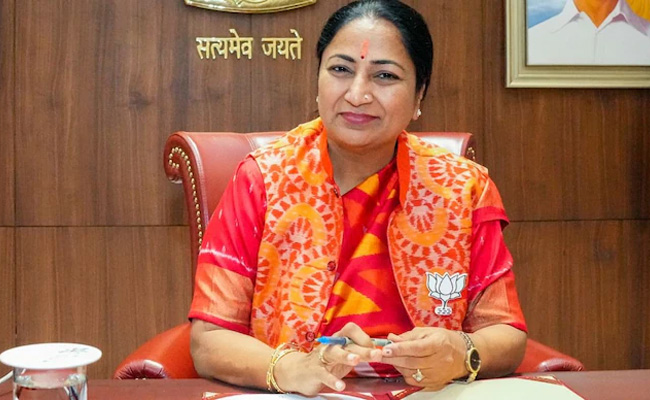
New Delhi (PTI): Delhi government will provide collateral-free loans of up to Rs 10 crore to women-led start ups and self help groups in the national capital, Chief Minister Rekha Gupta said on Sunday.
The government will also provide platforms in malls and large shopping complexes across the city to help indigenous products made by women self-help groups (SHGs) reach a wider market.
"We are working on a wider scale to make the women of the capital self-reliant, entrepreneurial, and economically empowered. Arrangements have been made for providing collateral-free loans up to Rs 10 crore to women self-help groups and startups," Gupta said in a statement.
She said the Delhi government itself would act as guarantor for such loans extended to women start ups and SHGs.
Addressing the inauguration of a two-day 'Mega Self Help Group (SHG) Mela-2026' organised in Rohini on Saturday, Gupta said that Prime Minister Narendra Modi has consistently promoted the vision of 'Vocal for Local', 'Atmanirbhar Bharat', and 'One District, One Product'.
She said the SHG Mela was an effort to promote indigenous products prepared by women and connect them with the wider market.
Around 24 self-help groups participated in fair, where handicrafts, crochet work, khadi, household products, food items, and other handmade products were exhibited and sold. Handicrafts under 'One District, One Product' initiative of North-West Delhi district were also showcased.
Gupta said that people often preferred foreign brands despite Indian handicrafts, khadi, household products, and handmade items being comparable in quality.
"The only requirement is better branding and marketing of these products," she said.
She appealed to people to use more local and indigenous products instead of foreign goods.
Referring to Prime Minister Narendra Modi's appeal to conserve fuel, use public transport, and adopt indigenous products, Gupta said the Delhi government was also promoting campaigns such as 'Monday metro' and 'No Vehicle Day'.
"If people make small changes in their daily routine, it will directly benefit the country," she said.