3 scientists win Nobel Prize in physics for looking at electrons in atoms during split seconds
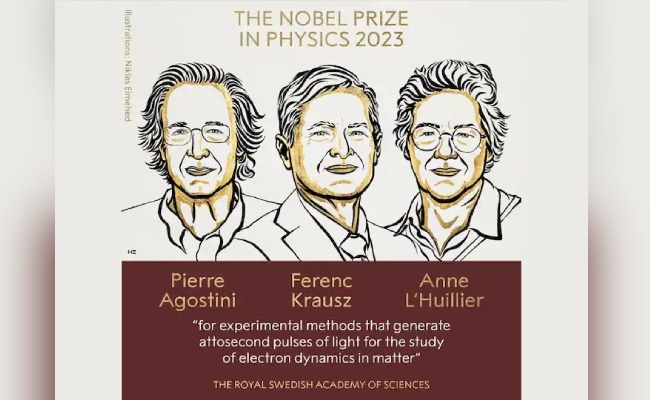
Stockholm (AP): The Nobel Prize in physics has been awarded to three scientists who look at electrons in atoms during the tiniest of split seconds.
Pierre Agostini of The Ohio State University in the US; Ferenc Krausz of the Max Planck Institute of Quantum Optics and Ludwig Maximilian University of Munich in Germany; and Anne L'Huillier of Lund University in Sweden won the award.
Hans Ellegren, the secretary-general of the Royal Swedish Academy of Sciences, announced the prize Tuesday in Stockholm.
The Nobel Prizes carry a cash award of 11 million Swedish kronor (
1 million). The money comes from a bequest left by the prize's creator, Swedish inventor Alfred Nobel, who died in 1896.
The physics prize comes a day after Hungarian-American Katalin Karik and American Drew Weissman won the Nobel Prize in medicine for discoveries that enabled the creation of mRNA vaccines against COVID-19.
Last year, three scientists jointly won the physics prize for proving that tiny particles could retain a connection with each other even when separated. The phenomenon was once doubted but is now being explored for potential real-world applications such as encrypting information.
Nobel announcements will continue with the chemistry prize on Wednesday and the literature prize on Thursday.
The Nobel Peace Prize will be announced on Friday and the economics award on Oct 9.
The prizes carry a cash award of 11 million Swedish kronor (
1 million) drawn from a bequest left by the prize's creator, Swedish inventor Alfred Nobel, who died in 1896.
The prize money was raised by 1 million kronor this year because of the plunging value of the Swedish currency.
The laureates are invited to receive their awards at ceremonies on Dec 10, the anniversary of Nobel's death. The prestigious peace prize is handed out in Oslo, according to his wishes, while the other award ceremony is held in Stockholm.
Let the Truth be known. If you read VB and like VB, please be a VB Supporter and Help us deliver the Truth to one and all.
Anbumani asks PM Modi to ban sale of cigarettes for those born after 2009
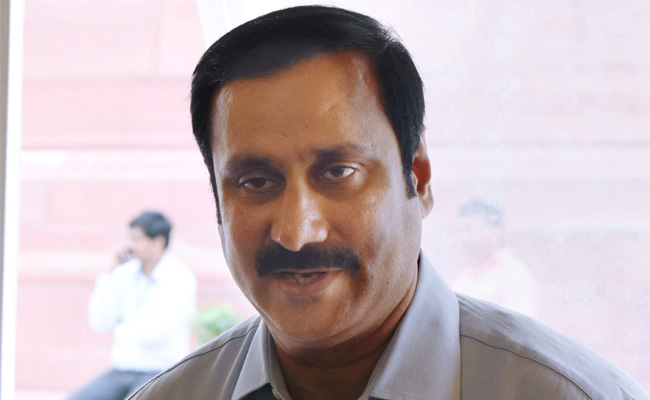
Chennai (PTI): PMK leader Anbumani Ramadoss on Saturday urged Prime Minister Narendra Modi to take legislative measures to prohibit smoking and the sale of cigarettes to individuals born on or after January 1, 2009, thereby creating a smoke-free generation.
Anbumani, former Union minister for health and family welfare, said, "Once implemented, it (ban on cigarettes) will ensure that future generations are legally prevented from ever accessing tobacco products", he said in a letter to Modi.
"I write to you with a deep sense of urgency and responsibility, drawing your kind attention to a critical public health issue that continues to endanger the lives of millions of Indians, particularly among the younger generation who are affected by cigarette smoking", he claimed.
Stating that India unfortunately bears a disproportionately high burden of tobacco-related morbidity and mortality, he said, adding that, according to global health estimates, nearly 267 million Indians, approximately one in five citizens, use tobacco.
"Each year, tobacco consumption directly accounts for over 1.35 million deaths, while exposure to second-hand smoke contributes to a total of approximately 2.3 million deaths annually", he said, adding, "these figures are alarming and reflect a public health crisis of immense magnitude".
He pointed out that Scientific evidence unequivocally establishes tobacco use as a leading cause of cancer and numerous non-communicable diseases, including cardiovascular ailments, chronic respiratory diseases such as COPD, and multiple forms of malignancies. "In India alone, tobacco is responsible for nearly 40–50 per cent of all cancer cases, with over 4.7 lakh deaths annually attributed to tobacco-induced cancers", he added.
"In this context, I strongly urge the Union government to consider enacting a transformative law similar to that of the United Kingdom, that permanently prohibits the sale and consumption of tobacco products for individuals born on or after a specified year (such as 2009). Such a generational ban would mark a decisive step towards eliminating tobacco use in India over time", he said.