90% of world's population breathes badly polluted air: WHO
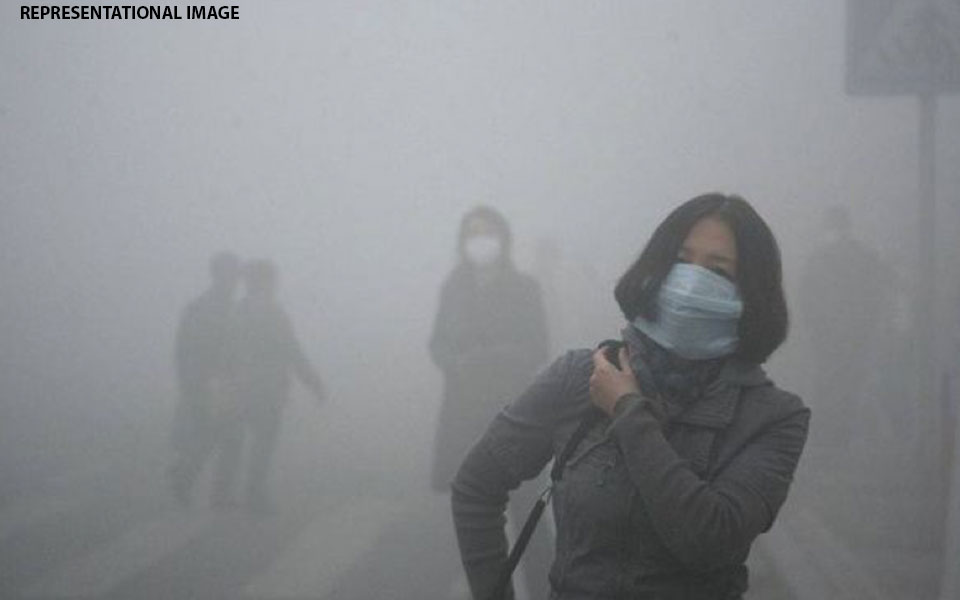
Geneva, May 2: Nine out of every 10 people on the planet breathe air that contains high levels of pollutants and kills seven million people each year, according to a new World Health Organization (WHO) study released on Wednesday.
The study is an analysis of what the WHO says is the world's most comprehensive database on ambient air pollution. The organisation collected the data from more than 4,300 cities and 108 countries, reports CNN.
People in Asia and Africa face the biggest problems, according to the study.
More than 90 per cent of air pollution-related deaths happen there, but cities in the Americas, Europe and the Eastern Mediterranean also have air pollution levels that are beyond what the WHO considers healthy.
The new WHO data show that US cities on the more polluted side of the list include Los Angeles, Bakersfield and Fresno, California; Indianapolis; and the Elkhart-Goshen area of Indiana.
Peshawar and Rawalpindi in Pakistan, have some of the highest particulate air pollution levels in the database. Varanasi and Kanpur in India; Cairo; and Al Jubail, Saudi Arabia, also show higher levels.
"I'm afraid what is dramatic is that air pollution levels still remain at dangerously high levels in many parts of the world," CNN quoted Maria Neira, director of the WHO's Department of Public Health, Environmental and Social Determinants of Health, as saying.
"No doubt that air pollution represents today not only the biggest environmental risk for health, but I will clearly say that this is a major, major challenge for public health at the moment and probably one of the biggest ones we are contemplating."
Particle pollution, a mix of solid and liquid droplets in the air, can get sucked into and embedded deep in your lungs when you breathe. That can lead to health conditions including asthma, lung cancer, heart disease, stroke and chronic obstructive pulmonary disorder (COPD), according to the study.
These outdoor particulates -- including sulphate, nitrates and black carbon -- are largely created by car and truck traffic, manufacturing, power plants and farming. In total, air pollution caused about 4.2 million deaths in 2016, it added.
"Many of the world's megacities exceed WHO's guideline levels for air quality by more than five times, representing a major risk to people's health," Neira said. This is "a very dramatic problem that we are facing now".
Cleaner air accounts for in cities like like Wenden, Arizona (population 2,882), or Cheyenne, Wyoming (population 64,019).
The Eureka-Arcata-Fortuna area of California; Battlement Mesa, Colorado; Wasilla, Alaska; Gillette, Wyoming; and Kapaa, Hawaii, are all on the cleaner-air list.
One of the bigger US cities with cleaner air is Honolulu, according to the WHO data.
Let the Truth be known. If you read VB and like VB, please be a VB Supporter and Help us deliver the Truth to one and all.
KSRTC introduces gender ticketing in buses across Kerala
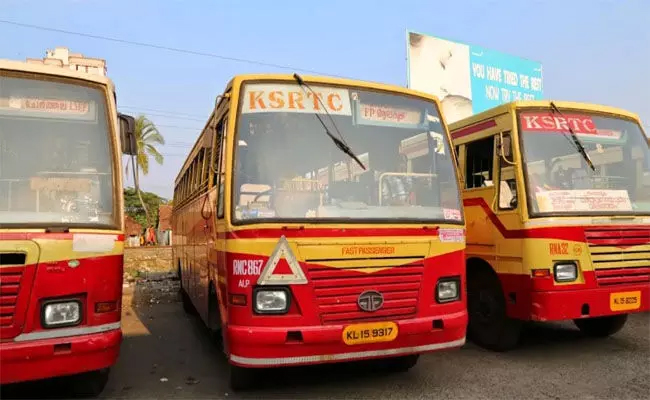
Thiruvananthapuram (PTI): The KSRCTC on Saturday began implementing gender ticketing in buses operating across the state.
According to a Kerala State Road Transport Corporation (KSRTC) circular issued on Friday, the gender ticketing system is intended to record whether a passenger is a woman, a man or a child in tickets issued on KSRTC buses from Saturday.
To facilitate the system, Electronic Ticketing Machines (ETMs) have been updated.
The circular stated that conductors in all KSRTC depots should record the gender category of passengers while issuing tickets through the ETMs.
Options for women, men, and children have been included in the ETMs to identify passenger categories when issuing tickets.
The printed tickets generated by the ETMs will also indicate the passenger's category, officials said.
The UDF had promised free KSRTC travel for women across the state during the Assembly election campaign.
UDF, which won 102 of 140 seats, would soon form the government after the Congress party finalises the discussion on the next Chief Minister.
The introduction of gender ticketing is being viewed as an effort to estimate the number of women travelling daily on KSRTC buses before implementing the poll promise.
Some conductors have reportedly raised concerns over the additional time required to record passenger details, especially during rush hours.