Banana plant extract may help you relish melt-proof ice cream
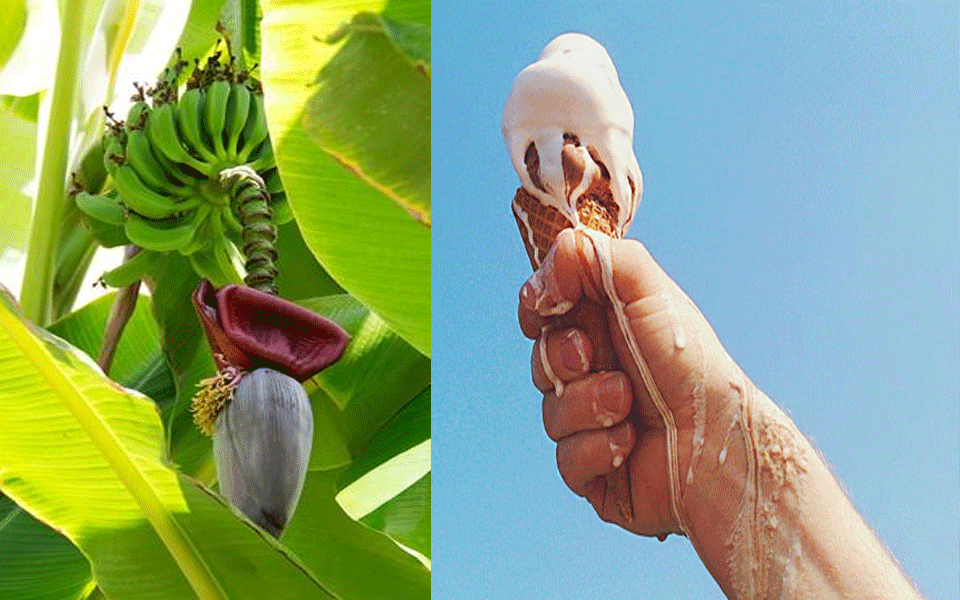
New York: Love to savour your ice cream in its solid state for longer and hate to see it melt? Scientists have found a solution to this problem in a banana plant extract that they say could be key to a creamier and longer lasting ice cream.
The findings showed that adding tiny cellulose fibres extracted from banana plant waste to ice cream could slow melting, increase shelf life and potentially replace fats used to make the tasty treat.
"Our findings suggest that cellulose nanofibres extracted from banana waste could help improve ice cream in several ways," Robin Zuluaga Gallego, from the Universidad Pontificia Bolivariana, Colombia.
"In particular, the fibres could lead to the development of a thicker and more palatable dessert, which would take longer to melt. As a result, this would allow for a more relaxing and enjoyable experience with the food, especially in warm weather," Gallego added.
For the study, presented at the 255th National Meeting and Exposition of the American Chemical Society in New Orleans, the team extracted cellulose nanofibrils (CNFs), which are thousands of times smaller than the width of a human hair, from ground-up banana stems or rachis.
Then they mixed the CNFs into ice cream at varying concentrations, ranging from zero up to three-tenths of a gram per 100 grams of the dessert.
They found that ice creams mixed with CNFs tended to melt much more slowly than traditional ice creams.
They also determined that CNFs could increase shelf life of ice cream, or at least decrease its sensitivity to temperature changes that occur when moved to and from the freezer.
In addition, CNFs increased the viscosity of low-fat ice cream, which improved the creaminess and texture of the product.
This suggests that CNFs could help stabilise the fat structure in ice creams. As a result, CNFs could potentially replace some of the fats -- and perhaps reduce calories -- in these desserts, the researchers noted.
Moving forward, the researchers plan to explore how different types of fat, such as coconut oil and milk fat, affect the behaviour of CNFs in other frozen treats.
Let the Truth be known. If you read VB and like VB, please be a VB Supporter and Help us deliver the Truth to one and all.
Karnataka govt tables Rs 14,767 cr supplementary estimates in assembly
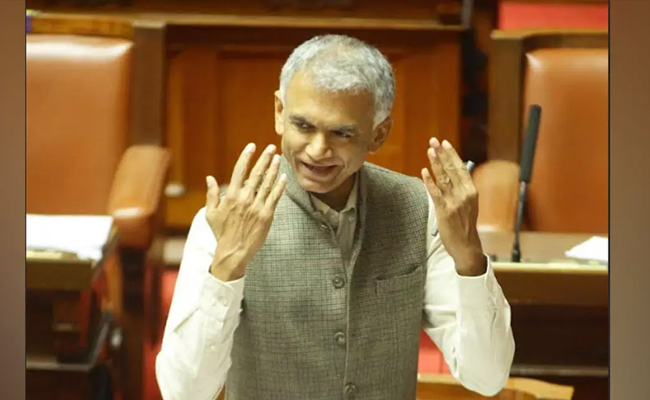
Bengaluru (PTI): The Karnataka government on Monday tabled the supplementary estimates in the assembly, totalling Rs 14,767 crore of additional expenditure for the current fiscal.
Tabled by Revenue Minister Krishna Byre Gowda on behalf of Chief Minister Siddaramaiah, supplementary estimates are additional expenditures incurred by the government over and above the budget provisions.
In the fiscal ending March, additional expenditures include Rs 147 crore on the Sadhana Samavesha to mark two years of the Congress government and Rs 223 crore for railway barricading to prevent human-elephant conflict.
As per the supplementary estimates, the government spent Rs 1.25 crore to purchase a Volvo XC90 for former Prime Minister H D Deve Gowda.
It also includes -- Rs 1,025 crore to clear various irrigation works bills, Rs 15 crore for helicopter and air travels by Governor, CM, ministers and other VIPs, Rs 110 crore towards scholarship and tuition fee reimbursement for minority students, Rs 15 crore for development of various temples, maths and trusts.
The government also spent Rs 1.4 crore to print a book comprising 'selected' speeches of Governor Thaawarchand Gehlot, Rs 50 lakh to clear pending electricity and water bills of ministers' residences, Rs 10 crore towards rehabilitation of families affected by landslides at Meppadi in Wayanad, Kerala.
Rs 5 crore each for Brahmin Development Board and Arya-Vysya Development Corporation, Rs 60 lakh to Supreme Court senior advocate Kapil Sibal for two appearances representing the government, Rs 5.13 crore towards bills from the Belagavi winter session of the legislature, Rs 5.5 crore towards pending bills from the 2019 and 2021 Assembly bypolls and the upcoming Davangere South and Bagalkot bypolls, are among the expenditures incurred.