BioVaram, Telangana govt join hands to set up CoE in Life Sciences
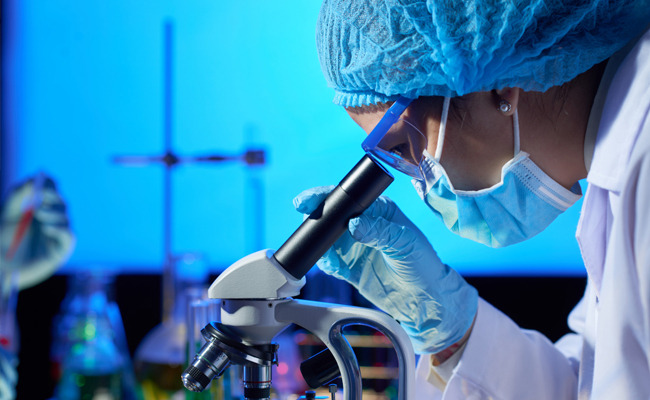
Hyderabad (PTI): Hyderabad-based biotechnology company BioVaram on Tuesday signed an MoU with the Telangana government to establish a CoE in Life Sciences, focusing on tissue engineering, regenerative medicine, and cell and gene therapy.
The Memorandum of Understanding was signed during the ongoing Telangana Rising Global Summit, held on December 8 and 9, the company said in a statement.
Under the agreement, the state government will provide land within Bharat Future City, a proposed development on the outskirts of Hyderabad.
The government is also expected to offer funding assistance for building and operationalising the facility, the release added.
BioVaram has committed to investing Rs 250 crore to build a fully integrated innovation ecosystem dedicated to high-risk, high-impact translational research.
The proposed Centre of Excellence is expected to feature world-class infrastructure supporting AI-integrated development in key areas, including tissue engineering, advanced biomaterials, regenerative medicine, cell and gene therapy (CGT), AI-driven bioanalytics, and predictive platforms.
"India has to lead the world in innovation, and Telangana has to lead India. The BioVaram Centre for Excellence stands as a testament to what visionary collaboration between government, industry, and science can achieve," said K I Varaprasad Reddy, Founder of Shantha Biotechnics and Chairman & Mentor of BioVaram.
Let the Truth be known. If you read VB and like VB, please be a VB Supporter and Help us deliver the Truth to one and all.
Himachal: Three killed, two injured as speeding car dashes against parked truck
Mandi (HP) (PTI): Three people were killed and two others sustained grievous injuries after a speeding car dashed against a stationary truck at Dadour near Nerchowk in Mandi district on Monday late at night, police said on Tuesday.
There were five people in the car when the tragedy struck. Three were declared dead in the hospital while two have been referred to AIIMS Bilaspur.
The deceased were identified as Anil Kumar (28), Rohit Kumar (26) and Subash Kumar (23), all residents of Mandi district, while the injured are Harish and Pankaj.
A case has been registered under relevant sections and investigations are underway, said Superintendent of Police (SP) Mandi Vinod Kumar.
He added that the bodies have been handed over to the family members of the deceased.
In a statement, Chief Minister Sukhvinder Singh Sukhu expressed grief over the loss of three lives in a road accident. He directed the district administration to ensure best possible treatment for the injured and wished them a speedy recovery.