Chandrayaan-2 detects presence of water molecules on moon
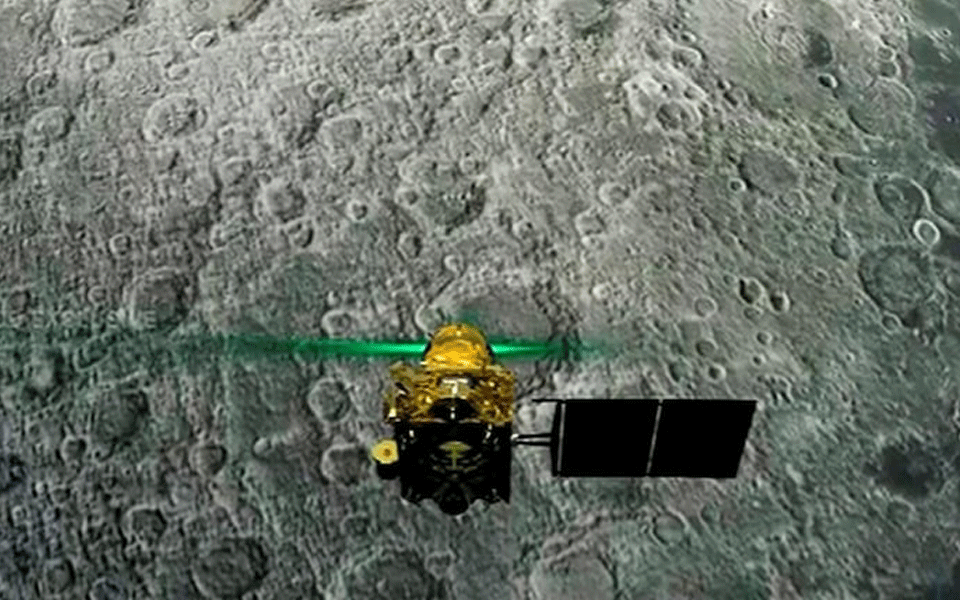
New Delhi: Chandrayaan-2, ISRO's second lunar mission, has detected the presence of water molecules on the moon, data obtained from the mission has revealed.
In a paper co-authored by A S Kirankumar, former Indian Space Research Organisation (ISRO) chairman, said imaging infrared spectrometre (IIRS) is one of the payloads on-board Chandrayaan-2, which is placed in a 100 km polar orbit to acquire global scientific data.
The initial data analysis from IIRS, clearly demonstrates the presence of widespread lunar hydration and unambiguous detection of OH and H2O signatures on the Moon between 29 N and 62 N lat., after incorporating physics-based thermal correction to reflectance data, the paper which was published in Current Science journal said.
Plagioclase-rich rocks have been found to have higher OH (hydroxyl) or possibly H2O (water) molecules when compared to the mare regions, which were found to have more dominance of OH at higher surface temperature, it said.
The development also assumes significance considering that Chandrayaan-2 did not yield desired results.
Planned to land on the South Pole of the moon, Chandrayaan-2 was launched on July 22. However, lander Vikram hard-landed on September 7, crashing India's dream to become the first nation to successfully land on the lunar surface in its maiden attempt.
The orbiter of the mission is working fine and has been sending data to Chandrayaan-1, the first lunar mission, and showed evidence that there was water on the moon, the paper said.
Let the Truth be known. If you read VB and like VB, please be a VB Supporter and Help us deliver the Truth to one and all.
Case registered against associate film director for sexual assault of model in Kochi

Kochi (PTI): Police on Saturday said they had registered a case against an associate director in the film industry for "sexually assaulting" a model here.
The case was registered against Jojo Kurishinkal of Chengannur in Alappuzha district at the Maradu police station on May 6.
Kurishinkal has worked in several films as an assistant and associate director.
According to the FIR, the complainant, a model based in Kochi, met Kurishinkal through a dating app in July 2023.
The FIR stated that the accused told the complainant he was a film director and had separated from his wife before proposing marriage to her.
He later allegedly assured the complainant and her mother that he would go ahead with the marriage once the legal procedures related to his divorce were completed, the FIR said.
According to the FIR, the accused later invited the complainant to his apartment in Vyttila on April 18, 2024, where he "sexually assaulted" her.
The FIR further alleged that he continued to sexually harass the woman thereafter. It also stated that the accused had "physically assaulted" the complainant on multiple occasions before later refusing to marry her.
Based on the complaint, police registered a case under Section 376(2)(n) of the Indian Penal Code for repeatedly raping the same woman.
Police said the woman’s confidential statement would be recorded, following which the accused would be summoned for questioning.