First robot-assisted spinal surgery performed
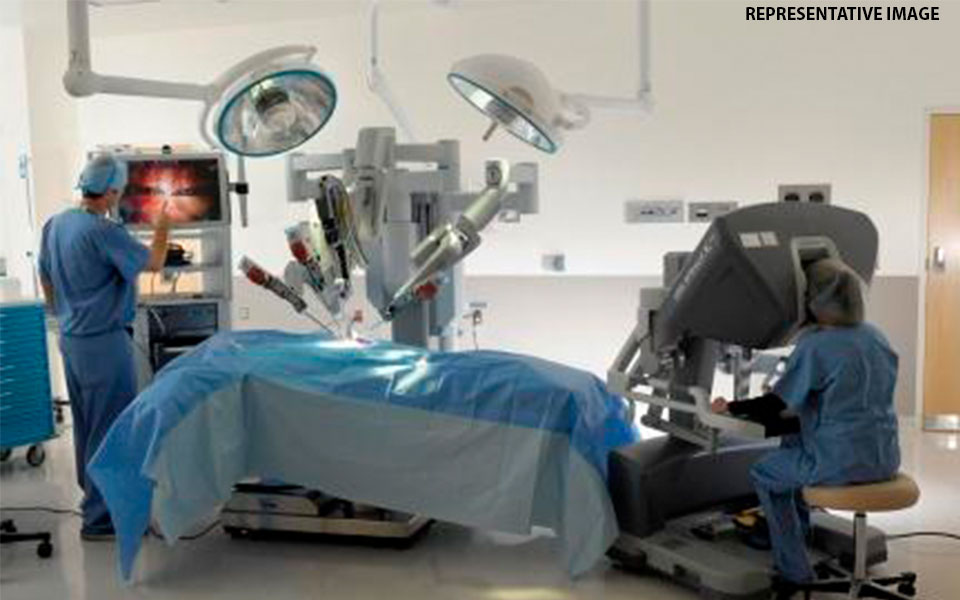
New York, May 6: A team of neurosurgeons led by an Indian-origin professor from the University of Pennsylvania School of Medicine performed the first-ever robot-assisted spinal surgery to successfully remove a rare tumour on the patient's neck.
The robotic approach assisted with a three-part, two-day complex procedure for a rare chordoma tumour removal from a patients' neck, where the skull meets the spine.
Chordoma is a rare type of cancer that occurs in the bones of the skull base and spine. A chordoma tumour usually grows slowly and is often asymptomatic for years.
It is extremely rare and it affects only one in a million people each year.
"This would be a first ever use of a robot in this manner -- a rare approach to an already rare and complex case," Neil Malhotra, an assistant professor of Neurosurgery and Orthopaedic Surgery said in a statement.
"Our team needed to reconstruct the removed area of patient's spine using bone and rods, and that was only the beginning," Malhotra added.
He added that due to the placement of the tumour, the removal could compromise the structural integrity of the patient's spine, causing permanent paralysis.
There was also a risk of complications such as bone and tissue breakdown, loss of sense of smell, fine motor skill issues and complete paralysis.
"If we could not remove the entire tumour, it would likely grow back, perhaps more aggressive than before," Malhotra added.
The surgery was performed in three parts and now nine months after the surgery, the patient is back to work in commercial contracting.
Let the Truth be known. If you read VB and like VB, please be a VB Supporter and Help us deliver the Truth to one and all.
KSRTC introduces gender ticketing in buses across Kerala
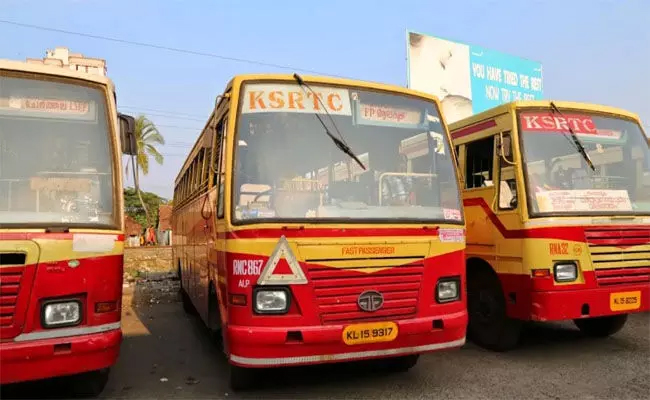
Thiruvananthapuram (PTI): The KSRCTC on Saturday began implementing gender ticketing in buses operating across the state.
According to a Kerala State Road Transport Corporation (KSRTC) circular issued on Friday, the gender ticketing system is intended to record whether a passenger is a woman, a man or a child in tickets issued on KSRTC buses from Saturday.
To facilitate the system, Electronic Ticketing Machines (ETMs) have been updated.
The circular stated that conductors in all KSRTC depots should record the gender category of passengers while issuing tickets through the ETMs.
Options for women, men, and children have been included in the ETMs to identify passenger categories when issuing tickets.
The printed tickets generated by the ETMs will also indicate the passenger's category, officials said.
The UDF had promised free KSRTC travel for women across the state during the Assembly election campaign.
UDF, which won 102 of 140 seats, would soon form the government after the Congress party finalises the discussion on the next Chief Minister.
The introduction of gender ticketing is being viewed as an effort to estimate the number of women travelling daily on KSRTC buses before implementing the poll promise.
Some conductors have reportedly raised concerns over the additional time required to record passenger details, especially during rush hours.