HAL delivers biggest ever cryogenic propellant tank to ISRO
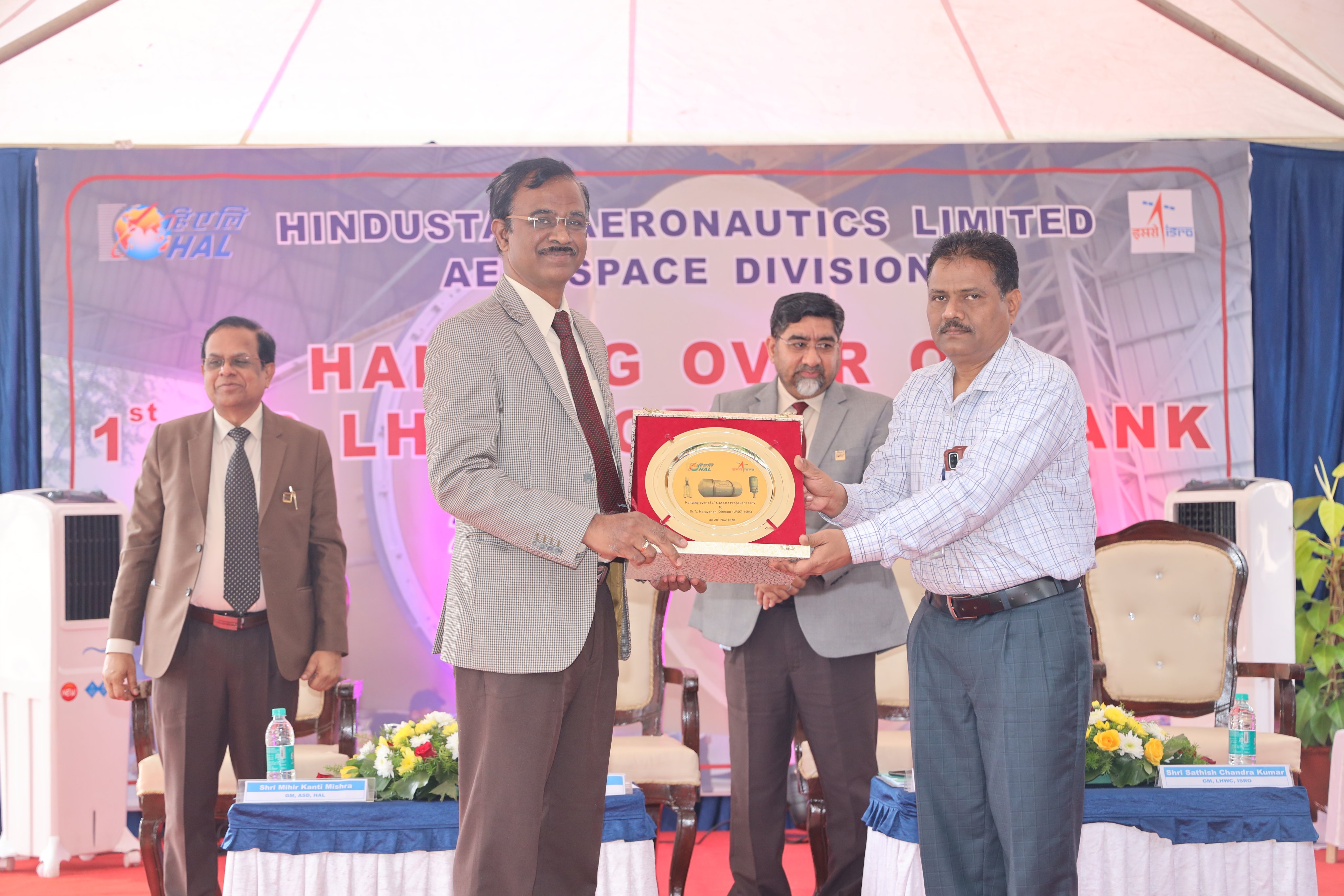
Bengaluru, Nov 30: Hindustan Aeronautics Limited on Monday said it has delivered the biggest cryogenic propellant tank (C32 LH2) ever fabricated by the company to ISRO, much ahead of the contractual schedule.
The C32-LH2 tank is a developmental cryogenic propellant tank of aluminium alloy designed for improving the payload capability of GSLV MK-III launching vehicle, HAL said in a release.
According to HAL, the four metre diametric tank is of eight metre length to load 5,755 Kg propellant in the 89 cubic metre volume.
Total length of weld carried out in the tank was 115 metre at different stages to the quality requirement of 100 per cent tests on radiography, Die penetrant check and Leak proof,it said.
HAL has mastered the skills and technologies required for fabricating welded propellant tanks of Aluminium alloy to such stringent quality requirements, it claimed.
HAL as a strategic reliable partner, has been associating with ISRO for the prestigious space programmes since the last five decades, the company said pointing out that it has supplied critical structures, tankages, satellite structures for the PSLV, GSLV-MkII and GSLV-MkIII launch vehicle.
Various new projects like PS2/GS2 integration, Semi-Cryo structure fabrication and manufacture of cryo and semi cryo engines are being taken up at HAL, for which setting up of necessary infrastructure and facilities is nearing completion, it said.
HAL has also supported ISRO right from the developmental phase of Crew Atmospheric Re-entry Experiment, PAD Abort test for Crew Escape for Human Space Mission and is currently building hardware for full-fledged launch vehicle GSLV Mk-III for Gaganyaan programme, it added.
HAL Delivers Biggest Ever Cryogenic Propellant Tank to ISRO @drajaykumar_ias @DefProdnIndia @gopalsutar @PIB_India @isro @PTI_News @SpokespersonMoD pic.twitter.com/QM66WE47GI
— HAL (@HALHQBLR) November 30, 2020
Let the Truth be known. If you read VB and like VB, please be a VB Supporter and Help us deliver the Truth to one and all.
Case registered against associate film director for sexual assault of model in Kochi

Kochi (PTI): Police on Saturday said they had registered a case against an associate director in the film industry for "sexually assaulting" a model here.
The case was registered against Jojo Kurishinkal of Chengannur in Alappuzha district at the Maradu police station on May 6.
Kurishinkal has worked in several films as an assistant and associate director.
According to the FIR, the complainant, a model based in Kochi, met Kurishinkal through a dating app in July 2023.
The FIR stated that the accused told the complainant he was a film director and had separated from his wife before proposing marriage to her.
He later allegedly assured the complainant and her mother that he would go ahead with the marriage once the legal procedures related to his divorce were completed, the FIR said.
According to the FIR, the accused later invited the complainant to his apartment in Vyttila on April 18, 2024, where he "sexually assaulted" her.
The FIR further alleged that he continued to sexually harass the woman thereafter. It also stated that the accused had "physically assaulted" the complainant on multiple occasions before later refusing to marry her.
Based on the complaint, police registered a case under Section 376(2)(n) of the Indian Penal Code for repeatedly raping the same woman.
Police said the woman’s confidential statement would be recorded, following which the accused would be summoned for questioning.