ISRO achieves major milestone in reusable launch vehicle tech with landing experiment
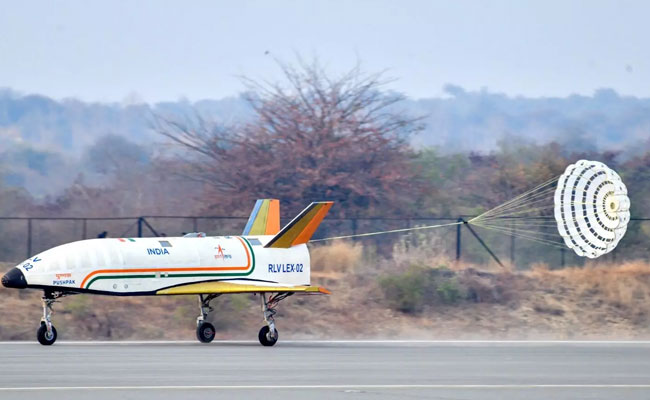
Bengaluru (PTI): ISRO on Friday said it has achieved a major milestone in the area of reusable launch vehicle technology through the RLV LEX-02 landing experiment.
This is the second of the series conducted at Aeronautical Test Range, Chitradurga, in Karnataka at 7.10 am.
After the RLV-LEX-01 mission was accomplished last year, RLV-LEX-02 demonstrated the autonomous landing capability of reusable launch vehicle (RLV) from off-nominal initial conditions at release from helicopter, the Bengaluru-headquartered space agency said in a statement.
"The RLV was made to undertake more difficult maneuvers with dispersions, correct both cross-range and downrange and land on the runway in a fully autonomous mode," it said.
The winged vehicle, called Pushpak, was lifted by an Indian Air Force Chinook helicopter and was released from 4.5 km altitude. After release at a distance of 4 km from the runway, Pushpak autonomously approached the runway along with cross-range corrections. It landed precisely on the runway and came to a halt using its brake parachute, landing gear brakes and nose wheel steering system, ISRO said.
It added that this mission successfully simulated the approach and high-speed landing conditions of RLV returning from space.
"With this second mission, ISRO has re-validated the indigenously developed technologies in the areas of navigation, control systems, landing gear and deceleration systems essential for performing a high-speed autonomous landing of a space-returning vehicle," the space agency said.
The winged body and all flight systems used in RLV-LEX-01 were reused in the RLV-LEX-02 mission after due certification/ clearances. Hence, reuse capability of flight hardware and flight systems is also demonstrated in this mission, ISRO said.
Based on the observation from RLV-LEX-01, the airframe structure and landing gear were strengthened to tolerate higher landing loads, it said.
The mission was accomplished by Vikram Sarabhai Space Centre (VSSC) along with the Liquid Propulsion System Centre (LPSC) and the ISRO Inertial Systems Unit (IISU).
ISRO chairman S Somanath congratulated the team for the flawless execution of this complex mission.
On the success of the landing experiment, VSSC Director Dr S Unnikrishnan Nair said through this repeated success, ISRO could master the terminal phase maneuvering, landing and energy management in a fully autonomous mode, which is a critical step towards the future.
Let the Truth be known. If you read VB and like VB, please be a VB Supporter and Help us deliver the Truth to one and all.
KSRTC introduces gender ticketing in buses across Kerala
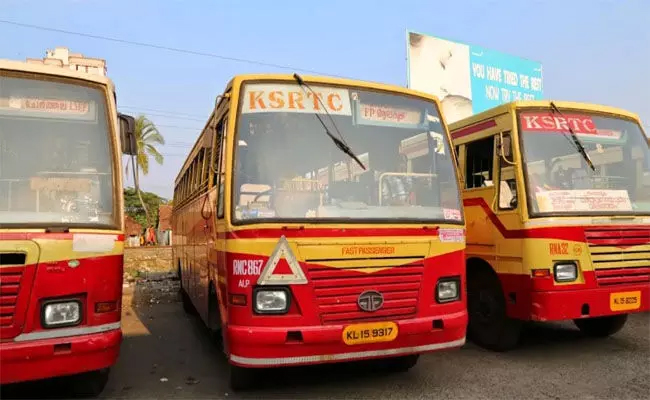
Thiruvananthapuram (PTI): The KSRCTC on Saturday began implementing gender ticketing in buses operating across the state.
According to a Kerala State Road Transport Corporation (KSRTC) circular issued on Friday, the gender ticketing system is intended to record whether a passenger is a woman, a man or a child in tickets issued on KSRTC buses from Saturday.
To facilitate the system, Electronic Ticketing Machines (ETMs) have been updated.
The circular stated that conductors in all KSRTC depots should record the gender category of passengers while issuing tickets through the ETMs.
Options for women, men, and children have been included in the ETMs to identify passenger categories when issuing tickets.
The printed tickets generated by the ETMs will also indicate the passenger's category, officials said.
The UDF had promised free KSRTC travel for women across the state during the Assembly election campaign.
UDF, which won 102 of 140 seats, would soon form the government after the Congress party finalises the discussion on the next Chief Minister.
The introduction of gender ticketing is being viewed as an effort to estimate the number of women travelling daily on KSRTC buses before implementing the poll promise.
Some conductors have reportedly raised concerns over the additional time required to record passenger details, especially during rush hours.