ISRO gears up for maiden human space flight programme with launch of test vehicle mission
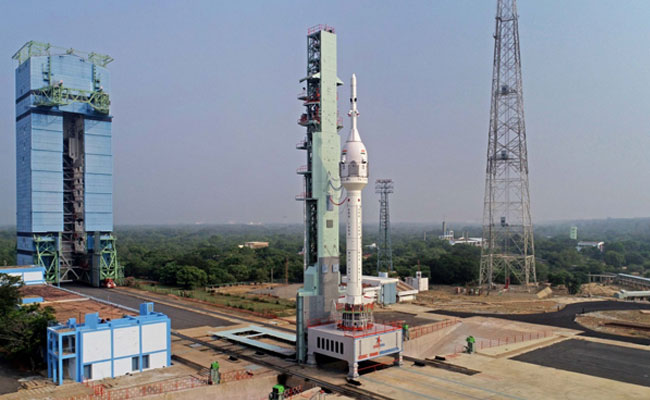
Sriharikota (Andhra Pradesh), (PTI): The launch of a single-stage liquid rocket on Saturday will signal ISRO's journey towards its ambitious human space flight programme, Gaganyaan, when the first crew module test to ensure the safety of astronauts will be conducted by the space agency here.
ISRO aims to send humans into space on a Low Earth Orbit of 400 km for a three-day Gaganyaan mission and bring them safely back to earth.
Unlike other missions by the Bengaluru-headquartered space agency, ISRO would attempt a successful launch of its Test Vehicle (TV-D1), a single-stage liquid rocket, scheduled to lift off from the first launch pad at this spaceport at 8 am on October 21.
The Test Vehicle mission with this Crew Module is a significant milestone for the overall Gaganyaan programme as a nearly complete system is integrated for a flight test.
The success of this test flight would set the stage for the remaining qualification tests and unmanned missions, leading to the first Gaganyaan programme with Indian astronauts, which is expected to take shape in 2025.
The Crew Module System is a habitable space with an Earth-like environment in space for the crew. It is of double-walled construction consisting of a pressurised metallic 'inner structure' and an unpressurised 'external structure' with 'thermal protection systems'.
It houses the crew interfaces, life support system, avionics, and deceleration systems. It is also designed for re-entry to ensure the safety of the crew during the descent till touchdown.
The Crew Module underwent various testing at ISRO centers before it was integrated into the launch complex in Sriharikota, located about 135 km east of Chennai.
The entire test flight sequence on Saturday is expected to be brief as the Test Vehicle Abort Mission (TV-D1) will launch the Crew Escape Systems and Crew Module at an altitude of 17 km which are expected to make a safe touchdown in the sea, about 10 kms from the eastern coast of Sriharikota.
They would be later retrieved by the Navy from the Bay of Bengal.
The TV-D1 vehicle uses a modified VIKAS engine with a Crew Module and Crew Escape System mounted at its fore end.
The vehicle is 34.9 metres tall and has a lift-off weight of 44 tonne.
The structure of the TV-D1 flight is a single-walled unpressurised aluminium structure with a simulated thermal protection system.
The Test Vehicle D1 mission aims for an in-flight abort demonstration of Crew Escape System with the newly developed Test Vehicle followed by Crew Module separation and safe recovery.
Mission objectives include flight demonstration and evaluation of test vehicles, crew escape systems, Crew Module characteristics, and deceleration systems demonstration at higher altitude and its recovery.
Through this campaign, scientists aim to ensure the safety of the crew who would be actually sent in the Crew Module on an LVM-3 rocket on the Gaganyaan mission.
Scientists have also lined up a series of tests with the beginning of the TV-D1 flight programme on Saturday.
ISRO Chairman S Somanath had recently said similar kinds of abort missions would be conducted much before the human space flight programme.
The prerequisites for the Gaganyaan mission include the development of many critical technologies, including human-rated launch vehicles for carrying the crew safely into space, a life support system to provide an earth-like environment to crew in space, and crew emergency escape provision.
The rocket to be launched in space would be a human-rated LVM 3 -- a vehicle which would carry the Orbital Module to an intended Low Earth Orbit of 400 km on the Gaganyaan mission.
However, for the Test Vehicle Abort Mission 1(TV-D1), the Crew Module is an unpressurised version and it has the overall size and weight of actual Crew Module on the Gaganyaan mission.
The Crew Module has all the systems for deceleration and recovery, a set of parachutes among many others.
In the first test flight on Saturday, the Crew Module would capture the flight data for evaluation of the performance of various systems onboard to serve the scientists.
Let the Truth be known. If you read VB and like VB, please be a VB Supporter and Help us deliver the Truth to one and all.
Tumakuru: Dalit family allegedly prevented from entering temple; accused arrested
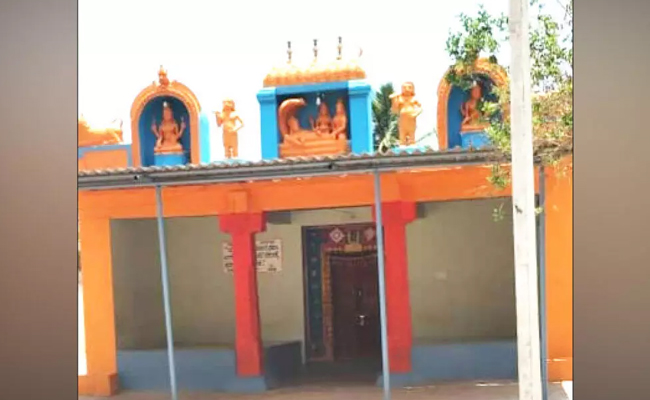
Tumakuru: Police in Turuvekere have arrested a 65-year-old man for allegedly obstructing a Dalit family from entering a temple and making caste-based remarks, officials said on Saturday.
The accused, identified as Rajanna, has been booked under provisions of the Scheduled Castes and Scheduled Tribes (Prevention of Atrocities) Act based on a complaint filed by Rangaramu T. of Thuyalahalli village.
According to the FIR, the incident took place on April 18 around 5:30 pm when Rangaramu T. and his family visited the Sri Ranganathaswamy temple in Mallur village to offer prayers. It states that the accused allegedly objected to their entry and made remarks referring to caste hierarchy and questioning their presence inside the temple premises.
The FIR further states that the accused made additional remarks asserting that such entry into the temple was not permitted and asked the family to leave. It also mentions that the complainant was subjected to mental harassment through these statements.
Following the complaint, DySP Om Prakash Gowda along with revenue officials and police visited the spot and conducted an inspection.
Further investigation is underway.