ISRO-NASA satellite NISAR scheduled to be launched by 2022

New Delhi: The NASA-ISRO Synthetic Aperture Radar (NISAR) satellite is expected to be launched by 2022 as India and the US have decided to share Space Situational Awareness Information, which will catalyze efforts to create the conditions for a safe and sustainable space environment.
The two sides also expressed the intent to continue the India-US Space Dialogue as well as discussions on areas of potential space defense cooperation.
A joint statement, issued after the 2+2 strategic dialogue between Defence Minister Rajnath Singh, External Affairs Minister S Jaishankar and their US counterparts Secretary of States Michael R Pompeo and Secretary of Defense Mark T Esper, said, "...the ministers applauded the ongoing collaboration between Indian Space Research Organisation (ISRO) and National Aeronautics and Space Administration, including on the NASA-ISRO Synthetic Aperture Radar (NISAR) satellite scheduled to be launched by 2022."
The space agencies of the two countries had signed an agreement in 2014 to conduct the joint NISAR mission to co-develop and launch a dual frequency synthetic aperture radar on an Earth observation satellite.
"The ministers also looked forward to sharing Space Situational Awareness information, which will catalyze efforts to create the conditions for a safe, stable, and sustainable space environment," it said.
The ministers welcomed the signing of a Memorandum of Understanding (MoU) for Technical Cooperation in Earth Observation and Earth Sciences between the Ministry of Earth Sciences and the US National Oceanic and Atmospheric Administration, the joint statement said.
The signing of MoU will be for developing a better understanding of the regional and global weather origins in the Indian Ocean and advancing common research goals in meteorology, oceanography, and management of living marine resources, it said.
Let the Truth be known. If you read VB and like VB, please be a VB Supporter and Help us deliver the Truth to one and all.
Deputy CM Shivakumar announces property ownership drive in Bengaluru
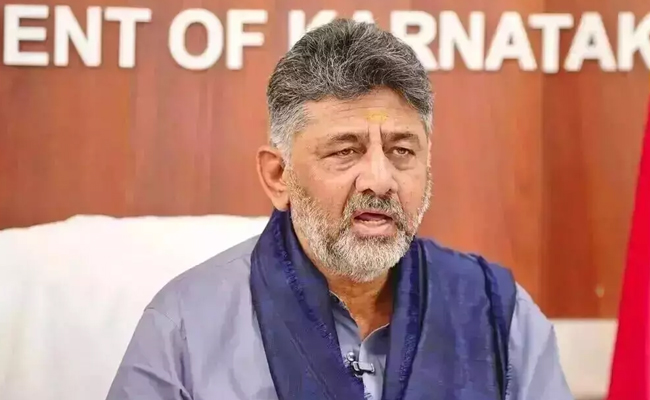
Bengaluru (PTI): Karnataka Deputy Chief Minister D K Shivakumar announced a major property ownership drive here aimed at correcting and regularising property records, saying the government had already rectified 23 lakh Khatas and enabled citizens to download their documents online.
Shivakumar, who also holds the Bengaluru Development portfolio, said the state government had begun converting B-Khatas into A-Khatas and would organise special Khata camps every Saturday across corporation limits from May 16 to help citizens secure their property documents.
A Khata is a legal document in Bengaluru certifying that a property complies with all local by-laws, regulations and has paid property taxes to the civic body.
“We have already corrected 23 lakh khatas and provided an opportunity for people to download them,” he said.
Shivakumar explained that the major campaign has been undertaken in Bengaluru to streamline property documentation.
The Deputy Chief Minister said between five and 10 centres would be set up in every corporation area as part of the “Khata Andolana” programme and urged citizens to participate in large numbers.
“I appeal to people to safeguard their property documents. We have created an opportunity for all citizens,” he said.
Calling it a "people-centric" initiative, Shivakumar said the government was working to ensure citizens received proper ownership documentation for their properties.
Shivakumar further claimed that the initiative had drawn national attention and said the Union government had recognised Karnataka with an award for the programme.
“Your Khata is your right. Obtain your Khata and protect yourself from fraud,” he said, while urging people to take advantage of the scheme.