ISRO to triple spacecraft output, launch Chandrayaan-4 in 2028: Chairman
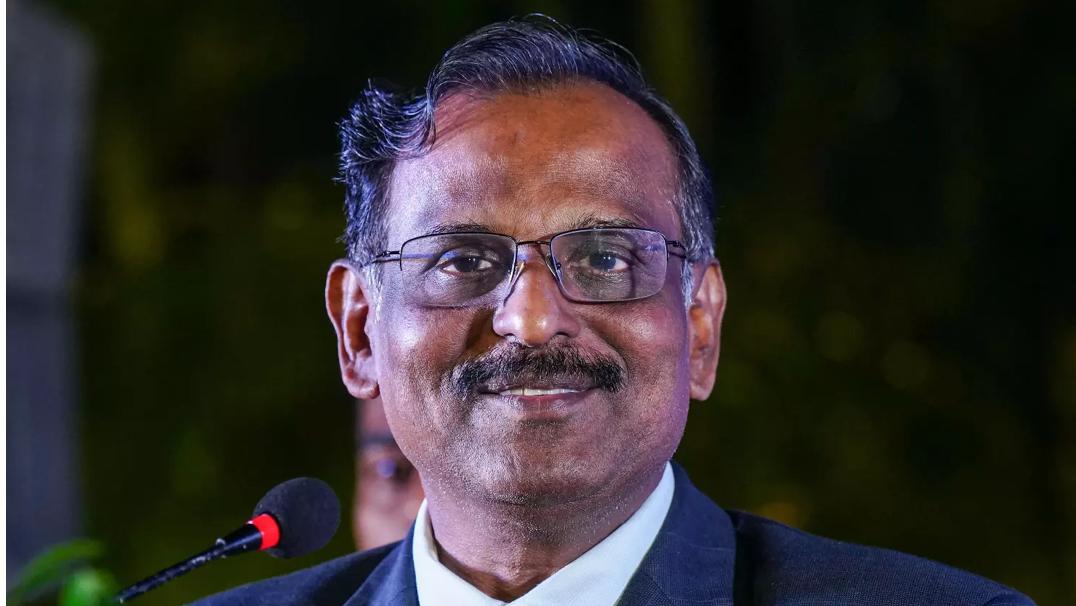
Kolkata (PTI): ISRO is gearing up for one of its busiest times with seven more launches planned this financial year, even as India's first human spaceflight remains scheduled for 2027, its chairman V Narayanan said.
In an interview with PTI, he said ISRO is preparing for a phase of rapid scaling in science, technology and industry capacity.
Narayanan said ISRO (Indian Space Research Organisation) is targeting seven more launches before the end of the current financial year, including a commercial communication satellite, and multiple PSLV and GSLV missions. A milestone will be the launch of the first PSLV manufactured entirely by the Indian industry.
The ISRO chief said the government has approved the Chandrayaan-4 mission, designed as a lunar sample-return mission and it will be India's most complex lunar endeavour yet.
"We are targeting 2028 for Chandrayaan-4," he said.
Another key mission is LUPEX, the joint lunar polar exploration programme with JAXA (Japan Aerospace Exploration Agency).
ISRO is simultaneously working to triple its annual spacecraft production in the next three years to keep pace with expanding mission demand.
Chandrayaan-4 will attempt to bring back samples from the moon -- a capability currently demonstrated only by the US, Russia and China.
LUPEX aims to study water ice at the lunar south pole.
Narayanan said ISRO has begun work on an Indian Space Station, targeted for completion by 2035.
"The first of the five modules will be placed in orbit by 2028," he said.
The endeavour would make India the third major nation to operate a space station, as the US-led ISS nears its end and China's Tiangong moves into full operation.
On India's maiden human-spaceflight mission, Gaganyaan, Narayanan clarified that only the timeframe for uncrewed missions has shifted.
"Let me make it clear: the uncrewed mission was targeted for 2025. The crewed mission was always planned for 2027, and we are holding on to that date," he said.
Three uncrewed test missions will precede the first flight with Indian astronauts.
He said Prime Minister Narendra Modi has also directed ISRO to work towards sending Indian astronauts to the lunar surface and bringing them back safely by 2040.
India's long-term human-spaceflight plan now aligns it with the world's leading space powers. The US plans lunar crewed missions under Artemis, while China has set a 2030 target for its first crewed moon landing.
India's share in the global space economy is currently around 2 per cent, and ISRO is working towards increasing it to 8 per cent by 2030, Narayanan said.
India's space economy is currently valued at around USD 8.2 billion and is projected to grow to USD 44 billion by 2033, while the global space economy, he said, stands at about USD 630 billion currently and could reach USD 1.8 trillion by 2035.
He said the space-sector reforms have sharply increased private participation.
Narayanan said more than 450 industries and 330 startups are now active in India's space ecosystem -- a massive rise from just three startups a few years ago.
"We now have a vibrant base ecosystem, and it will grow further," he said.
India's private space industry has accelerated post regulatory reforms in 2020, enabling private rocket development, satellite manufacture and commercial launch services.
Let the Truth be known. If you read VB and like VB, please be a VB Supporter and Help us deliver the Truth to one and all.
IPL final shifted for bigger stadium, not ticket issue: Shivakumar
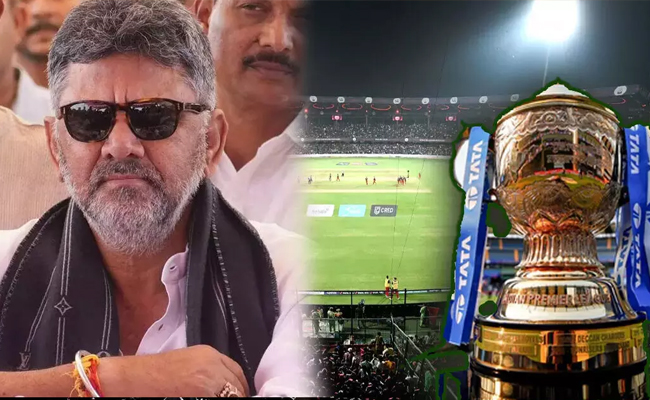
Bengaluru (PTI): Karnataka Deputy Chief Minister D K Shivakumar on Wednesday rubbished allegations that the IPL final venue was shifted from Bengaluru to Ahmedabad due to the distribution of tickets to MLAs.
Speaking to reporters, Shivakumar said the reason for the shift could be the availability of a larger stadium in Ahmedabad.
“Ahmedabad has a large stadium and can accommodate more spectators. That must be the reason the IPL final was shifted there. There is no connection between ticket distribution to MLAs and the venue change,” he said.
When asked about reports linking the venue shift to MLAs demanding tickets, he quipped, “In some places, 50 per cent of tickets are reserved.”
When reporters said the BCCI had indicated that the decision was linked to ticket issues, he responded, “Let them make such statements. I will respond appropriately.”
Bengaluru was originally expected to host the final as the Royal Challengers Bengaluru were the defending champions.
Ahmedabad will host the IPL final for a second successive season on May 31, the BCCI announced earlier in the day, while allotting Qualifier 1 to Dharamsala and two other playoff games to New Chandigarh.
The board, however, said the final venue was shifted “owing to certain requirements from the local association and authorities that were beyond the scope of BCCI’s established guidelines and protocols.”
Shivakumar declined to comment on the revocation of the suspension of Muslim leaders in Davanagere, saying it was a party decision.
Regarding the removal of MLC Naseer Ahmed as CM Siddaramaiah’s political secretary, he said the chief minister had already spoken on the matter.
“The CM has his own information. Party office-bearers have provided guidance. He was given certain responsibilities, which he did not handle properly, which is why he was removed,” Shivakumar said.
On MLC Abdul Jabbar, who resigned as the state Congress minority cell chief and was later expelled from the party, he said Jabbar had submitted his resignation, which the party accepted.
The Congress in Karnataka faced internal dissent in April when several Muslim leaders objected to the party fielding Samarth Shamanur as its candidate for the recently held Davanagere South Assembly bypoll.
They demanded that a Muslim candidate be fielded, citing the constituency’s substantial Muslim population. The party subsequently took disciplinary action against three leaders, including Jabbar and MLC Ahmed.
When asked about his and the CM’s visit to Delhi, he said, “We will go when the high command calls us. It is not appropriate to go without being called.”
On Congress supporting TVK in Tamil Nadu, Shivakumar said the decision was taken to keep the "BJP out of power and strengthen secular forces." Elections to the 234 Assembly constituencies were held on April 23, and the results were announced on May 4.
The Congress party, a long-time ally of the DMK, announced its support for TVK to form a government in Tamil Nadu and severed ties with the Dravidian major.
The incumbent DMK was trounced by the fledgling Tamilaga Vettri Kazhagam, led by Vijay, who secured 108 seats. “Despite pressure from the AIADMK and BJP, TVK did not align with them. Our party has taken this decision in the interest of secular forces and the welfare of Tamil Nadu,” Shivakumar said.