NASA's Curiosity rover tests new drilling method on Mars

Washington, May 24: After a mechanical problem took NASA Mars rover Curiosity's drill offline in December 2016, it has now successfully tested a new drilling method on the Red Planet, making a 50-millimetre deep hole in a target called "Duluth", NASA has said.
Engineers working with the Curiosity Mars rover have been hard at work testing a new way for the rover to drill rocks and extract powder from them.
On May 20, that effort produced the first drilled sample on Mars in more than a year, NASA said in a statement on Wednesday.
The new technique, called Feed Extended Drilling, keeps the drill's bit extended out past two stabiliser posts that were originally used to steady the drill against Martian rocks.
It lets Curiosity drill using the force of its robotic arm, a little more like the way a human would drill into a wall at home.
"The team used tremendous ingenuity to devise a new drilling technique and implement it on another planet," said Curiosity Deputy Project Manager Steve Lee of NASA's Jet Propulsion Laboratory in Pasadena, California.
"Those are two vital inches of innovation from 60 million miles away. We're thrilled that the result was so successful," Lee said.
Drilling is a vitally important part of Curiosity's capabilities to study Mars.
Inside the rover are two laboratories that are able to conduct chemical and mineralogical analyses of rock and soil samples.
The samples are acquired from Gale Crater, which the rover has been exploring since 2012.
"We've been developing this new drilling technique for over a year, but our job isn't done once a sample has been collected on Mars," said JPL's Tom Green, a systems engineer who helped develop and test Curiosity's new drilling method.
"With each new test, we closely examine the data to look for improvements we can make and then head back to our test bed to iterate on the process."
There's also the next step to work on -- delivering the rock sample from the drill bit to the two laboratories inside the rover.
As soon as this Friday, the Curiosity team will test a new process for delivering samples into the rover's laboratories, NASA said.
Let the Truth be known. If you read VB and like VB, please be a VB Supporter and Help us deliver the Truth to one and all.
KSRTC introduces gender ticketing in buses across Kerala
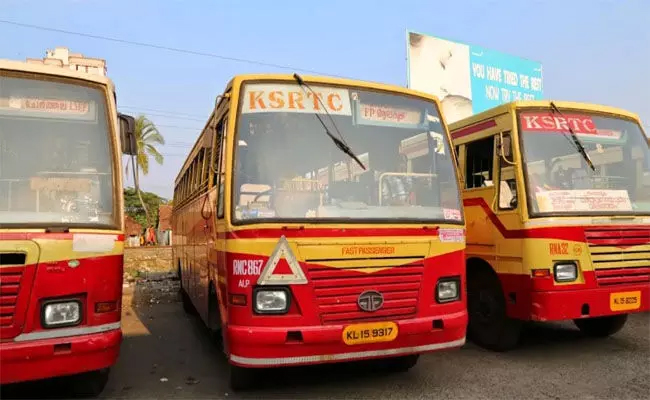
Thiruvananthapuram (PTI): The KSRCTC on Saturday began implementing gender ticketing in buses operating across the state.
According to a Kerala State Road Transport Corporation (KSRTC) circular issued on Friday, the gender ticketing system is intended to record whether a passenger is a woman, a man or a child in tickets issued on KSRTC buses from Saturday.
To facilitate the system, Electronic Ticketing Machines (ETMs) have been updated.
The circular stated that conductors in all KSRTC depots should record the gender category of passengers while issuing tickets through the ETMs.
Options for women, men, and children have been included in the ETMs to identify passenger categories when issuing tickets.
The printed tickets generated by the ETMs will also indicate the passenger's category, officials said.
The UDF had promised free KSRTC travel for women across the state during the Assembly election campaign.
UDF, which won 102 of 140 seats, would soon form the government after the Congress party finalises the discussion on the next Chief Minister.
The introduction of gender ticketing is being viewed as an effort to estimate the number of women travelling daily on KSRTC buses before implementing the poll promise.
Some conductors have reportedly raised concerns over the additional time required to record passenger details, especially during rush hours.