New bacterial species discovered aboard Tiangong Space Station by Chinese scinetists
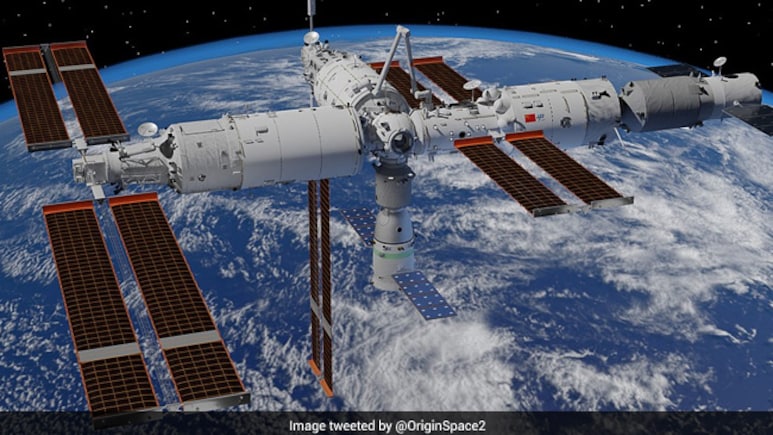
Chinese researchers have found a new, previously unknown bacteria species on the Tiangong Space Station, a Chinese modular space station in low Earth orbit. These findings are recorded in the International Journal of Systematic and Evolutionary Microbiology. The discovery has been formally named as Niallia tiangongensis. These findings were made from the microbial samples collected from multiple surfaces across the space station during the Shenzhou 15 mission, which landed on Earth in June 2023.
Characterized as aerobic, spore-forming and rod-shaped, these bacteria are genetically close to Niallia circulans, a terrestrial strain, this space-borne bacterium shows several different mutations. These differences, say the scientists, contain potential for further developing the knowledge of microbial life outside Earth.
One notable trait of Niallia tiangongensis is its ability to hydrolyse gelatin, a biochemical process that could prove advantageous in nutrient-scarce settings. The bacterium further demonstrates specialized structural and functional divergence within two proteins crucial to biofilm development, defense against oxidative stress, and repair from radiation damage. These characteristics indicate special adaptations that can allow the organism to survive in space, where one is exposed to continuous bombardment by toxic radiation, microgravity, and scarce resources with which to fight survival.
Although it is the first such discovery on Tiangong, it is not unusual. Bacterial experiments on the International Space Station already have yielded new bacterial isolates, some of which will come in handy for future efforts to grow food on Mars. Even within the spotless walls of NASA clean rooms, places intended to be nearly microbe-free, researchers recently discovered 26 new species of bacteria.
Let the Truth be known. If you read VB and like VB, please be a VB Supporter and Help us deliver the Truth to one and all.
Lt Gen NS Raja Subramani to be India's next Chief of Defence Staff
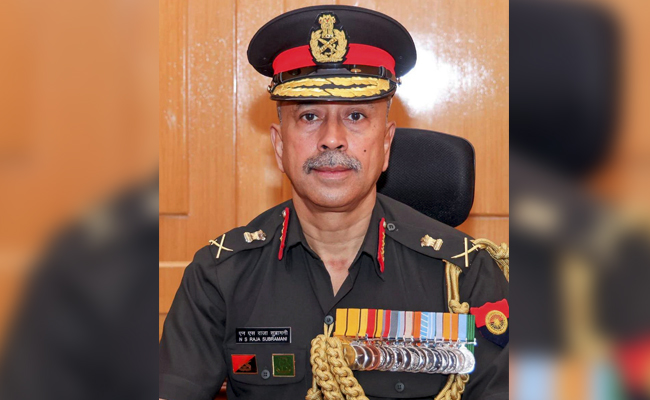
New Delhi (PTI): Lt Gen NS Raja Subramani will be India's new Chief of Defence Staff (CDS) and his key task is set to be to implement the ambitious theaterisation plan that seeks to ensure tri-services synergy.
He will succeed Gen Anil Chauhan whose tenure will come to an end on May 30.
Gen Chauhan, a former Eastern Army Commander, took charge as the country's senior-most military commander in September 2022, over nine months after the first CDS, General Bipin Rawat, died in a helicopter crash in Tamil Nadu.
The government has appointed Lt Gen NS Raja Subramani (Retd) as the Chief of Defence Staff, who will also function as the secretary of the Department of Military Affairs, the defence ministry said on Saturday.
Lt Gen Subramani is currently serving as the military adviser to the National Security Council Secretariat.
Prior to that, he was the Vice Chief of the Army Staff from July 1, 2024 to July 31, 2025, and was General Officer Commanding-in-Chief of the Central Command from March 2023 till June 2024.
As Chief of Defence Staff, Lt Gen Subramani's primary task will be to implement the theaterisation model to bring in tri-services synergy by rolling out integrated military commands.
The officer is a graduate of the National Defence Academy and the Indian Military Academy. He was commissioned into the eighth battalion of the Garhwal Rifles on December 14, 1985.
Lt Gen Subramani is an alumnus of Joint Services Command Staff College, Bracknell (UK), and the National Defence College, New Delhi. He holds a Master of Arts degree from King's College London and an MPhil in defence studies from Madras University.
In his illustrious career spanning over 40 years, Lt Gen Subramani has served across a wide spectrum of conflict and terrain profiles and tenanted a host of Command, Staff and Instructional appointments.
He commanded the 16 Garhwal Rifles in Counter-Insurgency operations in Assam as part of Operation Rhino, the 168 Infantry Brigade in Jammu and Kashmir, and the 17 Mountain Division in the Central Sector, all during a challenging operational environment.
He also has the distinction of commanding two Corps, including the Indian Army's premier strike Corps on the Western Front.