New study suggests organic molecules on Ceres came from Asteroids, not volcanoes
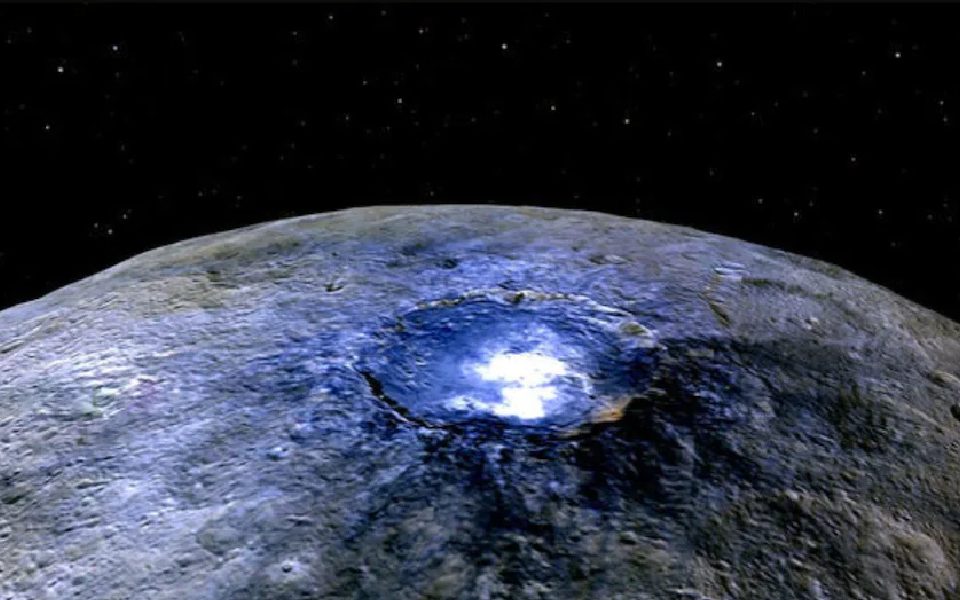
Recent findings from NASA's Dawn spacecraft have led scientists to reconsider how organic molecules ended up on the dwarf planet Ceres. Previously, it was believed that cryovolcanic activity—volcanoes that erupt icy materials—in Ceres' interior brought these organic compounds to the surface. However, new research from the Max Planck Institute for Solar System Research (MPS) in Germany suggests a different origin.
The study indicates that organic molecules on Ceres were likely deposited by asteroid impacts rather than being formed internally through volcanic processes. By analyzing spectral imaging data from the Dawn spacecraft, scientists mapped areas rich in organic materials and found they were not located near cryovolcanic sites.
Ranjan Sarkar, a scientist involved in the study, pointed out that these organic deposits are rare and not linked to volcanic features, challenging the earlier belief that volcanoes were responsible for bringing organic materials to the surface.
Further analysis suggests that slow-moving asteroids from the outer asteroid belt could be the source of these organic compounds. Due to their low impact speeds, the heat generated during collisions is insufficient to destroy the organic molecules, allowing them to remain on Ceres' surface.
Martin Hoffmann, another researcher at MPS, highlighted that there is no evidence of volcanic or tectonic activity in the areas where these organic compounds are found. This supports the theory that the organic materials were delivered from space by asteroid impacts rather than from within the planet itself.
Let the Truth be known. If you read VB and like VB, please be a VB Supporter and Help us deliver the Truth to one and all.
Lt Gen NS Raja Subramani to be India's next Chief of Defence Staff
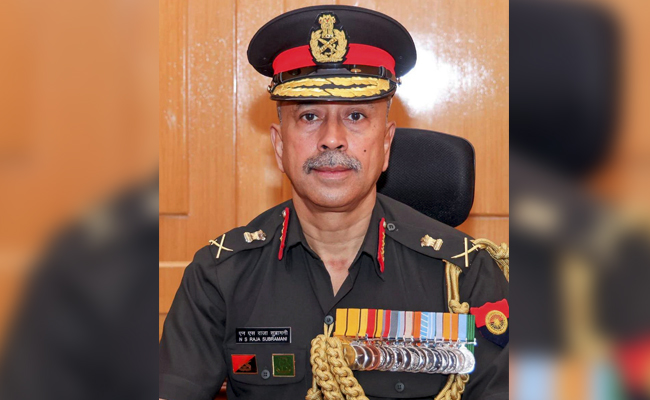
New Delhi (PTI): Lt Gen NS Raja Subramani will be India's new Chief of Defence Staff (CDS) and his key task is set to be to implement the ambitious theaterisation plan that seeks to ensure tri-services synergy.
He will succeed Gen Anil Chauhan whose tenure will come to an end on May 30.
Gen Chauhan, a former Eastern Army Commander, took charge as the country's senior-most military commander in September 2022, over nine months after the first CDS, General Bipin Rawat, died in a helicopter crash in Tamil Nadu.
The government has appointed Lt Gen NS Raja Subramani (Retd) as the Chief of Defence Staff, who will also function as the secretary of the Department of Military Affairs, the defence ministry said on Saturday.
Lt Gen Subramani is currently serving as the military adviser to the National Security Council Secretariat.
Prior to that, he was the Vice Chief of the Army Staff from July 1, 2024 to July 31, 2025, and was General Officer Commanding-in-Chief of the Central Command from March 2023 till June 2024.
As Chief of Defence Staff, Lt Gen Subramani's primary task will be to implement the theaterisation model to bring in tri-services synergy by rolling out integrated military commands.
The officer is a graduate of the National Defence Academy and the Indian Military Academy. He was commissioned into the eighth battalion of the Garhwal Rifles on December 14, 1985.
Lt Gen Subramani is an alumnus of Joint Services Command Staff College, Bracknell (UK), and the National Defence College, New Delhi. He holds a Master of Arts degree from King's College London and an MPhil in defence studies from Madras University.
In his illustrious career spanning over 40 years, Lt Gen Subramani has served across a wide spectrum of conflict and terrain profiles and tenanted a host of Command, Staff and Instructional appointments.
He commanded the 16 Garhwal Rifles in Counter-Insurgency operations in Assam as part of Operation Rhino, the 168 Infantry Brigade in Jammu and Kashmir, and the 17 Mountain Division in the Central Sector, all during a challenging operational environment.
He also has the distinction of commanding two Corps, including the Indian Army's premier strike Corps on the Western Front.