Scientists convert plant matter into chemicals

San Francisco, May 20: A team led by an Indian-origin scientist from Sandia National Laboratories in California has demonstrated a new technology based on bio-engineered bacteria that can make it economically feasible to produce chemicals from renewable plant sources.
The technology converts tough plant matter, called lignin, for wider use of the energy source and making it cost competitive.
"For years, we have been researching cost-effective ways to break down lignin and convert it into valuable platform chemicals," Sandia bioengineer Seema Singh said.
"We applied our understanding of natural lignin degraders to E. coli because that bacterium grows fast and can survive harsh industrial processes," she added in the work published in the "Proceedings of the National Academy of Sciences of the United States of America".
Lignin is the component of plant cell walls that gives them their incredible strength. It is brimming with energy but getting to that energy is so costly and complex that the resulting biofuel can't compete economically with other forms of transportation energy.
Once broken down, lignin has other gifts to give in the form of valuable platform chemicals that can be converted into nylon, plastics, pharmaceuticals and other valuable products.
Singh and her team have solved three problems with turning lignin into platform chemicals: cost, toxicity and speed.
Engineering solutions like these, which overcome toxicity and efficiency issues have the potential to make biofuel production economically viable.
"Now we can work on producing greater quantities of platform chemicals, engineering pathways to new end products, and considering microbial hosts other than E. coli," Singh said.
Let the Truth be known. If you read VB and like VB, please be a VB Supporter and Help us deliver the Truth to one and all.
KSRTC introduces gender ticketing in buses across Kerala
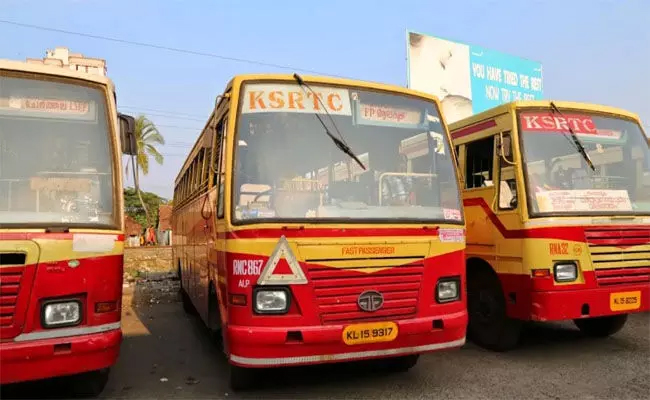
Thiruvananthapuram (PTI): The KSRCTC on Saturday began implementing gender ticketing in buses operating across the state.
According to a Kerala State Road Transport Corporation (KSRTC) circular issued on Friday, the gender ticketing system is intended to record whether a passenger is a woman, a man or a child in tickets issued on KSRTC buses from Saturday.
To facilitate the system, Electronic Ticketing Machines (ETMs) have been updated.
The circular stated that conductors in all KSRTC depots should record the gender category of passengers while issuing tickets through the ETMs.
Options for women, men, and children have been included in the ETMs to identify passenger categories when issuing tickets.
The printed tickets generated by the ETMs will also indicate the passenger's category, officials said.
The UDF had promised free KSRTC travel for women across the state during the Assembly election campaign.
UDF, which won 102 of 140 seats, would soon form the government after the Congress party finalises the discussion on the next Chief Minister.
The introduction of gender ticketing is being viewed as an effort to estimate the number of women travelling daily on KSRTC buses before implementing the poll promise.
Some conductors have reportedly raised concerns over the additional time required to record passenger details, especially during rush hours.