Scientists find water on sunlit surface of Moon
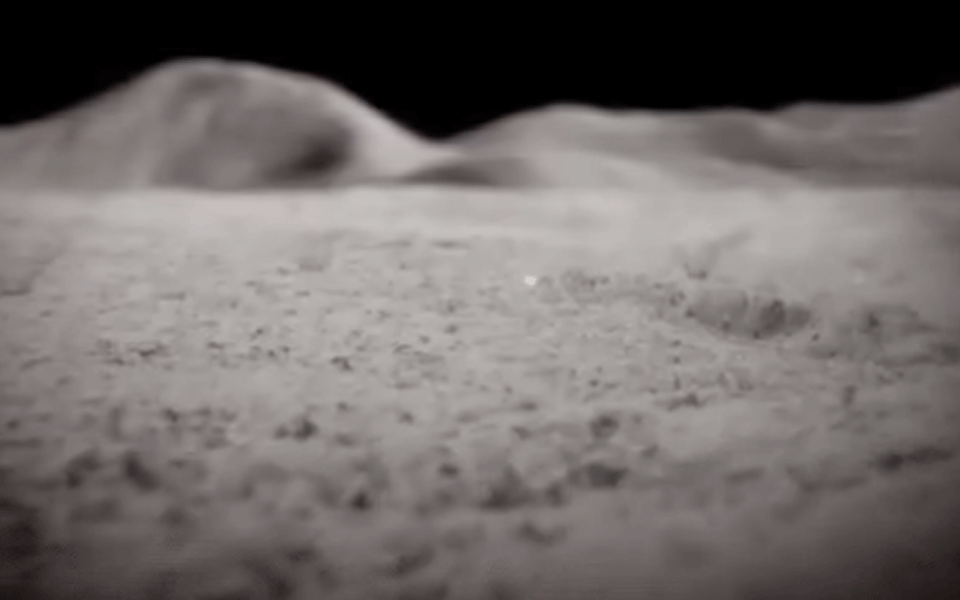
Washington: Scientists have confirmed, for the first time, the presence of water on the sunlit surface of the Moon, a discovery which indicates that water molecules may be distributed across the lunar surface, and not limited to the cold, shadowed places as previously thought.
Using NASA's Stratospheric Observatory for Infrared Astronomy (SOFIA), the researchers, including those from the University of Hawaii in the US, detected water molecules (H2O) in Clavius Crater -- one of the largest craters visible from the Earth, located in the Moon's southern hemisphere.
While earlier studies of the Moon's surface, including those conducted during the Indian Space Research Organisation's (ISRO) Chandrayaan-1 mission, detected some form of hydrogen, the NASA scientists said these were unable to distinguish between water and its close chemical relative, hydroxyl (OH).
Data from the current study, published in the journal Nature Astronomy, revealed that the Clavius Crater region has water in concentrations of 100 to 412 parts per million -- roughly equivalent to a 12-ounce bottle of water -- trapped in a cubic meter of soil spread across the lunar surface.
As a comparison, the researchers said the Sahara desert has 100 times the amount of water than what SOFIA detected in the lunar soil.
"Prior to the SOFIA observations, we knew there was some kind of hydration. But we didn't know how much, if any, was actually water molecules -- like we drink every day -- or something more like drain cleaner," said Casey Honniball, the lead author of the study from the University of Hawaii.
Despite the small amounts, they said the discovery raises new questions about how water is created and how it persists on the harsh, airless lunar surface.
"We had indications that H2O -- the familiar water we know -- might be present on the sunlit side of the Moon. Now we know it is there. This discovery challenges our understanding of the lunar surface and raises intriguing questions about resources relevant for deep space exploration," said Paul Hertz, director of the Astrophysics Division in the Science Mission Directorate at NASA Headquarters in Washington.
Whether the water SOFIA found is easily accessible for use as a resource remains to be determined, the researchers added. According to the scientists, SOFIA offered a new means of looking at the Moon, flying at altitudes of up to 45,000 feet.
They said the modified Boeing 747SP jetliner with a 106-inch diameter telescope reaches above 99 per cent of the water vapor in the Earth's atmosphere to get a clearer view of radiation from the universe in the infrared wavelength.
Using its Faint Object infraRed CAmera for the SOFIA Telescope (FORCAST), the researchers said SOFIA was able to pick up the specific wavelength unique to water molecules and discovered a relatively surprising concentration in the sunny Clavius Crater.
"Without a thick atmosphere, water on the sunlit lunar surface should just be lost to space. Yet somehow we're seeing it. Something is generating the water, and something must be trapping it there," Honniball said.
The scientists believe several forces could be at play in the delivery or creation of this water.
One possibility they said could be from micrometeorites raining down on the lunar surface, carrying small amounts of water, which may deposit the water on the lunar surface upon impact.
The researchers hypothesised that there may also be a two-step process whereby the Sun's solar wind delivers hydrogen to the lunar surface and causes a chemical reaction with oxygen-bearing minerals in the soil to create hydroxyl.
Meanwhile, they said radiation from the bombardment of micrometeorites could be transforming that hydroxyl into water.
Commenting on how the water was stored on the lunar surface, the scientists noted that the water could be trapped into tiny beadlike structures in the soil that form out of the high heat created by micrometeorite impacts.
Another possibility is that the water could be hidden between grains of lunar soil and sheltered from the sunlight --potentially making it a bit more accessible than water trapped in beadlike structures, they noted in a statement.
"It was, in fact, the first time SOFIA has looked at the Moon, and we weren't even completely sure if we would get reliable data, but questions about the Moon's water compelled us to try," said Naseem Rangwala, SOFIA's project scientist at NASA's Ames Research Center in the US.
"It's incredible that this discovery came out of what was essentially a test, and now that we know we can do this, we're planning more flights to do more observations," Rangwala added.
Let the Truth be known. If you read VB and like VB, please be a VB Supporter and Help us deliver the Truth to one and all.
Deputy CM Shivakumar announces property ownership drive in Bengaluru
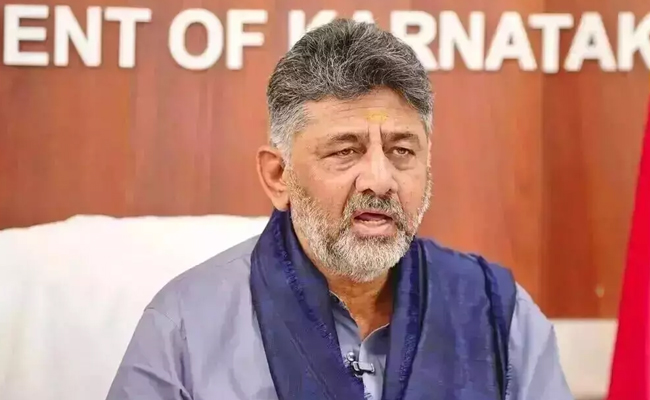
Bengaluru (PTI): Karnataka Deputy Chief Minister D K Shivakumar announced a major property ownership drive here aimed at correcting and regularising property records, saying the government had already rectified 23 lakh Khatas and enabled citizens to download their documents online.
Shivakumar, who also holds the Bengaluru Development portfolio, said the state government had begun converting B-Khatas into A-Khatas and would organise special Khata camps every Saturday across corporation limits from May 16 to help citizens secure their property documents.
A Khata is a legal document in Bengaluru certifying that a property complies with all local by-laws, regulations and has paid property taxes to the civic body.
“We have already corrected 23 lakh khatas and provided an opportunity for people to download them,” he said.
Shivakumar explained that the major campaign has been undertaken in Bengaluru to streamline property documentation.
The Deputy Chief Minister said between five and 10 centres would be set up in every corporation area as part of the “Khata Andolana” programme and urged citizens to participate in large numbers.
“I appeal to people to safeguard their property documents. We have created an opportunity for all citizens,” he said.
Calling it a "people-centric" initiative, Shivakumar said the government was working to ensure citizens received proper ownership documentation for their properties.
Shivakumar further claimed that the initiative had drawn national attention and said the Union government had recognised Karnataka with an award for the programme.
“Your Khata is your right. Obtain your Khata and protect yourself from fraud,” he said, while urging people to take advantage of the scheme.