AltNews debunks viral image claiming Pakistani parents lock daughters' graves to prevent rape
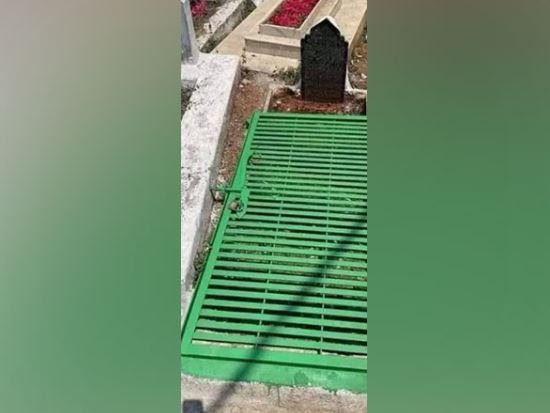
New Delhi: An image of a padlocked grave has been circulating on social media with a false claim that parents in Pakistan are locking their daughters' graves to prevent rape. The image has been used by several major news media outlets, including The Times of India, NDTV, TV9, and News18, in their reports on rising cases of necrophilia in Pakistan.

Other media outlets including Mirror Now, ThePrint, India Today, Wion, IndiaTV, Times Now, DNA India, OpIndia Hindi, News24, ABP News, Amar Ujala, News18, Firstpost and Jagran used the same image in their respective reports. Most of these stories were from the syndicated feed of ANI.

Harris Sultan, who is the author of the book ‘The Curse of God – Why I Left Islam’, tweeted the same image and claimed that it was clicked in Pakistan which had a “horny, sexually frustrated society”. He added, “…..When you link the burqa with rape, it follows you to the grave”. A number of the news media outlets mentioned above have used Harris’ tweet in their reports.

However, a fact-check report by Alt News has found that the image is actually from a cemetery in Hyderabad, India. The cemetery is located opposite Masjid E Salar Mulk in Darab Jung Colony, Madannapet, Hyderabad. Alt News contacted a social worker named Abdul Jaleel, who visited the spot and provided photographs of the grave in question. A comparison of these images with the viral image establishes that they depict the same grave.

According to Muqtar Sahab, the Muazzin of the Masjid E Salar Mulk, the padlocked grave was constructed without the permission of the concerned committee and is located right in front of the entrance, blocking the pathway. The grille or jaali was constructed to prevent people from burying bodies without permission and to prevent others from stamping on the grave since it was right in front of the entrance. The grave belonged to an aged woman who had passed away in her seventies, and her son constructed the grille over the grave about 40 days after she had been buried.
Alt News' fact-check report concludes that the padlock had nothing to do with necrophilia or Pakistan and that the image has been circulating with false claims. The report also notes that several major news media outlets used the image in their reports without verifying the claim.
Pakistani parents lock daughters' graves to avoid rape
— ANI Digital (@ani_digital) April 29, 2023
Read @ANI Story | https://t.co/2vbtYavyj5#Pakistan #necrophiliacases #sexualharassment #crime pic.twitter.com/1AndHMUXlZ
Pakistani parents lock daughters' graves to avoid rape https://t.co/YarziUwwWI
— The Times Of India (@timesofindia) April 29, 2023
Let the Truth be known. If you read VB and like VB, please be a VB Supporter and Help us deliver the Truth to one and all.
Allahabad HC orders probe into 'reinstatement' of teacher in UP's Barabanki
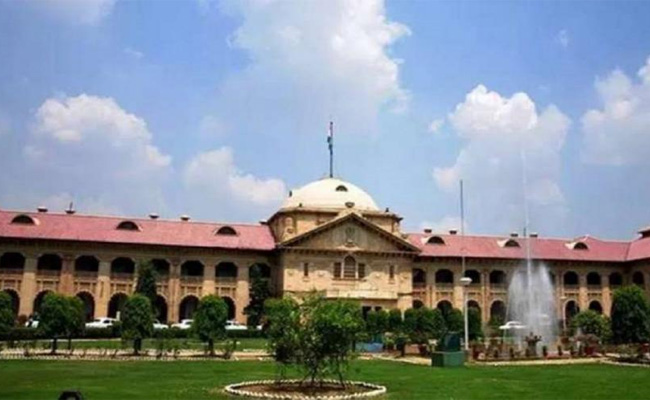
Lucknow (PTI): The Lucknow Bench of the Allahabad High Court on Friday ordered a probe by the special task force (STF) into alleged irregularities in the rejoining of a teacher at City Intermediate College in Barabanki, observing that the reinstatement appeared to be prima facie illegal.
The court also directed the recovery of the salary paid to the teacher during the disputed period.
A bench of Justice Rajeev Singh passed the order on a petition filed by the college management committee. The court expressed doubts over the roles of the District Inspector of Schools (DIOS), Barabanki, the college principal and the teacher concerned and hence, directed a detailed inquiry into the matter.
Taking note of alleged manipulation of records and misleading submissions, the court ordered the immediate transfer of the Barabanki DIOS to ensure a fair probe. It also directed the initiation of disciplinary proceedings against the then joint director of education of the Ayodhya division.
In its order, the court found that the teacher, Abhay Kumar, was initially appointed as an assistant teacher in 2018 but joined an Eklavya Model Residential School in Chhattisgarh as a lecturer in June 2024 without obtaining permission from the management. His subsequent request to retain the lien was rejected.
Despite this, he was allowed to rejoin the Barabanki College in September 2025 on the directions of the joint director of education and the DIOS, and was even paid the salary for October 2025. The court termed the rejoining "wholly illegal" and lacking any legal basis.
The bench also expressed concern over lapses in communication within the education department and directed the Uttar Pradesh chief secretary to ensure that official orders are communicated through email and WhatsApp as well, to prevent disputes.
The matter is next listed for hearing on May 28 when a compliance report is sought.