Amidst allegations of Rs. 666 crores corruption by kin of BSY, Twitterati demand CM’s resignation
#BSY_Must_Resign among top-trending hashtags on Twitter in Karnataka
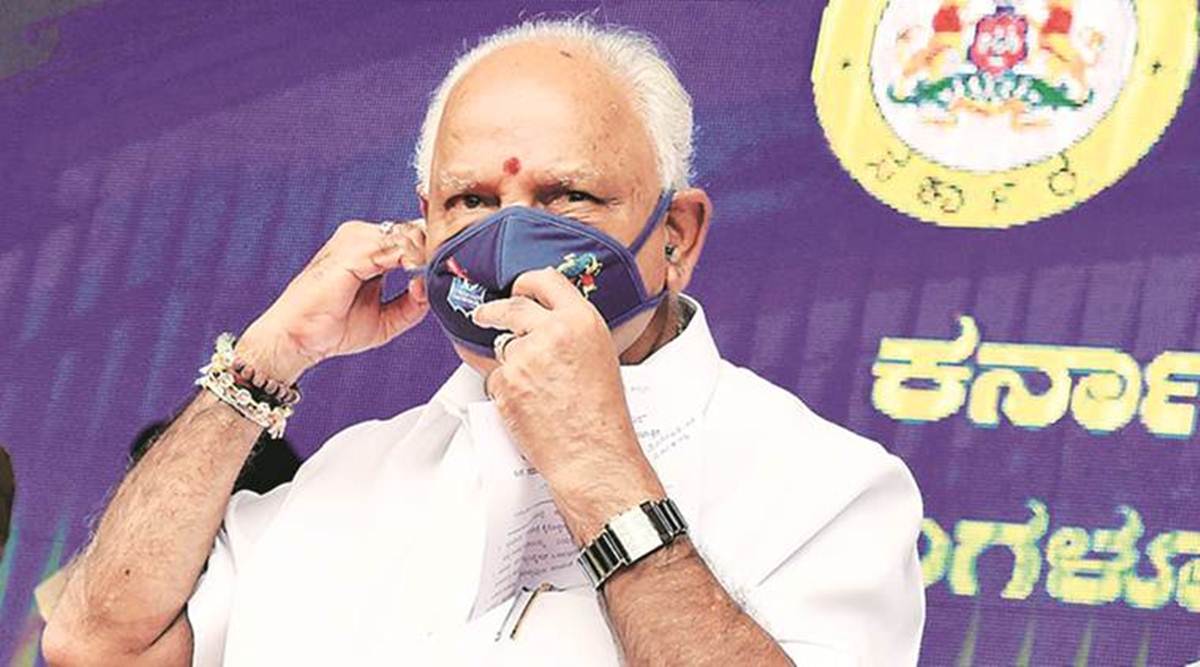
Bengaluru: After the Congress party leveled charges of corruption against the kin of Karnataka CM BS Yediyurappa, Twitter users on Wednesday sought the resignation of the Chief Minister. Congress also led a campaign on the micro-blogging site with hashtag #BSY_Must_Resign.
The campaign soon caught pace and grossed nearly 10,000 tweets in a short period of time. The hashtag was also among the top three trending hashtags in Karnataka.
Earlier, in a press release, the Congress party had alleged that the son-in-law and son of Yediyurappa were “caught red-handed” asking for bribing in a project of construction of apartments by Bangalore Development Authority (BDA). It had added that the revelation had “bewildered, shocked and appalled everyone”.
KPCC President DK Shivakumar in a tweet “CM Yediyurappa & his family have been caught taking a bribe in an alleged ₹666 crore BDA construction project scam.” He also called for a probe by a sitting SC Judge or by the CJ of Karnataka HC.
The official handle of the Indian National Congress added that the democratic functioning of the Karnataka government is under a serious threat.
“Karnataka is fast becoming a combination of the two under the Yeddyurappa Govt,” AICC General Secretary Randeep Surjewala wrote on Twitter.
In the campaign, Congress leaders also noted that there were call recordings and WhatsApp chats clearly showing that CM, his son, grandson, and son-in-law were actively involved in corruption and bribery in the project. It was also alleged that the bribe was transferred via 7 shell companies in the bank.
Adding that Karnataka had turned into a ‘Gunda Raj’ users also said that it was “Vijayendra Service Tax” that the CM and his family were collecting for working in Karnataka. The hashtag #VijayendraServiceTax was also among those trending in the state.
Here are some of the tweets from Thursday's Twitter campaign against the Karnataka Chief Minister BS Yediyurappa.
NOTE: The claims made in the tweets embedded below or the ideas presented in them are those solely of the users. Vartha Bharati does not guarantee the authenticity of any of the claims or does not necessarily endorse, support the ideas, views posted by any of the users.
CM Yediyurappa & his family have been caught taking a bribe in an alleged ₹666 crore BDA construction project scam.
— DK Shivakumar (@DKShivakumar) September 23, 2020
We demand a time bound probe by a sitting SC judge or by the CJ of the Karnataka HC.
CM Yediyurappa must resign or should be sacked by BJP.#BSY_Must_Resign pic.twitter.com/XEOPoPucR0
The democratic functioning of the Govt of Karnataka is under a serious threat.
— Congress (@INCIndia) September 23, 2020
The allegations against the ruling BJP dispensation in Karnataka need to go under judicial scrutiny immediately.#BSY_Must_Resign#VijayendraServiceTax pic.twitter.com/tWHoVjvo20
Mahatma Gandhi said-
— Randeep Singh Surjewala (@rssurjewala) September 23, 2020
“Misgovernance & corruption always go together”
Karnataka is fast becoming a combination of the two under the Yeddyurappa Govt
Deafening noise of corruption allegations has once again engulfed the Yeddyurappa Govt#BSY_Must_Resign #VijayendraServiceTax pic.twitter.com/YFGIpCPEIo
CM Yediyurappa & Family caught in yet another scam
— Srivatsa (@srivatsayb) September 23, 2020
?Scam in ₹666 cr building tender
?Yeddy's son, grandson & son-in-law allegedly took crores in bribes
?Cash & Bank Transfers via 7 shell companies@narendramodi is this 'Na Khaunga'?#VijayendraServiceTax#BSY_Must_Resign
CM Yediyurappa & Family caught in yet another scam
— Srivatsa (@srivatsayb) September 23, 2020
?Scam in ₹666 cr building tender
?Yeddy's son, grandson & son-in-law allegedly took crores in bribes
?Cash & Bank Transfers via 7 shell companies@narendramodi is this 'Na Khaunga'?#VijayendraServiceTax#BSY_Must_Resign
Ever since the bjp Govt has come to power in Karnataka its reeking of corruption Profits during pandemic, bribes for transfers & extortion is the norm of the day.
— Lavanya Ballal | ಲಾವಣ್ಯ ಬಲ್ಲಾಳ್ (@LavanyaBallal) September 23, 2020
CM’s kin has been caught red handed demanding bribes in ₹666 BDAproject.
#BSY_Must_Resign
#VijayendraServiceTax pic.twitter.com/FJ6KdD3klT
Stunning revelations against @BSYBJP and his family in a scam involving ₹666 crore in a building tender.PC at KPCC,Bangalore by @rssurjewala @DKShivakumar @siddaramaiah and other leaders.#VijayendraServiceTax#BSY_Must_Resign https://t.co/q7l1crhcHq
— Nayana Jhawar /Nayana Motamma (@NayanaJhawar) September 23, 2020
Appalling that Karnataka CM BS Yeddyurappa's son #Vijayendra & grandson Shashidhar Maradi are seemingly involved in an allegedly corrupt scheme. Talk of #VijayendraServiceTax has been swirling for a month, from BJP legislators themselves. #BSY_Must_Resignhttps://t.co/WoTu35mZOB
— Santhosh D'Souza (@santhoshd) September 23, 2020
Corruption is in the blood of BJP Leaders !
— Rohan Gupta (@rohanrgupta) September 23, 2020
Shocking evidences of Corruption by
CM Yediyurappa's family !
But they are immune from Modi Army of agencies !
#BSY_Must_Resign pic.twitter.com/C9S4kPNT6F
Yeh another scam by BJP Govt‼️
— Ankit Mayank (@mr_mayank) September 23, 2020
A mega scam worth ₹666 crores in a building tender!
Staunching evidences has been found against CM Yediyurappa & his Family. Such Repeat offenders!
Where is @narendramodi ? "Nah Khaunga Nah Khane Dunga?"#BSY_Must_Resign #VijayendraServiceTax https://t.co/Y7bBmGT30h
A corrupt man Always has a Price
— The Priyanca ✋ (@priyancapatil8) September 23, 2020
The BJP has proved it yet again that corruption is second nature to them.This is unacceptable.#BSY_Must_Resign#VijayendraService pic.twitter.com/jzotoay3KT
BS Yediyurappa and Family Didn't Learn A Lesson Even After Being Previously Jailed Under Corruption Charges
— Rahul Mk | ರಾಹುಲ್ ಮನೋಜ್ ಕುಮಾರ್ (@RahulManojkumar) September 23, 2020
Now - Scam In Building Tender Worth ₹.666Cr#VijayendraServiceTax#BSY_Must_Resign @rssurjewala pic.twitter.com/y7IcPoTsgu
CM Yediyurappa thought changing the spelling of his name will change his habits
— Haris Butt?? (@harisbutt142) September 23, 2020
BUT AGAIN
?₹666 cr scam in building tender
?Yediyurappa' son, grandson & son-in-law took crores in bribes
?Cash & Bank Transfers via 7 shell companies#VijayendraServiceTax#BSY_Must_Resign pic.twitter.com/fs63kbHraC
India is busy in fighting With Corona & Modi Jungle Raj,but people of Karnatak is having 1more trouble ,Mr @BSYBJP & his son started thr own Service Tax,if u wanna Work in Karnataka ,thn first pay Vijendra service Tax & Thn work.@srivatsayb#BSY_Must_Resign#VijayendraServiceTax
— chetan (@chetan4_U) September 23, 2020
Once again,Yeddy ji does what he's best at...Evn during a Pandemic,he lost no opportunity in minting goodies?? Ths time,its a whopping ₹666 crores,wth d connivance of his family?Y is d media outrage missin? Whr r d CBI,IT,ED, etc???@siddaramaiah @DKShivakumar#BSY_Must_Resign https://t.co/Fpdo6RF6ZF
— Shree Speaks (@StayingReal0511) September 23, 2020
Scam Alert‼️
— ? ? (@southcongressi) September 23, 2020
Scam of ₹666 cr building tender
The grandson and son in law of Chief Minster BS Yeddyurappa have shocked Nation
Is this not a clear cut case of money laundering and an offence under The Prevention of Money Laundering Act?#BSY_Must_Resign#VijayendraServiceTax
Let the Truth be known. If you read VB and like VB, please be a VB Supporter and Help us deliver the Truth to one and all.
HC says Bhojshala complex is Goddess Saraswati temple, scraps ASI order on namaz on premises
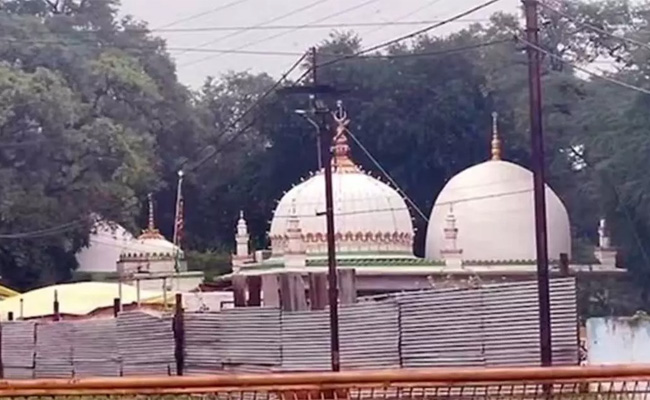
Indore (PTI): In a big win for the Hindu side, the Madhya Pradesh High Court on Friday declared that the disputed Bhojshala complex in Dhar district is a temple dedicated to Goddess Saraswati, and the Centre and ASI can decide on its administration and management.
The HC's Indore bench, which was hearing the case, also said the Muslim community, which called the 11th century monument Kamal Maula Mosque, may approach the state government for allotment of separate land in the district for construction of a mosque.
In its much-awaited verdict in the Bhojshala Temple-Kamal Maula Mosque complex dispute, the court observed that there were indications of a Sanskrit teaching centre and a temple of Goddess Saraswati existing in Bhojshala.
The religious character of the disputed complex of Bhojshala-Kamal Maula Mosque indicates it is a temple of Goddess Saraswati, noted the HC.
ALSO READ: Bihar CM walks to secretariat from official residence after PM's appeal to spend wisely
"If the Maulana Kamaluddin Welfare Society applies for land allotment for building a mosque in Dhar district, the state government can consider it," maintained the division bench.
The HC scrapped the 2003 Archaeological Survey of India (ASI) order which allowed Muslims to offer Friday prayers on Bhojshala premises.
Nearly 1,200 police personnel were deployed in and around the complex ahead of the HC ruling.
Dhar Collector Rajeev Ranjan Meena warned of strict action against anyone spreading objectionable content on social media, as the administration erected barricades at the site where Friday prayers coincided with the court verdict.
The long-running dispute pertains to the religious nature of the ASI-protected monument in Dhar district.
The Hindu community considers Bhojshala to be a temple dedicated to Vagdevi (Goddess Saraswati), while the Muslim side calls the monument Kamal Maula Mosque. A petitioner from the Jain community claims the disputed complex is a medieval Jain temple and gurukul.
After the controversy over the Bhojshala complex erupted, the ASI issued an order on April 7, 2003, permitting Hindus to worship at the complex every Tuesday and Muslims to offer namaz there every Friday. The Hindu side challenged the order in the HC, seeking exclusive rights to worship at the complex.
A division bench of Justices Vijay Kumar Shukla and Alok Awasthi of the HC's Indore bench began regular hearings on five petitions and one writ appeal related to the case on April 6 this year.
After hearing all the parties against the backdrop of differing religious beliefs, historical claims, complex legal provisions, and thousands of documents related to the disputed monument, the bench had reserved its decision on May 12.
During the hearing, petitioners from the Hindu, Muslim, and Jain communities presented detailed arguments and sought exclusive worship rights for their communities at the monument.
The ASI, after conducting a scientific survey of the monument, indicated in its over 2,000-page report that a massive structure dating back to the reign of the Parmar kings of Dhar predated the mosque, and that the current disputed structure was built using repurposed temple components.
The Hindu side claimed that coins, sculptures, and inscriptions found by the ASI during its scientific survey prove the complex was originally a temple.
However, the Muslim side argued in court that the ASI's survey report was "biased" and prepared to support the claims of the Hindu petitioners.
Refuting this, the ASI told the court the scientific survey process was carried out with the help of experts, including three from the Muslim community.
The HC had ordered the ASI to conduct a scientific survey of the Bhojshala Temple-Kamal Maula Mosque complex on March 11, 2024. The ASI began the survey on March 22 that year and, after a detailed 98-day survey, submitted its report to the High Court on July 15.