Can Facebook help young adults quit smoking?

New York, May 25 : Smokers were 2.5 times more likely to quit post a cessation intervention programme delivered entirely on social networking giant Facebook than by other online quit-smoking programmes, a clinical trial has showed.
Young adults are less likely to use evidence-based treatments for smoking cessation such as medication, counselling or phone-based quit lines, research has shown. As a result, social media-based programmes could potentially expand the reach of cessation services.
It can be used effectively to support short-term positive behaviour change, especially among young adult smokers--a challenging group to reach and treat, the researchers said.
"We found that we could reach a hard-to-reach population, have short-term abstinence, and also have excellent engagement," said Danielle Ramo, Associate Professor at University of California-San Francisco (UCSF).
"The social media environment can be an engaging tobacco treatment tool, even for those not ready to quit," Ramo added.
The study, published in the journal Addiction, involved 500 participants of an average age of 21 years old. Almost 87 per cent of the sample included daily smokers.
They participated in a 90-days programme called Tobacco Status Project, where they were assigned to private Facebook groups tailored to their readiness to quit smoking.
The intervention methods included daily posts, weekly live question and answer sessions, and weekly live cognitive behavioural counselling sessions with a doctoral-level smoking cessation counsellor.
The results showed that participants were two-and-a-half times more likely to have biochemically verified abstinence from smoking compared to controls at three months (8.3 per cent vs 3.2 per cent) and that abstinence over a longer period occurred among those who were prepared to stop smoking compared to others. However, the same effect was not sustained over a year during follow-up assessments.
Abstinence over a longer period occurred only among those who were prepared to stop smoking versus those who simply contemplated it or those who were not thinking about it at all, the researchers said.
According to the World Health Organisation (WHO), tobacco kills more than 7 million people each year.
More than 6 million of those deaths are the result of direct tobacco use while around 890,000 are the result of non-smokers being exposed to second-hand or passive smoke.
Around 80 per cent of the world's 1.1 billion smokers live in low and middle-income countries and are at health risks such as coronary heart disease, stroke as well as cancers.
Let the Truth be known. If you read VB and like VB, please be a VB Supporter and Help us deliver the Truth to one and all.
Allahabad HC orders probe into 'reinstatement' of teacher in UP's Barabanki
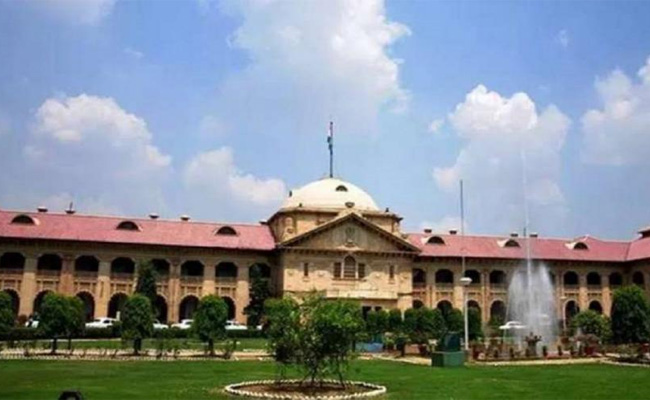
Lucknow (PTI): The Lucknow Bench of the Allahabad High Court on Friday ordered a probe by the special task force (STF) into alleged irregularities in the rejoining of a teacher at City Intermediate College in Barabanki, observing that the reinstatement appeared to be prima facie illegal.
The court also directed the recovery of the salary paid to the teacher during the disputed period.
A bench of Justice Rajeev Singh passed the order on a petition filed by the college management committee. The court expressed doubts over the roles of the District Inspector of Schools (DIOS), Barabanki, the college principal and the teacher concerned and hence, directed a detailed inquiry into the matter.
Taking note of alleged manipulation of records and misleading submissions, the court ordered the immediate transfer of the Barabanki DIOS to ensure a fair probe. It also directed the initiation of disciplinary proceedings against the then joint director of education of the Ayodhya division.
In its order, the court found that the teacher, Abhay Kumar, was initially appointed as an assistant teacher in 2018 but joined an Eklavya Model Residential School in Chhattisgarh as a lecturer in June 2024 without obtaining permission from the management. His subsequent request to retain the lien was rejected.
Despite this, he was allowed to rejoin the Barabanki College in September 2025 on the directions of the joint director of education and the DIOS, and was even paid the salary for October 2025. The court termed the rejoining "wholly illegal" and lacking any legal basis.
The bench also expressed concern over lapses in communication within the education department and directed the Uttar Pradesh chief secretary to ensure that official orders are communicated through email and WhatsApp as well, to prevent disputes.
The matter is next listed for hearing on May 28 when a compliance report is sought.