Facebook eases ban on cryptocurrency ads

San Francisco, June 27 : Facebook said on Tuesday that it is taking steps to ease a January policy banning financial products and services associated with cryptocurrency.
Rob Leathern, Product Management Director at Facebook, said in an official blog post that the world's largest social media network has "looked at the best way to refine this policy -- to allow some ads while also working to ensure that they're safe."
Facebook announced a broad policy in January this year which prohibited "ads that promote financial products and services that are frequently associated with misleading or deceptive promotional practices, such as binary options, initial coin offerings and cryptocurrency".
The policy, which even stopped legitimate businesses from buying advertisements, aimed to better detect what Facebook called deceptive promotional practices by many companies advertised binary options and cryptocurrencies without good faith, Xinhua reported.
Leathern announced that starting June 26, Facebook will be updating its "policy to allow ads that promote cryptocurrency and related content from pre-approved advertisers".
But the company will continue to block any ads that promote binary options and initial coin offerings, he said.
Advertisers are required to submit an application to Facebook before hand if they want to run ads for cryptocurrency products and services, so that Facebook can assess their eligibility, including any licenses they have obtained, whether they are traded on a public stock exchange, and other relevant public background on their business.
Under these restrictions, not everyone who wants to advertise will be able to do so, Facebook said.
"But we'll listen to feedback, look at how well this policy works and continue to study this technology so that, if necessary, we can revise it over time," Leathern wrote.
Last month, Facebook established a new experimental blockchain group dedicated to the technology that powers cryptocurrencies like bitcoin.
Let the Truth be known. If you read VB and like VB, please be a VB Supporter and Help us deliver the Truth to one and all.
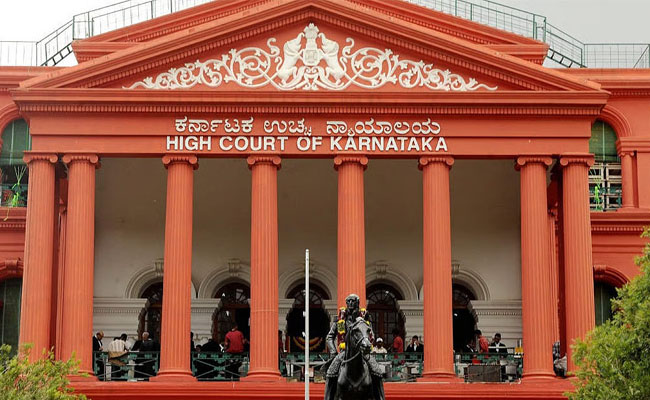
Allahabad HC orders probe into 'reinstatement' of teacher in UP's Barabanki

Lucknow (PTI): The Lucknow Bench of the Allahabad High Court on Friday ordered a probe by the special task force (STF) into alleged irregularities in the rejoining of a teacher at City Intermediate College in Barabanki, observing that the reinstatement appeared to be prima facie illegal.
The court also directed the recovery of the salary paid to the teacher during the disputed period.
A bench of Justice Rajeev Singh passed the order on a petition filed by the college management committee. The court expressed doubts over the roles of the District Inspector of Schools (DIOS), Barabanki, the college principal and the teacher concerned and hence, directed a detailed inquiry into the matter.
Taking note of alleged manipulation of records and misleading submissions, the court ordered the immediate transfer of the Barabanki DIOS to ensure a fair probe. It also directed the initiation of disciplinary proceedings against the then joint director of education of the Ayodhya division.
In its order, the court found that the teacher, Abhay Kumar, was initially appointed as an assistant teacher in 2018 but joined an Eklavya Model Residential School in Chhattisgarh as a lecturer in June 2024 without obtaining permission from the management. His subsequent request to retain the lien was rejected.
Despite this, he was allowed to rejoin the Barabanki College in September 2025 on the directions of the joint director of education and the DIOS, and was even paid the salary for October 2025. The court termed the rejoining "wholly illegal" and lacking any legal basis.
The bench also expressed concern over lapses in communication within the education department and directed the Uttar Pradesh chief secretary to ensure that official orders are communicated through email and WhatsApp as well, to prevent disputes.
The matter is next listed for hearing on May 28 when a compliance report is sought.