Facebook elevates Indian-origin executive to head Workplace
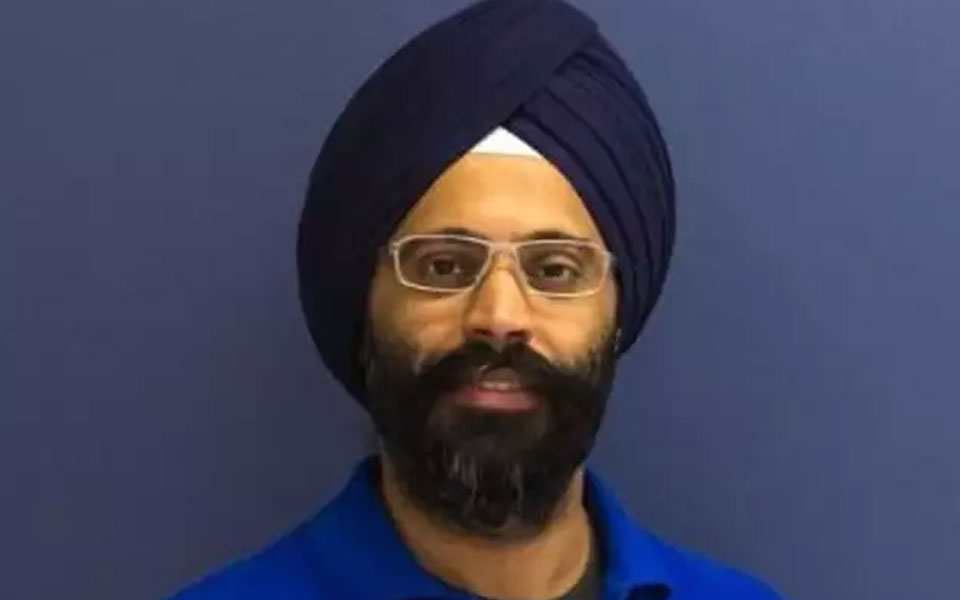
New York, Dec 19 : Karandeep Anand, an Indian-origin senior executive of Facebook, will head the social media giant's enterprise communications tool Workplace, the company has announced.
Anand, who worked at Microsoft for 15 years before joining Facebook nearly four years ago, will work closely with Julien Codorniou, the Facebook vice president who has been the leader of Workplace, CNBC reported.
Workplace, the London-based Facebook division, is a communications tool for companies and businesses.
Anand will handle the Workplace product team, which includes developers, engineers, researchers and data scientists, while Codorniou will remain in charge of sales and partnerships, a Facebook spokeswoman was quoted as saying in the report.
At Facebook, Anand has been the head of product for a number of other divisions, including Marketplace, Audience Network and Ad Solutions, the report said.
"I'm excited to now be part of the journey of bringing Workplace to companies across the globe and help them unlock the potential of their biggest asset - people," Anand wrote on his LinkedIn profile.
The spokeswoman said: "We're thrilled that Karandeep is joining Workplace as its new head of Workplace, effectively immediately.
"Karandeep joins Workplace from Marketplace, and brings with him a wealth of experience from both a consumer and enterprise background. We're excited to have him on board".
In its two years of existence, Workplace by Facebook has big-name customers like Walmart, Starbucks and Chevron, the report said.
However, it is behind its rivals like Microsoft and Slack in the enterprise communications software market.
Workplace is used by 30,000 organisations, according to a Facebook report in October 2017.
Microsoft Teams is used by 329,000 organisations while Slack by 500,000 organisations, including 70,000 paying organisations, the CNBC report added.
Let the Truth be known. If you read VB and like VB, please be a VB Supporter and Help us deliver the Truth to one and all.
French Open prize money up 10% to $72 million overall
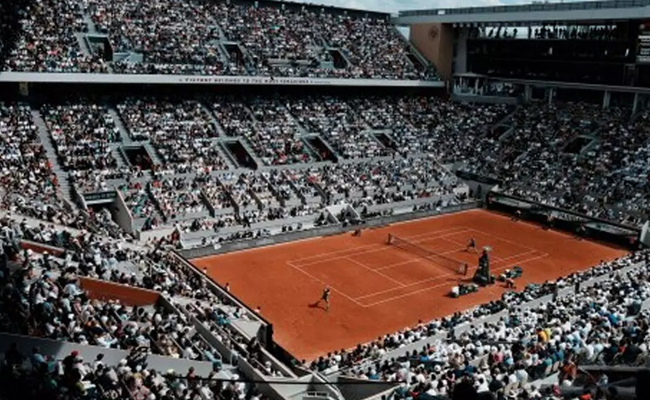
Paris (AP): French Open prize money has increased by about 10% for an overall pot of 61.7 million euros ($72.1 million).
The total amount is up 5.3 million euros from last year. Play begins on Sunday, May 24 at Roland Garros in western Paris.
Men's and women's singles champions each receive 2.8 million euros and the runners-up 1.4 million euros. Semifinalists earn 750,000 euros and first round losers get 87,000 euros.
Men's and women's doubles winners pocket 600,000 euros and the mixed doubles champions get 122,000 euros.
Last year, Carlos Alcaraz staged an epic comeback to beat Jannik Sinner in a five-set final and Coco Gauff defeated Aryna Sabalenka for the women's title.
There will be an opening ceremony before the men's and women's finals, lasting about six minutes, with French choreographer Benjamin Millepied in charge of the program.
Also for the first time, players can wear data-collecting portable devices on court in order to gain information on their physical performances, tournament director Amélie Mauresmo said at a news conference on Thursday.
Privacy for playersMauresmo repeated the importance of privacy for players — an issue raised by Iga Swiatek and Gauff at this year's Australian Open.
Gauff's racket-smashing away from the court went viral. Swiatek said the seemingly limitless access-all-areas cameras that track players made them feel they were being watched like “animals in the zoo.”
Without mentioning the Australian Open itself, Mauresmo said tennis should “maintain respect for privacy” and have a secluded space.
“Players need a private area, something which will not change,” she said. “No cam access (there).”
Upholding traditionsThis year, a local amateur beat Sinner and went on to become a millionaire in Australian dollars after winning the newly invented 1 Point Slam at the Australian Open.
Don't expect it at the French Open.
“Our ambition is not to repeat everything that's done elsewhere," Mauresmo said. "This is not something that corresponds to us, to the image of Roland Garros."
The French Open is also unflinching on the electronic line-calling adopted by Wimbledon and most big tennis tournaments; instead remaining committed to human line judges.
“They are not 100% reliable,” Mauresmo said, "but our decision was to stick to our way.”
However, Mauresmo was open to women playing five-set matches like their male counterparts.
“You can't change a format overnight to go from best of three to best of five. But if we think about it, would it be only the semifinal, the final, or for all matches?" the former Wimbledon champion asked. “This could be a win-win situation but we have to talk about this with the women players.”
The former women's No. 1 would have wanted to.
“As a player when I did the Masters final (in 2005) they had just stopped this,” Mauresmo said. "I would have wanted to do the final in best of five. So maybe one day, you never know.”
Mauresmo was also asked about scheduling for evening matches.
“We will talk about scheduling when the time comes,” she said without going into details. “Nothing is closed and nothing is set in stone, it depends on the draws and the lineups.”
Last year there were a lack of women's matches during the night sessions.
On the final Saturday there has been one change: The men's doubles final will be played before the women's singles final and not afterward.
Entertaining fansThere will be a Jardin des Chefs — a chefs' garden — for fans to sample French gastronomy in an area next to Court Simonne-Mathieu. A small army of 13 French chefs will work daily, three on duty each day.
The famed Concorde Square — with its iconic Egyptian Obelisk — will again show matches on a big screen for free during the second week from June 3-7.
The tournament will pay tribute to French veteran Gaël Monfils and 2015 champion Stan Wawrinka, who are retiring at the end of the season.
Clay is the wayThe French Open is synonymous with clay the way Wimbledon is with grass.
Keen to build on that identity, French Tennis Federation director Gilles Moretton said there will be a strong investment in building more clay courts, real or synthetic.
Clay courts currently make up only 13% of courts in France.