Facebook investors want Zuckerberg to step down as company's chairman: Report

Washington, Nov 17: Facebook investors have called on the company's chief executive Mark Zuckerberg to step down as chairman following reports that the company hired a public relations firm to smear its critics, a media report said on Saturday.
The New York Times recently published a report revealing that Facebook at times smeared critics as anti-Semitic or tried to link activists to billionaire investor George Soros, and tried to shift public anger away toward rival tech firms.
It also said that the company also used a Republican public relations firm, Definers Public Affairs, to help repair its battered reputation following intense criticism of the social media platform's handling of a scandal over Russian interference in the 2016 US elections and the Cambridge Analytica scandal, The Telegraph reported.
Jonas Kron, a senior vice president at Trillium Asset Management, a US investor which owns an 8.5m stake in Facebook, last night called on Zuckerberg to step down as board chairman in the wake of the report, the paper said.
"Facebook is behaving like it's a special snowflake," the paper quoted him as saying.
"It's not. It is a company and companies need to have a separation of chair and CEO," he said.
The attack on Zuckerberg is set to complicate the daunting challenge facing Sir Nick Clegg, Facebook's new global head of policy and communications, who joined last month and has been asked to conduct a review of Facebook's use of lobbying firms.
Definers allegedly encouraged the depiction of Facebook's critics as anti-Semites and had published news articles criticising Facebook's competitors.
The business has also been accused of attempting to encourage journalists to report that anti-Facebook groups were linked to Mr Soros, the paper said.
In a call with journalists on Thursday, Zuckerberg denied knowing that his business had hired the firm.
"As soon as I learned about this, I talked to our team and we are no longer working with this firm," he said.
Kron said the new revelations about Facebook's use of Definers offered fresh reasons for Mr Zuckerberg to relinquish his dual role as chairman and chief executive.
"The latest report should remove any lingering doubts that some may have had," he said.
Zuckerberg has retained a high level of control over the social networking business which he founded in 2004 due to his combined role and his ownership of a stake representing 60pc of the company's voting shares, the report said.
Let the Truth be known. If you read VB and like VB, please be a VB Supporter and Help us deliver the Truth to one and all.
SC rejects pleas of Anil Ambani challenging Bombay HC order on declaration of accounts as fraud
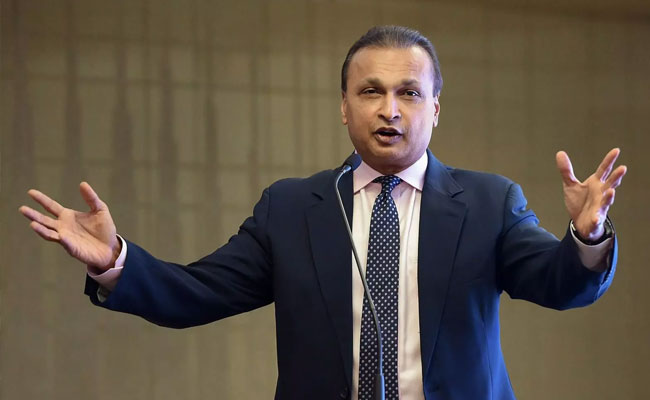
New Delhi (PTI): Observing that crores of public monies had been siphoned off, the Supreme Court on Thursday dismissed industrialist Anil Ambani's three separate pleas, challenging the Bombay High Court order that allowed the proceedings, initiated by banks against him and Reliance Communications Ltd to classify their bank accounts as fraud, to continue.
A bench of Chief Justice Surya Kant and Justices Joymalya Bagchi and Vipul M Pancholi permitted Ambani to pursue his plea before the high court's single judge bench against the banks' show cause notices to declare the accounts as fraud.
"Hard-earned public money to the tune of thousands of crores has been siphoned. Did you make good losses to banks and financial institutions," the bench said.
Ambani and the firm were represented by senior advocates Kapil Sibal and Shyam Divan, who said the order would lead to the "civil death" of their clients.
Refusing to interfere with the February 23 order of the Bombay High Court's division bench, the SC said, "We see no ground to interfere with the judgment of the High Court (division bench). It is clarified that the observations of the Division Bench shall have no bearing in the pending suit. The (single judge bench) High Court is requested to expedite the disposal of the suit (filed by Ambani against the show cause notices issued by banks on move to declare the accounts as fraud)."
The bench requested the single judge bench to expeditiously decide Ambani's plea against the show cause notices issued by three banks.
The apex court passed the order while hearing three separate pleas filed by Ambani who had challenged a February 23 order of a division bench of the high court.
The division bench had quashed a single judge bench interim order that stayed proceedings initiated against him and Reliance Communications Ltd to classify their bank accounts as fraud.
The division bench allowed the appeals filed by three public sector banks and auditor firm BDO India LLP against the December 2025 interim order passed by a single bench.
The single judge bench order had stayed all present and future action by Indian Overseas Bank, IDBI Bank, and Bank of Baroda, noting that the action was based on a legally flawed forensic audit and violated the Reserve Bank of India's mandatory guidelines.
Ambani challenged the show cause notices issued by Indian Overseas Bank, IDBI and Bank of Baroda before the single bench, seeking to declare his and Reliance Communications' accounts as fraudulent.
At the outset, Sibal said there was a question of law that must be decided. The bench said, "the matter pertains to siphoning of thousands of crores of public money," and any intervention at this stage would prejudice the ongoing investigation by probe agencies.
"Please go and raise all these issues before the high court … show cause notices have been issued. You have your own remedy against them...institutions have been duped crores of rupees," the CJI said, adding, "it's a case of siphoning off… We can't really express any opinion as we don't want to prejudice."
Sibal submitted that Ambani had conveyed his willingness to amicably resolve and settle all pending matters with the banks.
Earlier, the high court's division bench quashed the single bench order and termed it "illegal and perverse."
The banks had challenged a December 2025 single-bench order granting interim relief to Ambani and his company.
The order cited violations of mandatory RBI rules and a classic case of banks "waking up from deep slumber" after years.
The three banks in their appeal said the forensic audit, which led to accounts being classified as "fraud", was legally valid and based on serious findings of fund siphoning and misutilisation.
This was recorded in the report submitted by the audit firm BDO LLP, they contended.
The banks, in their plea, also said Ambani had raised a technical challenge to the forensic audit before the single bench.
Ambani, as an interim relief, sought a stay of the notices and an injunction against any coercive action on the ground that BDO LLP was not qualified to conduct the forensic audit as its signatory was not a chartered accountant.
BDO LLP is an accounting consultant firm and not an audit firm, Ambani claimed. The single bench agreed with Ambani and stayed the action by the banks.