Facebook launches 'Instagram Lite' for emerging markets

San Francisco, June 28: In a bid to add another billion users from emerging markets including India, Facebook-owned Instagram has quietly released a lighter version of its app called "Instagram Lite" for Android on Google Play App Store.
Although Facebook was yet to release an official statement, the appearance of 'Instagram Lite' on Google Play Store is a likely pilot run in a select countries to begin with.
There are millions of smartphone users in India who still have old variants with slow 2G Internet connectivity and "Instagram Lite" app can help them get in touch with friends and family.
"The 'Instagram Lite' app is small, allowing you to save space on your phone and download it quickly," read the app's description on Play Store.
"At just 573 kilobytes, 'Instagram Lite' is 1/55th the size of Instagram's 32MP main app. It lets you filter and post photos to the feed or Stories, watch Stories and browse the Explore page, but currently lacks the options to share videos or Direct message friends," TechCrunch reported on Thursday.
With this new version of the photo messaging app, users using older phones with less storage space or slower internet connections, would have access to Instagram without having to delete photos, apps or wait longer and pay more to download it.
The app would run on Android versions 5.0 and up.
"We are testing a new version of Instagram for Android that takes up less space on your device, uses less data and starts faster," an Instagram spokesperson told TechCrunch earlier.
With over a billion users, Instagram is a very popular app from the Facebook family.
Facebook launched "Facebook Lite" in 2015 which had 200 million users by the end of last year. Facebook "Messenger Lite" came in April this year.
Aiming to take on Google-owned YouTube, Instagram this month announced it would allow users to upload videos up to one hour in length, up from the previous one-minute limit.
"We launched IGTV (a button inside the Instagram home screen, as well as a standalone app) at an event featuring many of the Instagram creators who'll make it great," the company wrote in a blog post.
Not just celebrities, IGTV will let all users be a creator and let them upload vertical videos through Instagram's app or the web.
Let the Truth be known. If you read VB and like VB, please be a VB Supporter and Help us deliver the Truth to one and all.
Allahabad HC orders probe into 'reinstatement' of teacher in UP's Barabanki
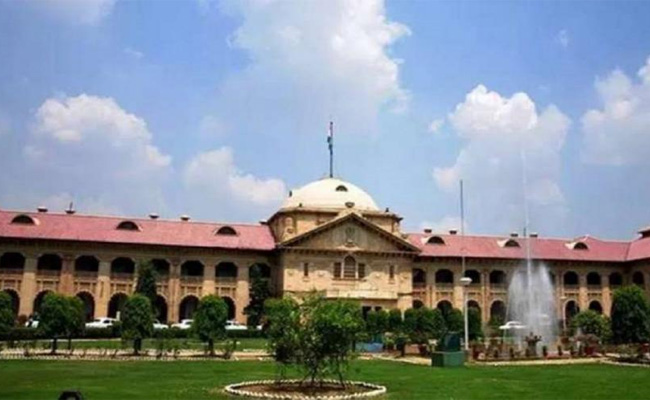
Lucknow (PTI): The Lucknow Bench of the Allahabad High Court on Friday ordered a probe by the special task force (STF) into alleged irregularities in the rejoining of a teacher at City Intermediate College in Barabanki, observing that the reinstatement appeared to be prima facie illegal.
The court also directed the recovery of the salary paid to the teacher during the disputed period.
A bench of Justice Rajeev Singh passed the order on a petition filed by the college management committee. The court expressed doubts over the roles of the District Inspector of Schools (DIOS), Barabanki, the college principal and the teacher concerned and hence, directed a detailed inquiry into the matter.
Taking note of alleged manipulation of records and misleading submissions, the court ordered the immediate transfer of the Barabanki DIOS to ensure a fair probe. It also directed the initiation of disciplinary proceedings against the then joint director of education of the Ayodhya division.
In its order, the court found that the teacher, Abhay Kumar, was initially appointed as an assistant teacher in 2018 but joined an Eklavya Model Residential School in Chhattisgarh as a lecturer in June 2024 without obtaining permission from the management. His subsequent request to retain the lien was rejected.
Despite this, he was allowed to rejoin the Barabanki College in September 2025 on the directions of the joint director of education and the DIOS, and was even paid the salary for October 2025. The court termed the rejoining "wholly illegal" and lacking any legal basis.
The bench also expressed concern over lapses in communication within the education department and directed the Uttar Pradesh chief secretary to ensure that official orders are communicated through email and WhatsApp as well, to prevent disputes.
The matter is next listed for hearing on May 28 when a compliance report is sought.