Indian government requests for Facebook data rose 62% in 2017

New Delhi, May 16: Facebook has recorded massive increase in the total number of Indian government requests for data over the past one year -- a rise of nearly 62 per cent in 2017 compared to the global average of 30 per cent.
In its transparency report released on Tuesday, Facebook said that it received a total of 22,024 requests from India in 2017 compared to 13,613 in 2016 - a rise of 61.7 per cent.
Facebook provided data for about half of the requests.
The total number of government requests for data the social network received from around the world in 2017 was 161,231 as compared to 123,508 -- an increase of 30.5 per cent.
Government requests for account data increased globally by around four percent compared to the first half of 2017, increasing from 78,890 to 82,341 requests.
In the US, government requests remained roughly even at 32,742 in the second half of 2017, Facebook said in its report.
Facebook said it responds to government requests for data in accordance with applicable law and is terms of service.
The social networking major also accepts government requests to preserve account information pending receipt of formal legal process.
"When we receive a preservation request, we will preserve a temporary snapshot of the relevant account information but will not disclose any of the preserved records unless and until we receive formal and valid legal process," Facebook said.
The Facebook report also showed an increase in the number of posts identified as containing graphic violence in the first of quarter of 2018.
"Of every 10,000 content views, an estimate of 22 to 27 contained graphic violence, compared to an estimate of 16 to 19 last quarter," Xinhua quoted the report as saying.
It said the growth was a possible result of a higher volume of graphic violence content shared on Facebook in the first three months of this year.
Let the Truth be known. If you read VB and like VB, please be a VB Supporter and Help us deliver the Truth to one and all.
Allahabad HC orders probe into 'reinstatement' of teacher in UP's Barabanki
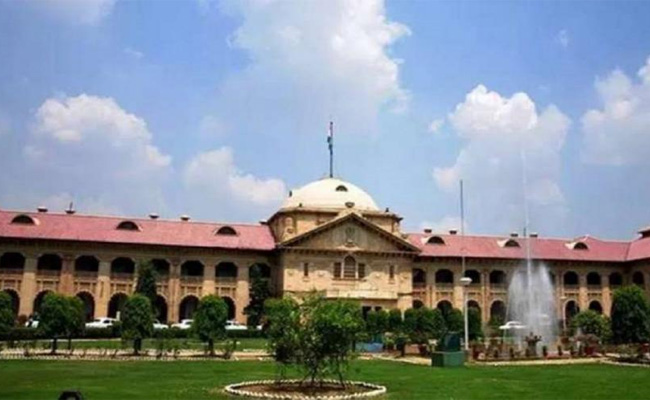
Lucknow (PTI): The Lucknow Bench of the Allahabad High Court on Friday ordered a probe by the special task force (STF) into alleged irregularities in the rejoining of a teacher at City Intermediate College in Barabanki, observing that the reinstatement appeared to be prima facie illegal.
The court also directed the recovery of the salary paid to the teacher during the disputed period.
A bench of Justice Rajeev Singh passed the order on a petition filed by the college management committee. The court expressed doubts over the roles of the District Inspector of Schools (DIOS), Barabanki, the college principal and the teacher concerned and hence, directed a detailed inquiry into the matter.
Taking note of alleged manipulation of records and misleading submissions, the court ordered the immediate transfer of the Barabanki DIOS to ensure a fair probe. It also directed the initiation of disciplinary proceedings against the then joint director of education of the Ayodhya division.
In its order, the court found that the teacher, Abhay Kumar, was initially appointed as an assistant teacher in 2018 but joined an Eklavya Model Residential School in Chhattisgarh as a lecturer in June 2024 without obtaining permission from the management. His subsequent request to retain the lien was rejected.
Despite this, he was allowed to rejoin the Barabanki College in September 2025 on the directions of the joint director of education and the DIOS, and was even paid the salary for October 2025. The court termed the rejoining "wholly illegal" and lacking any legal basis.
The bench also expressed concern over lapses in communication within the education department and directed the Uttar Pradesh chief secretary to ensure that official orders are communicated through email and WhatsApp as well, to prevent disputes.
The matter is next listed for hearing on May 28 when a compliance report is sought.