Meta faces historic antitrust trial that could force it to break off Instagram, WhatsApp
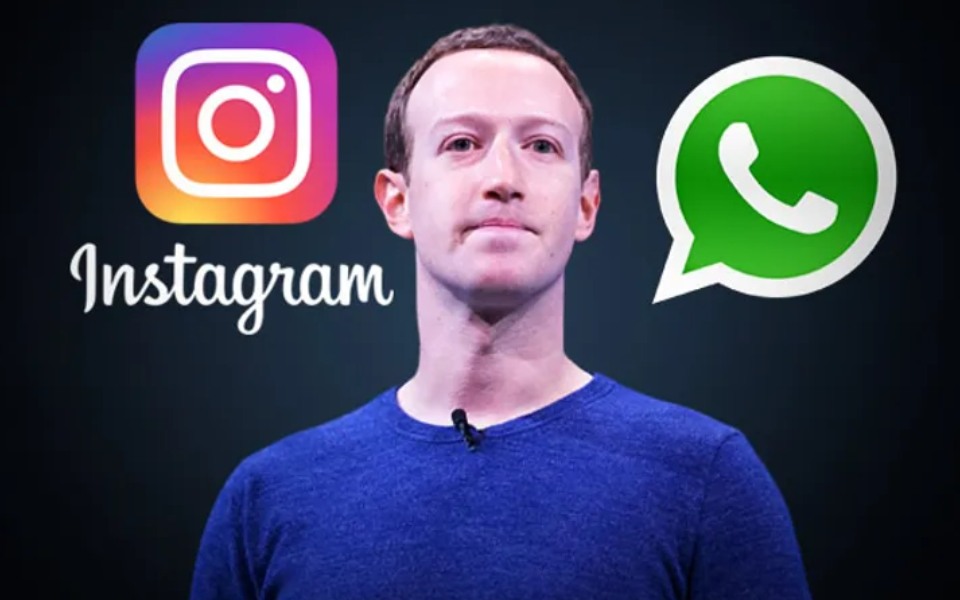
San Francisco, Apr 14 (AP): Meta Platforms Inc. faces a historic antitrust trial beginning Monday that could force the tech giant to break off Instagram and WhatsApp, startups it bought more than a decade ago that have since grown into social media powerhouses.
The looming antitrust trial will be the first big test of President Donald Trump's Federal Trade Commission's ability to challenge Big Tech. The lawsuit was filed against Meta — then called Facebook — in 2020, during Trump's first term. It claims the company bought Instagram and WhatsApp to squash competition and establish an illegal monopoly in the social media market.
Meta, the FTC argues, has maintained a monopoly by pursuing CEO Mark Zuckerberg's strategy, "expressed in 2008: It is better to buy than compete.' True to that maxim, Facebook has systematically tracked potential rivals and acquired companies that it viewed as serious competitive threats."
Facebook also enacted policies designed to make it difficult for smaller rivals to enter the market and “neutralize perceived competitive threats,” the FTC says in its complaint, just as the world shifted its attention to mobile devices from desktop computers.
“Unable to maintain its monopoly by fairly competing, the company's executives addressed the existential threat by buying up new innovators that were succeeding where Facebook failed,” the FTC says.
Facebook bought Instagram — then a scrappy photo-sharing app with no ads and a small cult following — in 2012. The $1 billion cash and stock purchase price was eye-popping at the time, though the deal's value fell to $750 million after Facebook's stock price dipped following its initial public offering in May 2012.
Instagram was the first company Facebook bought and kept running as a separate app. Up until then, Facebook was known for smaller “acqui-hires” — a type of popular Silicon Valley deal in which a company purchases a startup as a way to hire its talented workers, then shuts the acquired company down. Two years later, it did it again with the messaging app WhatsApp, which it purchased for $22 billion.
WhatsApp and Instagram helped Facebook move its business from desktop computers to mobile devices, and to remain popular with younger generations as rivals like Snapchat (which it also tried, but failed, to buy) and TikTok emerged. However, the FTC has a narrow definition of Meta's competitive market, excluding companies like TikTok, YouTube and Apple's messaging service from being considered rivals to Instagram and WhatsApp.
“The FTC already has the difficult task, whether it's looking at 10 years ago or five years ago or today, of trying to define what is the market we're talking about in a sufficiently narrow way that it can show Meta has a ton of power in that market,” said Paul Swanson, an antitrust attorney for the law firm Holland & Hart. “And I do think that challenge has gotten harder as the years have gone by and we see more and more potential competitors in social media spaces.”
Meta, meanwhile, says the FTC's lawsuit “defies reality.”
“The evidence at trial will show what every 17-year-old in the world knows: Instagram, Facebook and WhatsApp compete with Chinese-owned TikTok, YouTube, X, iMessage and many others. More than 10 years after the FTC reviewed and cleared our acquisitions, the Commission's action in this case sends the message that no deal is ever truly final. Regulators should be supporting American innovation, rather than seeking to break up a great American company and further advantaging China on critical issues like AI," the company said in a statement.
In a filing last week, Meta also stressed that the FTC “must prove that Meta has monopoly power in its claimed relevant market now, not at some time in the past." This, experts say, could also prove challenging since more competitors have emerged in the social media space in the years since the company bought WhatsApp and Instagram.
Meta's fate will be decided by U.S. District Judge James Boasberg, who late last year denied Meta's request for a summary judgment and ruled that the case must go to trial.
Boasberg “seems to be skeptical” of the FTC's narrow market definition in his rulings to date, Swanson said. He added that the judge also said it is a “fact question," which means he is open to hearing what the FTC and its experts have to say to define that narrow market.
While the FTC may face an uphill battle in proving its case, the stakes are high for Meta, whose advertising business could be cut in half if it's forced to spin off Instagram.
“Instagram is now Meta's biggest money maker in the U.S., its most lucrative market, where the app accounts for 50.5% of the company's ad revenues in 2025. Instagram has also been picking up the slack for Facebook on the user front, particularly among young people, for a long time,” said Emarketer analyst Jasmine Enberg. “The trial also comes as Meta is trying to bring back OG Facebook in an effort to appeal to Gen Z and younger users as they join social media. Social media usage is far more fragmented today than it was in 2012 when Facebook acquired Instagram, and Facebook isn't where the cool college kids hang out anymore. Meta needs Instagram to continue growing, especially as more advertisers think Instagram-first with their Meta budgets.”
But Meta isn't the only technology company in the sights of federal antitrust regulators, Google and Amazon face their own cases. The remedy phase of Google's case is scheduled to begin on April 21. A federal judge declared the search giant an illegal monopoly last August.
“A big theme here is we are applying 19th-century laws to 21st-century markets. And I think it's an open question whether the judgment developments to antitrust law can keep up with markets as they are changing — these fluid and dynamic tech markets in particular,” Swanson said. “And this will be a case that speaks directly to that.”
Let the Truth be known. If you read VB and like VB, please be a VB Supporter and Help us deliver the Truth to one and all.
Chhattisgarh Vedanta power plant blast: Death toll rises to 20; sixteen workers undergoing treatment
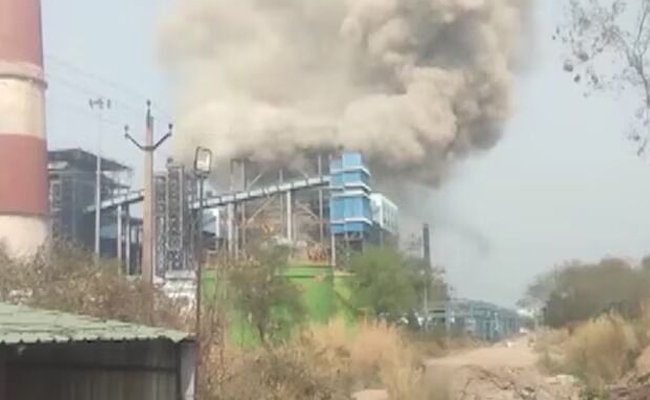
Sakti (Chhattisgarh) (PTI): The death toll in a blast at the Vedanta power plant in Chhattisgarh's Sakti district has mounted to 20 with seven more workers succumbing to injuries, while 16 others are undergoing treatment at different hospitals, officials said on Wednesday.
The deceased include six labourers from West Bengal, five from Chhattisgarh, three each from Jharkhand and Uttar Pradesh, two from Bihar, and one from Madhya Pradesh.
The opposition Congress has demanded registration of an FIR against the plant management and a judicial inquiry into the incident.
The explosion occurred on Tuesday afternoon in a steel tube carrying high-pressure steam from the boiler to the turbine at the Vedanta Ltd power plant located in Singhitarai village, leaving several workers with severe burn injuries.
According to officials, four workers died on the spot, while nine others succumbed to injuries soon after the incident.
Seven more workers have died in hospitals, raising the toll to 20, Sakti Collector Amrit Vikas Topno told PTI on Wednesday.
He said that a total of 36 workers were affected in the blast, and 20 of them died.
"Of the 16 injured workers, five are undergoing treatment in hospitals in Raipur, while 11 others are in hospitals of Raigarh, the neighbouring district of Sakti," he added.
Topno added that every possible effort was being made to provide the best medical treatment to the injured.
The deceased were identified, and their family members are being contacted. Arrangements have been made to transport the mortal remains to their native villages via ambulance following the postmortem examination and to provide immediate financial assistance, he said.
Chief Minister Vishnu Deo Sai has announced a compensation of Rs 5 lakh to the families of each deceased worker and Rs 50,000 for those injured.
Vedanta Power has also announced a Rs 35 lakh compensation for the family of each deceased worker, along with employment support.
The company will also provide Rs 15 lakh to each injured person, ensure salary continuation until recovery, and offer counselling support, a statement from the plant management said.
The chief minister has ordered an inquiry by the Commissioner of the Bilaspur division, assuring strict action against the guilty.
He directed officials to ensure free and proper medical treatment for all injured and emphasised that no negligence in their care would be tolerated.
The district administration has also ordered a separate magisterial probe, while the company has initiated its own internal investigation.
Collector Topno has appointed the Sub-Divisional Magistrate (SDM) of Dabhra to conduct the magisterial inquiry.
The SDM has been asked to submit a report within 30 days covering key aspects, including the cause of the accident, whether it was due to technical or human error, and details of safety inspections carried out at the plant.
Meanwhile, the opposition Congress has demanded registration of an FIR against the plant management and a judicial inquiry into the incident.
State Congress communication wing head Sushil Anand Shukla on Wednesday alleged negligence on the plant management's part and accused the government of attempting to shield those responsible.
He also demanded compensation of Rs 1 crore for the families of the deceased and Rs 50 lakh for the injured.
The construction of a 1,200 MW coal-based thermal power project (two units of 600 MW each) in Singhitarai, originally owned by Athena Chhattisgarh Power Ltd, started in 2009, but remained stalled between 2016 and 2022.
Vedanta acquired the plant in 2022, after which a 600 MW unit was completed and commissioned in August last year, while the second unit is still under construction.
The deceased have been identified as Amrit Lal Patel, Thanda Ram Lahre, Udhab Singh Yadav, Rameshwar Mahilange, and Nadeem Ansari (all from Chhattisgarh); Susanta Jana, Sheikh Saifuddin, Manas Giri, Kailash Mahto, Shibnath Murmu, and Dipankar Singh (West Bengal), Tarun Kumar Ojha, Abdul Karim and Ashok Parhiya (Jharkhand), Raju Ram, Pappu Kumar and Brijesh Kumar (Uttar Pradesh), Aakib Khan and Ritesh Kumar (Bihar), and Chitranjan Dhulai of Madhya Pradesh, officials said.