Muslim cleric killed in cross-border shelling wrongly labelled as 'Terrorist' by news channels
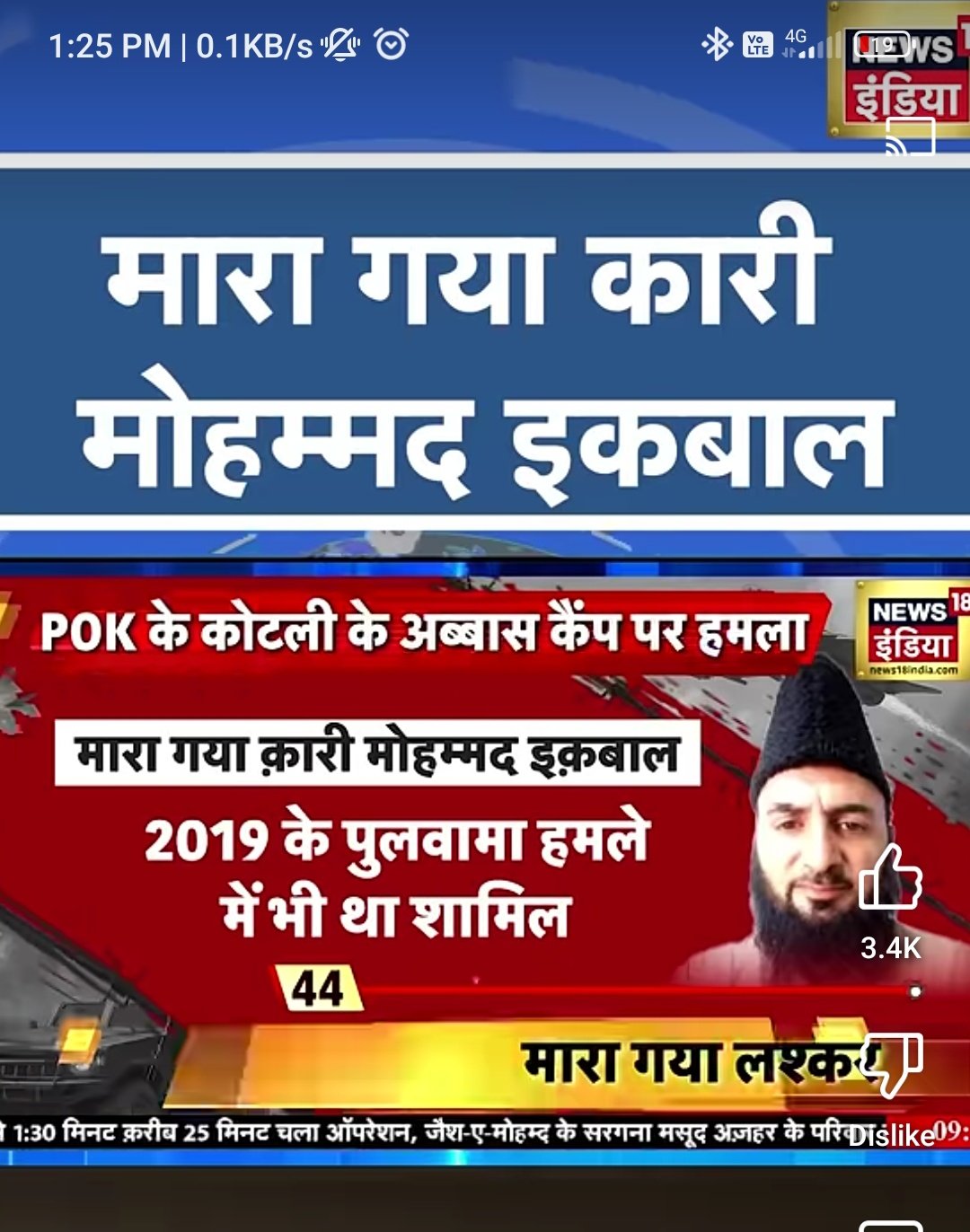
New Delhi: Several national television channels have come under sharp criticism for wrongly identifying a Muslim cleric, killed in cross-border shelling by Pakistan, as a “terrorist”. The inaccurate reports have triggered widespread outrage on social media and among fact-checkers.
The victim, Qari Muhammad Iqbal, was an Islamic scholar and seminary teacher from Poonch district in Jammu and Kashmir. He lost his life on Tuesday during Pakistani shelling across the Line of Control (LoC). Qari Iqbal had been associated with Jamia Zia-ul-Uloom in Poonch, where he had been teaching for over ten years.
Despite this, prominent Hindi news channels such as ABP News and Zee News aired reports claiming that a “terrorist” was killed in an Indian air strike, using Qari Iqbal’s image and name—without verification. The reports were later challenged by several independent media platforms and fact-checkers.
Kashmiri news outlet The Kashmiriyat clarified that Qari Iqbal was among the civilian casualties in the shelling and not involved in any terrorist activities. Their report included his name in the official list of civilians who died in the unprovoked attack from across the border.
Criticising the misleading coverage, Mohammad Zubair of Alt News wrote on social media platform X, “This is a shameful thing by Indian news channels. Mohammad Iqbal, a Qari from Poonch, India, has died in Pakistani shelling. He is being portrayed as a 'terrorist' (in the media).”
The incident has sparked fresh concerns about the lack of verification and sensitivity in television news reporting, particularly in conflict-related coverage. It has also raised questions about the impact such misreporting can have on the families of victims and the wider community.
This is shameful by Indian News Channels. Qari Mohammad Iqbal from poonch, India was killed yesterday in shelling from Pakistan is being portrayed as a 'terrorist' in multiple national Indian news channels. pic.twitter.com/8yXkUaJswd
— Mohammed Zubair (@zoo_bear) May 8, 2025
Let the Truth be known. If you read VB and like VB, please be a VB Supporter and Help us deliver the Truth to one and all.
Chhattisgarh Vedanta power plant blast: Death toll rises to 20; sixteen workers undergoing treatment
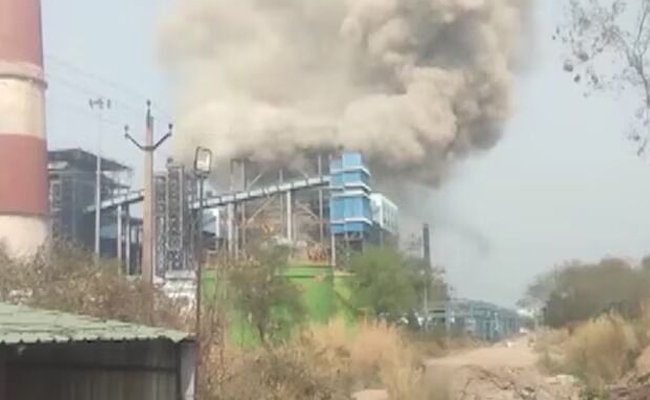
Sakti (Chhattisgarh) (PTI): The death toll in a blast at the Vedanta power plant in Chhattisgarh's Sakti district has mounted to 20 with seven more workers succumbing to injuries, while 16 others are undergoing treatment at different hospitals, officials said on Wednesday.
The deceased include six labourers from West Bengal, five from Chhattisgarh, three each from Jharkhand and Uttar Pradesh, two from Bihar, and one from Madhya Pradesh.
The opposition Congress has demanded registration of an FIR against the plant management and a judicial inquiry into the incident.
The explosion occurred on Tuesday afternoon in a steel tube carrying high-pressure steam from the boiler to the turbine at the Vedanta Ltd power plant located in Singhitarai village, leaving several workers with severe burn injuries.
According to officials, four workers died on the spot, while nine others succumbed to injuries soon after the incident.
Seven more workers have died in hospitals, raising the toll to 20, Sakti Collector Amrit Vikas Topno told PTI on Wednesday.
He said that a total of 36 workers were affected in the blast, and 20 of them died.
"Of the 16 injured workers, five are undergoing treatment in hospitals in Raipur, while 11 others are in hospitals of Raigarh, the neighbouring district of Sakti," he added.
Topno added that every possible effort was being made to provide the best medical treatment to the injured.
The deceased were identified, and their family members are being contacted. Arrangements have been made to transport the mortal remains to their native villages via ambulance following the postmortem examination and to provide immediate financial assistance, he said.
Chief Minister Vishnu Deo Sai has announced a compensation of Rs 5 lakh to the families of each deceased worker and Rs 50,000 for those injured.
Vedanta Power has also announced a Rs 35 lakh compensation for the family of each deceased worker, along with employment support.
The company will also provide Rs 15 lakh to each injured person, ensure salary continuation until recovery, and offer counselling support, a statement from the plant management said.
The chief minister has ordered an inquiry by the Commissioner of the Bilaspur division, assuring strict action against the guilty.
He directed officials to ensure free and proper medical treatment for all injured and emphasised that no negligence in their care would be tolerated.
The district administration has also ordered a separate magisterial probe, while the company has initiated its own internal investigation.
Collector Topno has appointed the Sub-Divisional Magistrate (SDM) of Dabhra to conduct the magisterial inquiry.
The SDM has been asked to submit a report within 30 days covering key aspects, including the cause of the accident, whether it was due to technical or human error, and details of safety inspections carried out at the plant.
Meanwhile, the opposition Congress has demanded registration of an FIR against the plant management and a judicial inquiry into the incident.
State Congress communication wing head Sushil Anand Shukla on Wednesday alleged negligence on the plant management's part and accused the government of attempting to shield those responsible.
He also demanded compensation of Rs 1 crore for the families of the deceased and Rs 50 lakh for the injured.
The construction of a 1,200 MW coal-based thermal power project (two units of 600 MW each) in Singhitarai, originally owned by Athena Chhattisgarh Power Ltd, started in 2009, but remained stalled between 2016 and 2022.
Vedanta acquired the plant in 2022, after which a 600 MW unit was completed and commissioned in August last year, while the second unit is still under construction.
The deceased have been identified as Amrit Lal Patel, Thanda Ram Lahre, Udhab Singh Yadav, Rameshwar Mahilange, and Nadeem Ansari (all from Chhattisgarh); Susanta Jana, Sheikh Saifuddin, Manas Giri, Kailash Mahto, Shibnath Murmu, and Dipankar Singh (West Bengal), Tarun Kumar Ojha, Abdul Karim and Ashok Parhiya (Jharkhand), Raju Ram, Pappu Kumar and Brijesh Kumar (Uttar Pradesh), Aakib Khan and Ritesh Kumar (Bihar), and Chitranjan Dhulai of Madhya Pradesh, officials said.