'No choice', says Musk as he justifies massive layoffs at Twitter
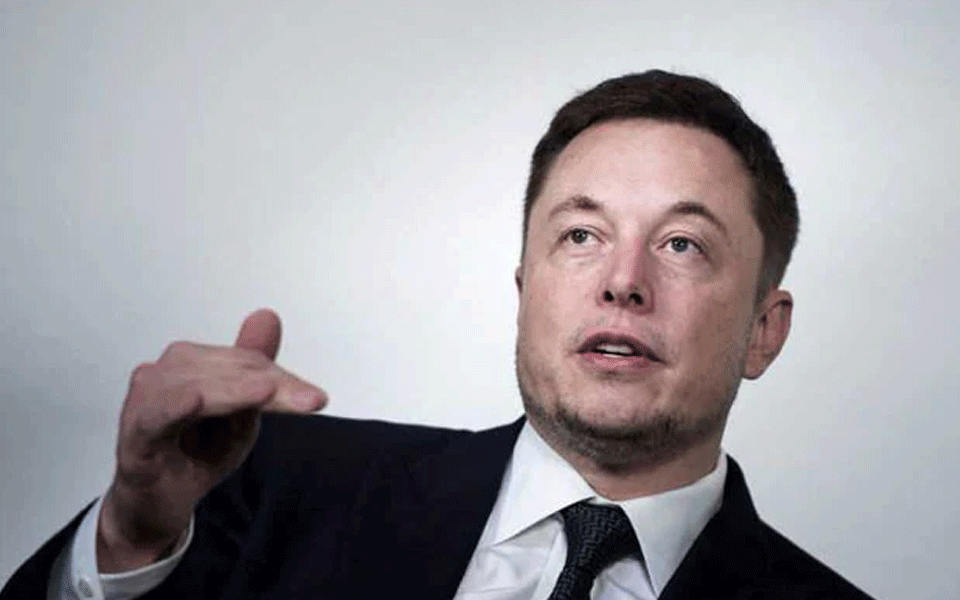
New York (PTI): Amid massive layoffs at Twitter across the world, including in India, and the subsequent backlash, the microblogging site's new owner Elon Musk on Saturday justified the move, saying there was "no choice" when the company was losing millions of dollars daily.
The company posted a net loss of USD 270 million in the second quarter ended June 30, 2022 compared to a profit of USD 66 million in the same period a year ago.
"Regarding Twitter's reduction in force, unfortunately, there is no choice when the company is losing over $4M/day," Musk tweeted, adding, "Everyone who exited was offered 3 months of severance, which is 50% more than legally required."
Hundreds of employees were handed the pink slips at Twitter on Friday as Musk, 51, started overhauling the social media platform which he bought for a whopping USD 44 billion late last month.
In a letter to employees obtained by multiple media outlets on Friday, the company said employees would find out by 9 am Pacific Standard Time if they had been laid off. The email did not say how many people would lose their jobs.
Some employees tweeted early Friday that they had already lost access to their work accounts.
Twitter has also fired the majority of its over-200 employees in India. Sources said that the layoffs are across engineering, sales and marketing, and communications teams.
However, there is no clarity yet on the severance package to be paid to employees laid off in India.
The entire marketing and communications department in India has been sacked, the sources said.
Musk has blamed activists for a significant drop in the company's revenues.
"Twitter has had a massive drop in revenue, due to activist groups pressuring advertisers; even though nothing has changed with content moderation and we did everything we could to appease the activists. Extremely messed up! They're trying to destroy free speech in America," Musk tweeted on Friday.
Twitter's roughly 7,500 employees have been expecting layoffs since Musk took the helm of the company. After he completed the acquisition of Twitter, Musk ousted CEO Parag Agrawal, legal executive Vijaya Gadde, Chief Financial Officer Ned Segal and General Counsel Sean Edgett. He also removed the company's board of directors and installed himself as the sole board member.
Musk has also announced Twitter will charge USD 8 (around Rs 660) per month from verified (blue tick) accounts -- triggering intense debate on the social media platform.
The firm is reportedly laying off 3,738 people out of its total headcount of 7,500 across the globe.
Meanwhile, several Twitter employees on Thursday night filed a class action lawsuit alleging that Twitter is in violation of the federal and California Worker Adjustment and Retraining Notification Act (WARN Act) after laying off some employees already, CNN reported.
The WARN Act requires that an employer with more than 100 employees must provide 60 days' advance written notice prior to a mass layoff affecting 50 or more employees at a single site of employment.
"Elon Musk, the richest man in the world, has made clear that he believes complying with federal labour laws is trivial," Attorney Shannon Liss-Riordan, who filed the lawsuit, said in a statement to CNN, adding, "We have filed this federal complaint to ensure that Twitter be held accountable to our laws and to prevent Twitter employees from unknowingly signing away their rights."
Let the Truth be known. If you read VB and like VB, please be a VB Supporter and Help us deliver the Truth to one and all.
4 workers die after being buried under coal slurry in Jharkhand's Dhanbad
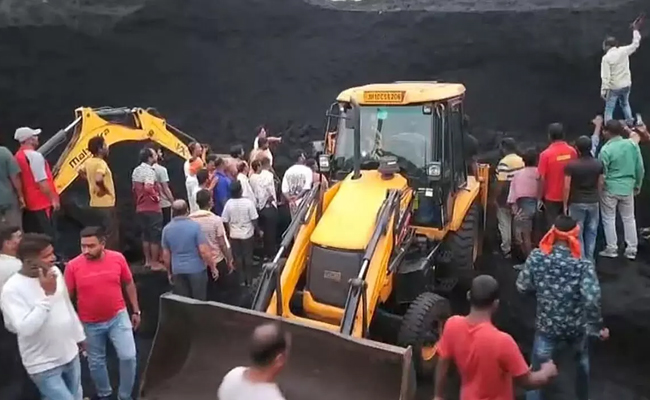
Dhanbad (Jharkhand) (PTI): At least four workers died after being buried under coal slurry in Jharkhand's Dhanbad district on Saturday, a police official said.
The incident took place at Moonidih coal washery in the command area of Bharat Coking Coal Limited (BCCL).
"Bodies of all four workers were dug out of debris during a rescue operation," Putki police station in-charge Waqar Hussain told PTI.
The incident took place when coal slurry was being loaded into trucks by workers, during which a large chunk of slurry fell and trapped several workers underneath, officials said.
The deceased have been identified as Manik Bauri, Dinesh Bauri, Deepak Bauri, and Hemlal Gope.
Meanwhile, the family members of the deceased and local villagers placed the bodies in front of the washery gate and began a protest.
They demanded compensation, jobs for dependents and action against those responsible for the incident.
Police and administration officials are trying to pacify the protesters, an official said.