"Oh No! Not PM Care Funds" Here's how twitter users reacted to Pat Cummins' PM Cares Funds donation
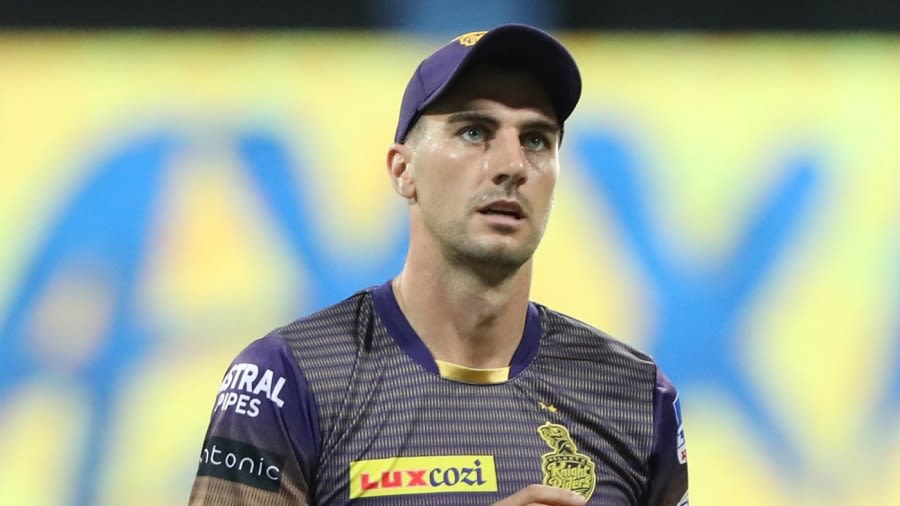
New Delhi: Australian pace bowler and cricketer Pat Cummins who is currently in India for playing IPL, on Monday made an announcement through his Twitter account donating $50,000 to India’s PM Cares Funds to fight Coronavirus.
Cummins who plays for Kolkata Knight Riders (KKR) in IPL added that he was donating the money to PM Cares Fund “Specifically to purchase oxygen supplies for India’s hospitals”.
Twitter users hailed the bowler for the generous contribution to the country’s fight against the deadly virus whose second wave has grappled the entire country pushing it to one of the worst healthcare crises in the country’s history.
However, users also expressed their reservations over Cummins choosing to donate the amount to PM Cares Fund alleging the funds were mismanaged by the government and had no audit to show the utilization of the money to the public.
Several users including a few with verified batch added it would’ve been better of Cummins had he chose any other organization or charitable units to help and that the PM Cares Funds were not ideal as it would not help the people of the country.
Here are some of the tweets where people called on Cummins to consider other organizations for donating the money over PM Cares Funds.
Thank you Pat. You're a great guy. Just that don't put the money in PM Cares. Repeated RTIs have led to the open announcement that it's not accountable to anyone and any funds allocation won't be disclosed. Pls donate to any of the other numerous charities that are accountable.
— Abijit Ganguly (@AbijitG) April 26, 2021
Why would you pay to pmcares? He is already not sharing that money with people. It is a private fund with no auditing
— پربھا ਪ੍ਰਬਾ (@deepsealioness) April 26, 2021
Thanks Pat. U r terrific bowler & human being. Ur gesture speaks volume about you. However, please don't donate the money to PM Cares. Multiple RTI's, court cases have shown PM Cares is not transparent & is a private entity. Rather donate to hospitals & those working on ground.
— N Sai Balaji | ఎన్ సాయి బాలాజీ (@nsaibalaji) April 26, 2021
Great gesture. But please consider donating to a more transparent and accountable mechanism, and not PM CARES. PM CARES is opaque and not fit for purpose.
— Suvojit (@suvojitc) April 26, 2021
कही भी दीजिये PMCARES में नही दीजियेगा , वहां आगे सिर्फ भावनाएं जाएंगी , पैसा कहा जायेगा पता नही ।
— Sarvesh Mishra (@SarveshMishra_) April 26, 2021
Thank you Pat, but you just wasted your money by donating to PM Care fund...He doesn't care at all...It would be great if you had donated this amount to some NGOs.
— Md Asif Khan (@imMAK02) April 26, 2021
Please don't donate to "PM CARES FUND". The Government denied to reveal the utility of it last year.
— Sukanya L.N. (@sulakshna7783) April 26, 2021
Till now,none of the citizens know what it is been used for, the amount that is collected and all. Please enquire, and find alternative authentic organization to donate please ?
PM Cares Fund is used to buy MLA's, other players should also contribute in this cause so that BJP can make Government in West Bengal.
— TweetBOT (@HackBot20) April 26, 2021
Dear Pat .... I think You have wasted your dream think and hope by donating money in 'PM Cares Fund' !
— Ashish Yadav (@Ashishy7055) April 26, 2021
Our Prime Minister is not taking this panic situation seriously. In some words I'll say Indian PM is just fooling us and using that money for his particular people and Party !
Sorry To Say
— PATNITES (@Er__Civil) April 26, 2021
I don't believe in PM CARE FUND , Honnest Indian Cheated by this name.......PM Care is One of biggest SCAME
Everyone Must Donate To Honest NGO who Working tirelessly in dis pandemic
I can see your good intention but they will use your money for building statues and temples. And if you question their decision, they will retaliate with, " An outsider should not interfere in our internal matters ".
— மண்ட கசாயம் (@TheLastJ1) April 26, 2021
I’m heartbroken that he donated straight into Modi’s pocket though. That fund has been criticised for a year now because it is completely private and there’s no indication where the money is going to, with suspicions it’s used to fund the BJPs political rallies.
— mrs. alisson's moustache (rip) (@fudgeposner) April 26, 2021
Thank you Pat. But why #PMCaresFund ? He will use it to buy MLA’s.
— Dhivya Marunthiah (@DhivCM) April 26, 2021
Thanks Pat for donating to PMCares with good intent.
— Bhakt's Nightmare (@ReportTweet_) April 26, 2021
But, lakhs of crore rupees have gone to PMCares and still we are here.
People dy!ng like flies without oxygen.
Please, don't pay to pm fund.. He is the biggest fraud
— RahulSingh (@rk066273) April 26, 2021
@patcummins30 PM CARE fund is big scam and also non audited account. Use your money direct benefit to people and help in covid pendemic. Or go through @SonuSood ngo.
— PravinSinh Jadav (@PkJadav_) April 26, 2021
Let the Truth be known. If you read VB and like VB, please be a VB Supporter and Help us deliver the Truth to one and all.
Karnataka electoral roll SIR exercise to begin from June 20
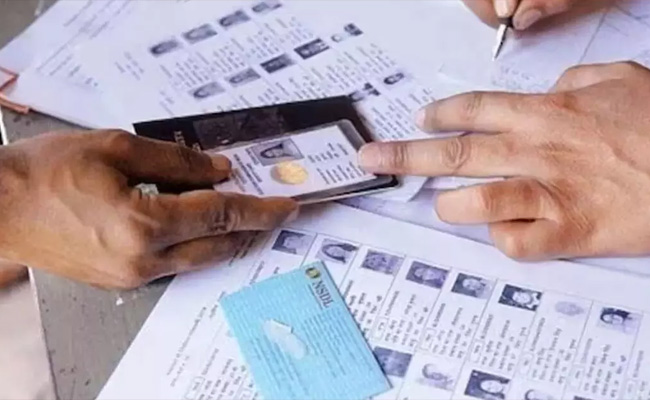
Bengaluru (PTI): Karnataka will begin SIR of electoral rolls from June 20 as part of a nationwide exercise covering 16 states and three Union territories, CEO Anbu Kumar said on Friday.
The drive will cover more than 5.55 crore electors in the state, he said.
As per the schedule notified by the Election Commission (EC), preparation, training and printing activities will be carried out from June 20 to June 29 and Booth Level Officers (BLOs) will conduct house-to-house visits from June 30 to July 29.
The rationalisation of polling stations is scheduled to be completed by July 29. The draft electoral roll will be published on August 5, following which claims and objections can be filed between August 5 and September 4.
The notice phase and disposal of claims and objections will continue from August 5 to October 3, and the final electoral roll will be published on October 7, it said.
ALSO READ: Sindhu out of Thailand Open, loses to Yamaguchi in quarterfinals
Addressing a press conference here, CEO Kumar said that in Karnataka, the Office of the Chief Electoral Officer is fully prepared to proceed with the SIR of electoral rolls.
As part of this exercise, we have successfully mapped 86.46 per cent of our voters, he said.
"The primary objective of this entire exercise is to ensure that every eligible voter is enrolled, while simultaneously ensuring that no ineligible individuals are included in the voter list. Therefore, I seek the support and cooperation of all the voters of Karnataka, all political parties, and our friends from the media," he added.
According to the statement issued by the CEO's office, 59,050 BLOs will be involved in the SIR of the electoral roll in the state. The exercise will cover approximately 5,55,74,064 electors in the state as of May 12.
The SIR is a participative and transparent exercise involving electors, political parties and the election machinery. During the revision process, BLOs will undertake house-to-house visits for the distribution and collection of enumeration forms, the statement said.
Stating that there are currently 25,284 Booth Level Agents (BLAs) appointed by recognised political parties, the CEO urged all recognised political parties to appoint BLAs for every polling station to ensure active participation and transparency in the revision process.
Electors have been requested to cooperate with BLOs during the house-to-house distribution and collection of enumeration forms.
Further details regarding the revision process, forms and schedule will be made available on the official websites of the District Election Officers, the Chief Electoral Officer, Karnataka, and the Election Commission of India, the statement said.