Ronaldo criticised for Herbalife endorsement amid health concerns raised by 'Liver Doc'
NDTV deletes related story
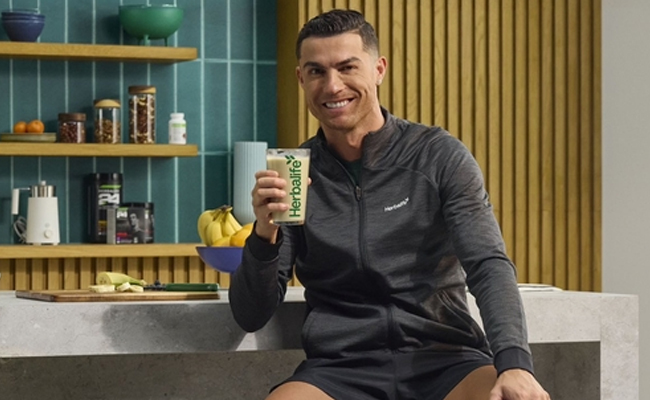
Cristiano Ronaldo’s recent endorsement of Herbalife’s Formula 1 meal replacement shake has drawn sharp criticism, with hepatologist Dr. Cyriac Abby Phillips, known as "The Liver Doc," highlighting potential health risks associated with the product. Dr. Phillips took to X (formerly Twitter), urging caution about products like Herbalife due to past controversies surrounding liver health concerns. His response gained significant traction, resonating with many followers concerned about Ronaldo’s influence on public health choices.
Ronaldo promoted the shake as a “healthy breakfast option” on his social media, presenting it as a balanced source of protein, fibre, vitamins, and minerals. His post, accompanied by hashtags like #Herbalife and #HealthyBreakfast, sparked a community fact-check and ignited a debate over the ethics and transparency of celebrity endorsements.
A good way to start the day? A healthy breakfast. Herbalife Formula 1 delivers a balanced mix of protein, fiber, vitamins, and minerals.#Herbalife #HealthyBreakfast pic.twitter.com/0N3O59FWZP
— Cristiano Ronaldo (@Cristiano) November 7, 2024
Users quickly pointed out Ronaldo’s failure to disclose the post as a paid advertisement, which violates social media endorsement regulations. The platform added a community note, alerting viewers that the footballer had not been transparent about his relationship with Herbalife.
Christiana Ronaldo just got community noted by @theliverdr pic.twitter.com/vm2ph5HVcQ
— Zee (@MhaskarChief) November 8, 2024
Dr. Phillips criticised Ronaldo’s endorsement, warning that Herbalife products had raised liver health concerns. He stated, “A healthy breakfast is, of course, a great start to the day, but not with products that have raised concerns over liver health.” He also urged influencers to prioritise ethical advertising when endorsing products with potential health risks, linking sources supporting his claim.
A good way to start the day? A healthy breakfast.
— TheLiverDoc (@theliverdr) November 8, 2024
No doubt. But Herbalife has no role in it.
Herbalife is a multilevel marketing pyramid scheme company which manufactures low quality mixed protein made from pea and soy and includes other dangerous botanicals, all the while… https://t.co/jsO4l5TH22
This incident also revived debate over Ronaldo’s past stance against sugary drinks like Coca-Cola. During UEFA Euro 2020, Ronaldo famously removed Coca-Cola bottles from view at a press conference, suggesting people should drink water instead. This gesture, widely perceived as an endorsement of healthier choices, even impacted Coca-Cola’s market value.
Now, Ronaldo’s endorsement of Herbalife has led to accusations of inconsistency, with critics questioning his stance on health-related endorsements.
Cristiano Ronaldo:
— M (@monsefp29) November 10, 2024
Coca cola ❌😡🤬
Herbalife ✅🥰🫶🏼 https://t.co/Hr29A9QTxn
This is one of the biggest ponzy scheme ever across continents. But I was surprised by Ronaldo's post. During a press conference at UEFA Euro 2020 in June 2021, Cristiano removed two Coca-Cola bottles placed in front of him and held up a water bottle. And now U-turn?? pic.twitter.com/sAbJfBFKD5
— Pragya Nidhi (@Pragya_Nidhi1) November 10, 2024
Several Indian athletes, including Virat Kohli, Smriti Mandhana, Mary Kom, and Lakshya Sen, also faced similar criticism for appearing in front-page ads as Herbalife ambassadors in Indian newspapers on 10 November 2024.
And we have our celebs also endorsing this as well pic.twitter.com/QAePig1yuY
— Rajith Ramachandran (@rajithr14) November 10, 2024
NDTV initially reported on the backlash with a post titled “Kerala Doctor Calls Out Cristiano Ronaldo For Endorsing Herbalife: "Deprived Of Ethics”, but reportedly took down the article shortly after publication, sparking further speculation. Social media users speculated that NDTV's decision might have been influenced by external pressures or commercial interests, as the platform provided no official explanation.
Let the Truth be known. If you read VB and like VB, please be a VB Supporter and Help us deliver the Truth to one and all.
Four passengers arrested at BLR airport with hydroponic ganja worth over Rs 21.5 crore
Bengaluru (PTI): Four passengers who arrived from Bangkok at Kempegowda International Airport here were arrested with hydroponic ganja valued at over Rs 21.5 crore in two separate cases, officials said on Saturday.
They were intercepted at Terminal 2 of the airport on May 1, they added.
In the first case, Bengaluru Customs said in a post on ‘X’ that three passengers arriving from Bangkok were intercepted, and 52.68 kg of hydroponic ganja, valued at Rs 18.43 crore, was seized from their baggage.
In a separate case on the same day, another passenger arriving from Bangkok was intercepted, and 9 kg of hydroponic ganja, valued at Rs 3.15 crore, was seized from his baggage.
In both cases, the accused, whose identities have not been disclosed, were arrested under the Narcotic Drugs and Psychotropic Substances (NDPS) Act, officials added.