Saket Gokhale alleges Modi govt made 8863 orders to remove content, suspend accounts on Twitter
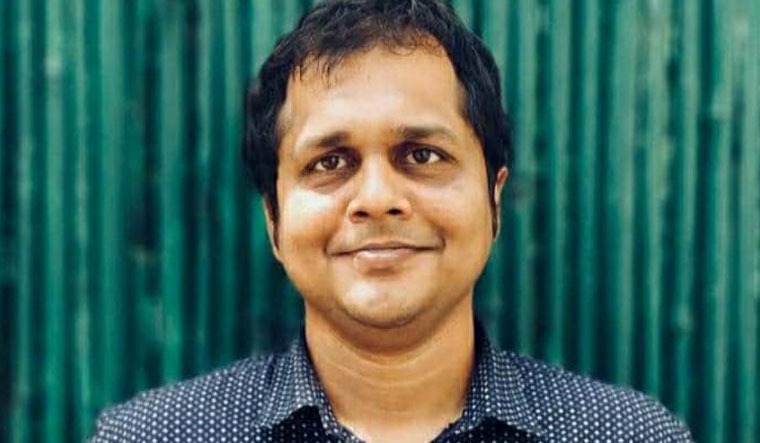
New Delhi: Trinamool Congress national spokesperson Saket Gokhale on Wednesday hit back at the government over refusal of former Twitter CEO Jack Dorsey’s claims that the Indian government “pressured” the microblogging site to act against the critical voices during the farmers protest.
Through a series of tweets, Gokhale has cited official data from Twitter Transparency Reports which suggests that the Centre cracks down critical voices. He shared that India submitted maximum government requests for account information during the peak of Anti-CAA and farmers protests.
Between January to December 2020, the government demanded for user details of 5830 accounts which saw an exponential increase of 425% compared to information sought on 1057 accounts in 2019. He stated that the government made 8863 orders for removal of content & account suspension on Twitter in 2021. However, only 32 were court-ordered.
Gokhale also compared the data with other countries which showcased that India accounted for 8% of the global demands of suspension of Twitter accounts. India made 3992 orders for suspension of 12,916 accounts whereas UK and US ordered suspension for 16 and 32 accounts respectively. Only Turkey (4284) and Russia (8370) demanded for more suspension of accounts than India.
It is crystal clear, Gokhale suggests, that the Modi government made “unprecedented demands for Twitter censorship during the anti-CAA & Farmer Protests”. He further questioned whether the ruling party will have the guts to deny this data and term the same as “lies” and “foreign conspiracy”.
Nailing the lies of Modi Govt on Twitter ex-CEO Jack Dorsey's allegations of censorship & spying:
— Saket Gokhale (@SaketGokhale) June 14, 2023
Modi Govt has denied allegations of indulging in spying & pressure on Twitter & called them "lies".
But here's the truth based on data from Twitter's Transparency Reports.
In the recorded period of the peak of the Anti-CAA & Farmers Protest:
— Saket Gokhale (@SaketGokhale) June 14, 2023
India submitted MAXIMUM GOVT REQUESTS FOR ACCOUNT INFORMATION GLOBALLY during this period
Indian Govt account requests for this period represent 25% OF GLOBAL VOLUME & 15% of ALL GLOBAL ACCOUNTS
(2/13) pic.twitter.com/oyhmEMxvKA
Now in 2021 (COVID period)
— Saket Gokhale (@SaketGokhale) June 14, 2023
Indian Govt requests for user details comprised 19% of TOTAL GLOBAL REQUESTS.
Let's compare this with % of global requests from other countries:
UK was 4%
Germany was 6%
Brazil was 2%
AND WAIT...
PAKISTAN WAS LESS THAN 1%
(4/13) pic.twitter.com/d6RtOD5OV4
Let the Truth be known. If you read VB and like VB, please be a VB Supporter and Help us deliver the Truth to one and all.
Allahabad HC orders probe into 'reinstatement' of teacher in UP's Barabanki
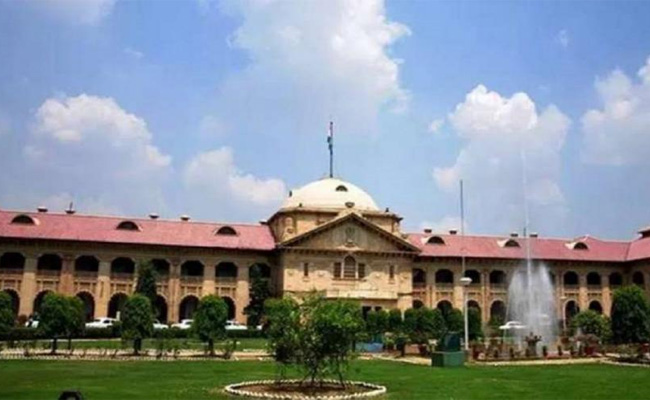
Lucknow (PTI): The Lucknow Bench of the Allahabad High Court on Friday ordered a probe by the special task force (STF) into alleged irregularities in the rejoining of a teacher at City Intermediate College in Barabanki, observing that the reinstatement appeared to be prima facie illegal.
The court also directed the recovery of the salary paid to the teacher during the disputed period.
A bench of Justice Rajeev Singh passed the order on a petition filed by the college management committee. The court expressed doubts over the roles of the District Inspector of Schools (DIOS), Barabanki, the college principal and the teacher concerned and hence, directed a detailed inquiry into the matter.
Taking note of alleged manipulation of records and misleading submissions, the court ordered the immediate transfer of the Barabanki DIOS to ensure a fair probe. It also directed the initiation of disciplinary proceedings against the then joint director of education of the Ayodhya division.
In its order, the court found that the teacher, Abhay Kumar, was initially appointed as an assistant teacher in 2018 but joined an Eklavya Model Residential School in Chhattisgarh as a lecturer in June 2024 without obtaining permission from the management. His subsequent request to retain the lien was rejected.
Despite this, he was allowed to rejoin the Barabanki College in September 2025 on the directions of the joint director of education and the DIOS, and was even paid the salary for October 2025. The court termed the rejoining "wholly illegal" and lacking any legal basis.
The bench also expressed concern over lapses in communication within the education department and directed the Uttar Pradesh chief secretary to ensure that official orders are communicated through email and WhatsApp as well, to prevent disputes.
The matter is next listed for hearing on May 28 when a compliance report is sought.