Travel influencer Aanvi Kamdar dies in Kumbhe waterfall accident

Raigad: Aanvi Kamdar, a 26-year-old Instagram influencer from Mumbai known for her love of monsoon tourism, tragically lost her life after falling into a gorge at Kumbhe waterfall in Raigad, Maharashtra.
Aanvi was on a trip with seven friends when the incident occurred around 10:30 AM on July 16. While shooting a video near the waterfall, she slipped and fell approximately 300 feet into a deep crevice.
Local authorities responded immediately to the emergency, mobilizing a rescue team that included assistance from the Coast Guard, Kolad rescue team, and Maharashtra State Electricity Board staff.
"After reaching the spot, we found the girl had fallen nearly 300-350 feet. Due to heavy rain and her injuries, it was challenging to extricate her directly. Therefore, we used a vertical pulley system for the rescue," recounted one of the rescuers to NDTV.
Following a six-hour operation, Aanvi was successfully retrieved from the gorge but succumbed to her injuries shortly after being admitted to Managaon sub-district hospital.
In the aftermath, local authorities, including the Tehsildar and Managaon police inspector, issued an appeal to tourists and citizens alike. They urged everyone to enjoy tourism responsibly and prioritise safety while exploring the scenic beauty of the Sahyadri ranges.
Aanvi, an avid traveller and social media influencer known for her passion for monsoon tourism died in an attempt to capture the beauty of Kumbhe waterfall.
Let the Truth be known. If you read VB and like VB, please be a VB Supporter and Help us deliver the Truth to one and all.
Bridge portion collapses on Jammu outskirts; 3-4 labourers feared trapped, 1 rescued
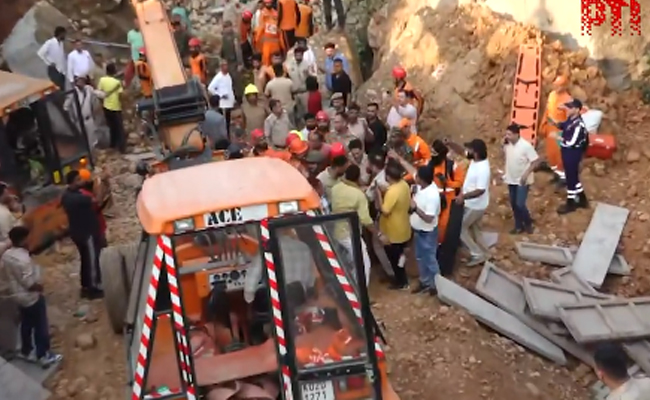
Jammu (PTI): A portion of a small bridge collapsed in the Bantalab area on the outskirts of Jammu city on Friday, trapping at least three to four labourers under the debris, while one injured worker was rescued, official sources said.
Authorities have closed the road link following the collapse of the portion of the bridge.
The incident occurred when labourers were carrying out repair work on a retaining wall near the bridge that was damaged in last year's flash floods, the sources said.
According to the sources, a section of the bridge suddenly gave way, burying workers engaged at the site under the rubble.
Police, Army and State Disaster Response Force (SDRF) teams launched rescue operations to extricate those buried under the debris. They pulled out one injured labourer and shifted him to a hospital, the sources said.
Family members of the labourers present at the site said around six workers engaged at the site at the time of the incident came under the debris when the structure collapsed. The family members said while two of the labourers managed to escape, four got trapped.
The sources said those trapped included the husband of a woman labourer, a mason, an unmarried labourer and a relative of the contractor.
There was no official confirmation on the exact number of persons trapped under the debris till the filing of this report.
The rescue operations are ongoing.