Banu Mushtaq: lawyer, Kannada writer, feminist and now International Booker winner
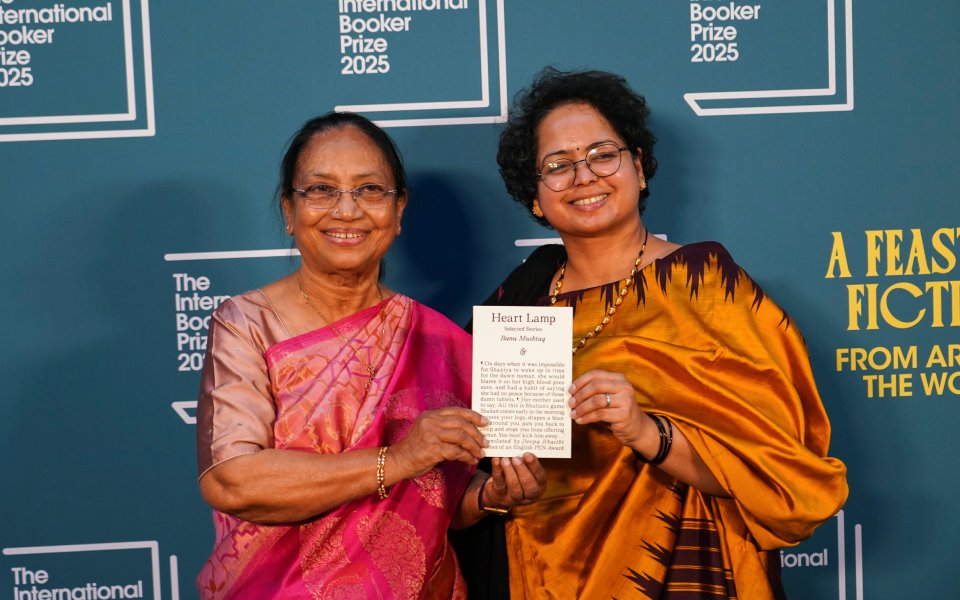
New Delhi, May 21 (PTI): She's a lawyer, an activist, a feminist. And a writer in Kannada who distils it all in her stories that are deeply reflective of the lives of women around her and the patriarchal systems they fight against.
On Wednesday, Banu Mushtaq became the toast of the literary world when she won the International Booker Prize for her collection of short stories "Heart Lamp", translated from the Kannada "Hridaya Deepa" into English by Deepa Bhasthi.
It is the first Kannada title to win the prestigious literary award and only the second in an Indian language after Geetanjali Shree’s “Tomb of Sand”, translated from Hindi by Daisy Rockwell, in 2022.
Mushtaq's collection of 12 short stories chronicle the everyday lives of women and girls in patriarchal communities in southern India -- the reproductive rights that are often exploited, the dynamics of lives where the power reins are held by men and the everyday oppression of an orthodox society that seldom tolerates women’s autonomy.
The tales in “Heart Lamp”, the first collection of short stories to win the prize, were written by the 77-year-old over 30 years, from 1990 to 2023.
Mushtaq’s portraits of family and community tensions “testify to her years tirelessly championing women’s rights and protesting all forms of caste and religious oppression”, reads the blurb of her book.
The women’s rights activist based in Hassan in Karnataka began writing within the progressive protest literary circles in southwestern India in the 1970s and 1980s as part of the Bandaya Sahitya Movement. She rose to prominence during the rebel literary movement critical of the caste and class system.
Born in Hassan to progressive parents - her father was a senior health inspector and her mother a homemaker - Mushtaq also worked as a journalist with Lankesh Patrike for a while before doing her law degree.
She is still a practicing lawyer with a team working with her from her home in Hassan and regularly goes to court.
“I am not very conscious about it, but I know I am a Muslim woman and how to work under those identities… My parents were liberal and educated. My father wanted all his children to be highly educated. My husband is also very cooperative. My family doesn't impose anything on us," she told PTI after her book was shortlisted for the International Booker Prize.
She said she started writing when she was just seven or eight. “My father brought me a lot of books… Panchatantra, Chandamama. I was a voracious reader. I would read them and I would mash up everything and make stories and tell my father," Mushtaq said.
That early promise was amply met.
Author of six short story collections, a novel, an essay collection and a poetry collection, Mushtaq writes only in Kannada and has won major awards for her literary works, including the Karnataka Sahitya Academy and the Daana Chintamani Attimabbe awards.
One of her stories, "Hasina", was adapted for cinema by director Girish Kasaravalli in 2004 and went on to win multiple National Awards.
In an interview to the International Booker Prize, the author said the “social conditions of Karnataka” shaped her.
“The 1970s was a decade of movements in Karnataka - the Dalit movement, farmers’ movement, language movement, rebellion movement, women’s struggles, environmental activism, and theatre, activities among others, had a profound impact on me. My direct engagement with the lives of marginalised communities, women, and the neglected, along with their expressions, gave me the strength to write,” she said.
Through her characters - the spirited children, the audacious grandmothers, the buffoonish maulvis and thug brothers, the oft-hapless husbands, and the mothers above all, surviving their feelings at great cost - Mushtaq emerges an observer of human nature.
“This book was born from the belief that no story is ever small, that in the tapestry of human experience every thread holds the weight of the whole,” Mushtaq said after the glittering award ceremony on Tuesday night at London’s Tate Modern.
“In a world that often tries to divide us, literature remains one of the lost sacred spaces where we can live inside each other's minds, if only for a few pages,” she said.
The International Booker celebrates the best works of long-form fiction or collections of short stories translated into English and published in the UK and/or Ireland. It is different from the Booker Prize that was earlier confined to Commonwealth writers and is now open to all writers in English.
With the award, Mushtaq’s works have found a whole new audience beyond her Kannada readers and also beyond India to the globe.
The stories in “Heart Lamp” "were selected and curated by Bhasthi, who was keen to preserve the multilingual nature of southern India. When the characters use Urdu or Arabic words in conversation, these are left in the original, reproducing the unique rhythms of spoken language. A translation of Mushtaq’s stories by Bhasthi also won the English PEN’s PEN Translates award in 2024.
“Heart Lamp” is the first book-length translation of Mushtaq’s work into English.
Max Porter, International Booker Prize 2025 chair of judges, described the winning title as something genuinely new for English readers.
“A radical translation which ruffles language, to create new textures in a plurality of Englishes. It challenges and expands our understanding of translation,” he said.
The accolades were fulsome, from friends, family and a host of authors and political leaders.
Her husband Mushtaq Moinuddin and son Tahir Mushtaq were thrilled.
“We are very happy with this news. It has brought glory to India and Karnataka. It is not a prize only for us, it is not personal, it is a matter of great joy for the whole of Karnataka,” said the proud husband.
“It's a very exciting, momentous and joyous event for all of us, not just for us as a family but for all the Kannadigas… we are very happy that a Kannada work has won and touched readers across the globe,” added her son Tahir.
Karnataka Chief Minister Siddaramaiah said she has raised the flag of Kannada's greatness at an international level.
“This is a time to celebrate Kannada, Kannadigas and Karnataka…I wish she would continue to write meaningfully for many more years and spread the vibe of Kannada to the world,” the CM posted on X.
“On behalf of all Kannadigas, I would also like to congratulate the talented author Deepa Bhasti, who has translated her Booker Prize-winning work 'Hridaya Deepa' into English,” he added.
Each shortlisted title is awarded a prize of GBP 5,000, shared between the author and translator. The winning prize money of GBP 50,000 will be split between Mushtaq and Bhasthi.
Let the Truth be known. If you read VB and like VB, please be a VB Supporter and Help us deliver the Truth to one and all.
HC orders preservation of Sunjay Kapur's assets on plea by Karisma Kapoors' children
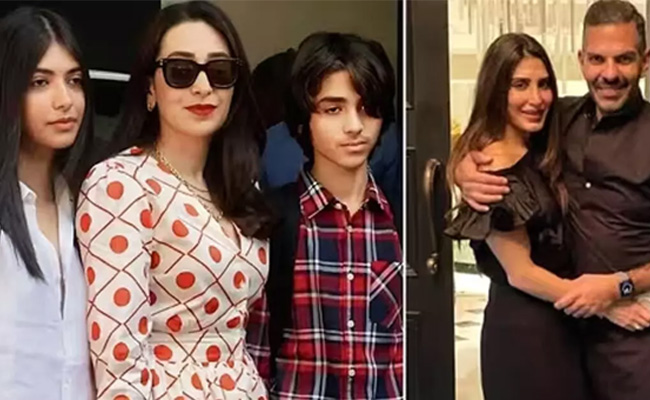
New Delhi (PTI): The Delhi High Court on Thursday directed preservation of the assets of late Sunjay Kapur, ruling that all "suspicious circumstances" raised by the industrialist's children from his marriage with actor Karisma Kapoor have to be completely removed by his third wife, Priya Kapur, before the acceptance of his purported last will.
Justice Jyoti Singh passed the interim order on an application filed by Karisma Kapoor's children to restrain Priya Kapur from alienating their father's assets, reportedly worth Rs 30,000 crore.
The interim application was filed in a suit by the children, challenging their late father's purported will of his assets.
"Having heard and on examination of the material on record, I have the considered view that all legitimate suspicious circumstances raised by the plaintiffs will have to be completely removed by defendant number one (Priya Kapur) before the document is accepted as the last will," the judge said.
"Plaintiffs have made out a prima-facie case that the assets which are subject matter need to be protected, preserved, pending disposal of the suit," she added.
Justice Singh ordered that the equity shareholdings in the three Indian companies of the deceased cannot be changed and also restrained the disposal of his personal effects, including artwork.
The court said if the assets are not preserved and Priya Kapur ultimately fails to prove the validity and genuineness of the will, the deceased's children from his marriage with Karisma Kapoor -- his second wife -- and his mother Rani Kapur would be deprived of their legitimate shares.
"I have restrained from alienating, transferring, pledging, liquidating or in any other manner changing the equity shareholdings in the three Indian companies. I have restrained from withdrawing the PF amount. I have restrained from withdrawing monies from the three accounts except to the extent of discharging liabilities towards the children," the judge said.
The court clarified that it has not passed the order with respect to immovable foreign assets.
A detailed copy of the verdict is awaited.
Sunjay Kapur died on June 12, 2025, after collapsing during a polo match in England. He had reportedly suffered a sudden cardiac arrest.