Jobs, healthcare, drinking water top priorities for voters: Survey
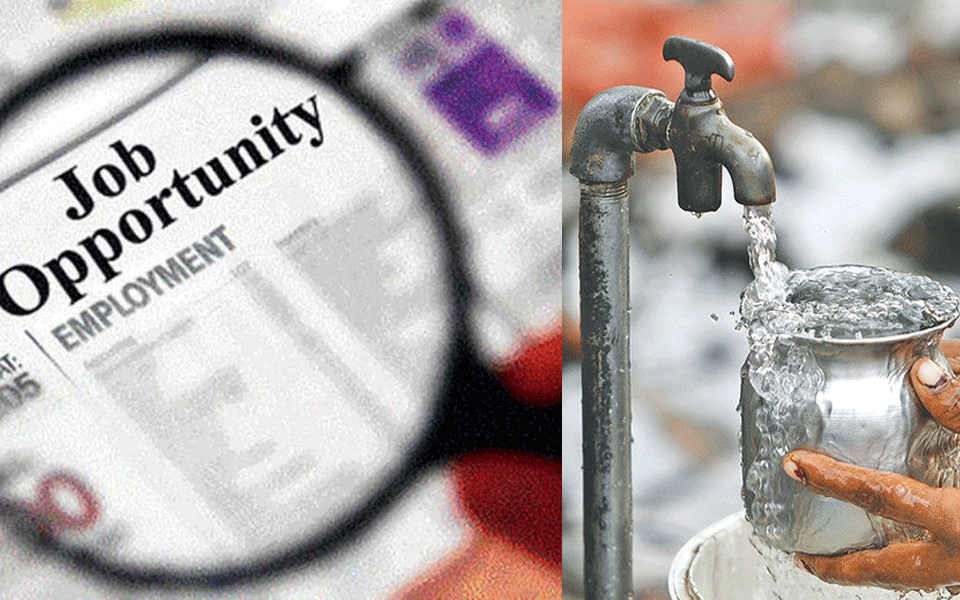
New Delhi, Mar 26: Better employment opportunities, better healthcare and drinking water are the top priorities for the voters at the all-India level, as per a survey by the Association of Democratic Reforms (ADR).
According to the All India Survey 2018, in all the 10 areas that were the priority for the voters, the government's rating was "below average".
"The significance of better employment opportunities as voters' highest priority has increased by 56.67 per cent from 30 per cent in 2017 to 47 per cent in 2018. At the same time, the performance of the government on this issue declined from 3.17 to 2.15 on a scale of five," the ADR survey noted.
The three main objectives of the ADR survey were to identify voters' priorities on specific governance issues, voters ratings of the government's performance on those issues, and factors affecting the voting behaviour.
According to the survey, better employment opportunities (46.80 per cent), better healthcare (34.60 per cent) and drinking water (30.50 per cent) were the top three priorities of the voters at the all-India level,
It is followed by better roads (28.34 per cent) and better public transport (27.35 per cent) at the fourth and fifth place, respectively.
Agriculture-related governance issues also featured predominantly in the top 10 voters' priorities at a time several parts of the country have been witnessing farm distress.
For instance, the availability of water for agriculture (26.40 per cent) was ranked sixth, agriculture loan availability (25.62 per cent) ranked seventh, higher price realisation for farm products (25.41 per cent) ranked eighth, and agriculture subsidy for seeds/fertilisers (25.06 per cent) ranked ninth.
Better law-and-order situation was the 10th governance-related issues in the survey.
The survey was conducted between October -December last year, covering 534 Lok Sabha constituencies with 2,73,487 voters, spread among various demographics, participating in the exercise.
"Amongst the 32 states and UTs (Union Territories) that were surveyed, in 29 of them, voters have given below average ratings to the government for its performance on all top 3 voters' priorities at the state level. This is with the exception of Dadra and Nagar Haveli, Daman and Diu, and Puducherry," the findings of the survey noted.
As per All India Survey 2018, 75.11 per cent voters disclosed that the chief ministerial candidate was the most important reason behind voting for a particular candidate, followed by candidate's party (71.32 per cent) and the candidate (68.03 per cent) himself/herself.
Let the Truth be known. If you read VB and like VB, please be a VB Supporter and Help us deliver the Truth to one and all.
Three dead after drinking country liquor in Meerut, police initiate probe
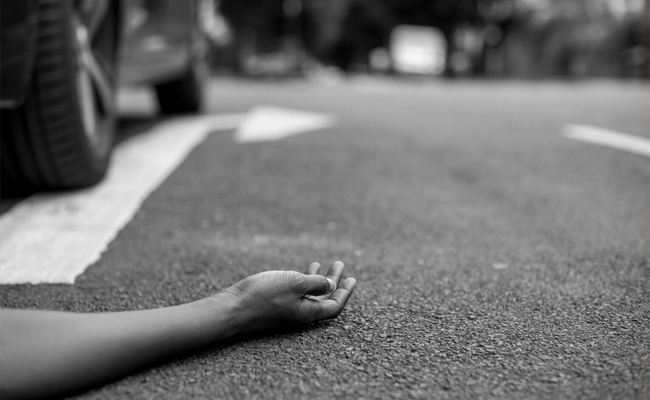
Meerut (UP) (PTI): Three people died under suspicious circumstances after consuming country liquor in Meerut, Uttar Pradesh. Preliminary probe has not confirmed if they died due to the quality of alcohol, officials said on Saturday.
All three vomited and had abdominal pain after drinking the liquor on Friday evening and were rushed to a hospital where they were declared dead. A post-mortem will determine the exact cause of death, they said.
According to the police, Baburam (60), a grocery shop owner, Jitendra (35), who worked at his shop and Ankit alias Daulat (40), purchased liquor in the evening from a government-authorised country liquor outlet and began drinking at the spot.
Shortly after drinking the liquor, the health of all three deteriorated, and they began complaining of vomiting and abdominal pain.
The three were rushed to a private hospital, where doctors declared Jitendra and Ankit dead, while Baburam passed away during treatment.
Additional Director General (ADG) of Police for the Meerut Zone, Bhanu Bhaskar, District Magistrate VK Singh, Senior Superintendent of Police (SSP) Avinash Pandey, and District Excise Officer Pradeep Kumar reached the spot and initiated an investigation.
SSP Avinash Pandey said that preliminary investigations have not confirmed whether the liquor was "toxic or expired". The bottling date was found to be February 11, 2026, and other bottles from the same batch received no such complaints.
He added that a post-mortem will determine the exact cause of death. Personnel from the Health, Forensic, Surveillance, and Intelligence teams have been constituted to investigate the matter.
Following the incident, the family members created a ruckus at the hospital. Police said further action would be taken based on the findings of the investigation.