Official RSS page shares old image as Seva Bharati workers working in Kerala flood relief
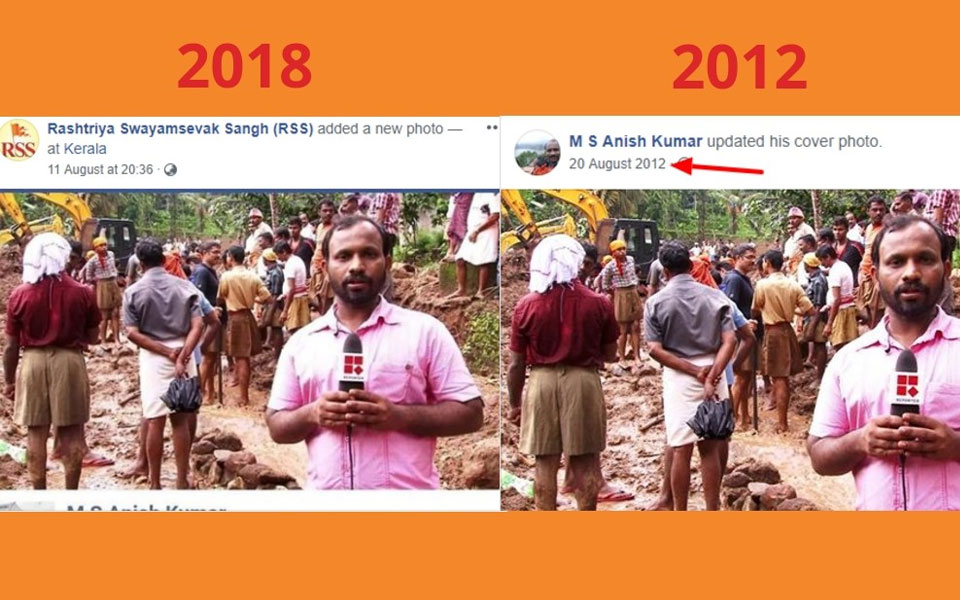
A set of images along with a donation appeal was shared by the official Rashtriya Swayamsevak Sangh (RSS) Facebook page with the claim that the individuals in the images were Seva Bharati workers aiding Kerala flood victims. One of the images shared as part of this set shows a reporter with many people standing in the background including a few wearing khakhi shorts resembling the old RSS uniform.
Official RSS page shares old image as Seva Bharati workers working in Kerala flood relief
The image was also widely circulated by many on social media, including the Twitter handle Friends of RSS, which describes itself as an “independent initiative by Swayamsevaks”.

The image is from 2012 Kerala floods
The photograph shared by RSS is not of the recent Kerala floods and was taken during the 2012 floods in the state. The reporter in the image had shared the image that same year.

In August 2012 flash floods triggered by heavy rains in Kozhikode and Kannur districts in north Kerala took the lives of nine people. An image of this event was shared as RSS workers providing aid during the recent Kerala floods. However, this isn’t the only old image reshared with a false narrative.
Images of 2017 Gujarat floods viral on social media as recent Kerala floods
Purported images of RSS workers providing aid and relief to flood-stricken Kerala was widespread on social media with captions carrying a tinge of irony – “Looks like Kerela couldn’t kill all of those RSS Terrorists. Few of them are still alive and are looting the poor flood-struck Keralites.”
Looks like Kerela couldn't kill all of those RSS Terrorists. Few of them are still alive and are looting the poor floodstruck Kerelaites.
Where the hell is PFI, shouldn't they be saving these 100% literate civilians from these chaddi clad barbarians? pic.twitter.com/xPYqVr1Qht
— Biswajit Roy (@biswajitroy2009) August 12, 2018
Twitter users Rishi Bagree and Rajesh KrishnanSimha circulated the same images that drew a combined share of 1,500.

BJP MLA from Karnataka C.T. Ravi also shared photographs of Rashtriya Swayamsevak Sangh’s “humanitarian efforts”.
Blood Thirsty Commies murdered numerous @RSSorg Karyakartas in Kerala.
— C.T.Ravi (@CTRavi_BJP) August 13, 2018
But when "God's Own Country" crumbled due to severe floods it is the same RSS that saved people & provided them with relief.
This Humanitarian efforts by Nationalists will not be showcased by the Paid Media. pic.twitter.com/IY8iudPEkC
However, these images are actually from Gujarat last year and not Kerala. SM Hoax Slayer found identical images being circulated of RSS workers providing aid during Gujarat flood in August 2017. Multiple users on Facebook had shared the images.

Severe monsoon flooding killed at least 213 in Gujarat last year. Over one lakh residents had to be relocated due to submergence of their homes.
Not isolated incidents
Old or unrelated images have been attributed to RSS several times in the past. In 2015, images of RSS workers in Gujarat was shared as them providing aid during the Nepal earthquake.

Dattatreya Hosabele, a senior RSS functionary based in Nepal, had denied the claims on social media as reported by Nistula Hebbar, the political editor of The Hindu.

Further, the official Twitter handle of RSS had also denied the claim of 20000 RSS workers having reached Nepal.
Media is reporting inflated figures of RSS Swayamsevaks reaching Nepal for rescue work.
— RSS (@RSSorg) April 26, 2015
Last year, Twitter handle @TrueIndology also falsely attributed a picture of a camp in late 1940s East Punjab to RSS.

Recirculating old images as part of a recent or an unrelated event is a mischievous attempt to misinform people. It is advisable to verify photographs viral on social media before believing in them.
Courtesy: www.altnews.in
Let the Truth be known. If you read VB and like VB, please be a VB Supporter and Help us deliver the Truth to one and all.
Congress using hijab issue to pacify minority anger, alleges Karnataka LoP R Ashoka
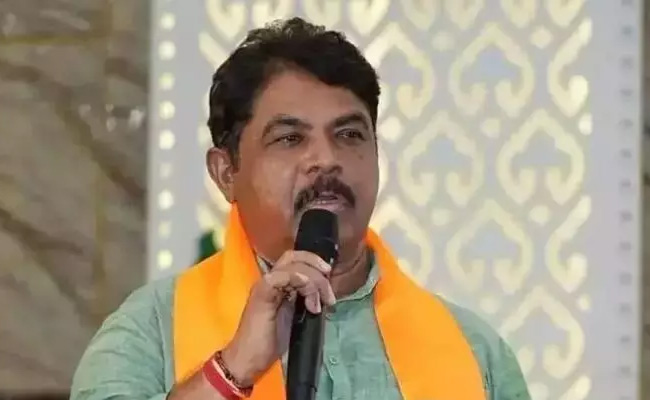
Bengaluru: Leader of Opposition in the Assembly R. Ashoka has accused the Congress government of using the hijab issue to placate what he described as discontent among minority voters after the Davanagere by-election.
In a post on X on Wednesday, Ashoka alleged that the state government, instead of addressing issues such as price rise, corruption, farmers’ distress and law and order, was attempting to retain its minority vote base by reviving the hijab issue.
Referring to the 2022 dress code introduced by the BJP government, which prohibited hijab in schools and colleges, Ashoka said the Karnataka High Court had upheld the policy and emphasised the importance of discipline in educational institutions.
He questioned the Congress government’s move to revisit the issue and asked whether setting aside the court-backed policy to benefit one community could be described as secularism.
Ashoka further alleged that while the government was willing to permit hijab, it continued to prohibit saffron shawls.
He accused the government of dividing students on religious lines rather than treating schools and colleges as spaces of equality.
Drawing a comparison with Mamata Banerjee’s government in West Bengal, Ashoka claimed that excessive appeasement politics had harmed the state and warned that the Congress in Karnataka could face a similar political response.
He said voters in Karnataka would teach the Congress a lesson for what he termed “vote-bank politics” and for compromising constitutional and judicial principles.