Why are you silent on discrimination against Dalit jawans? Macwan questions Modi
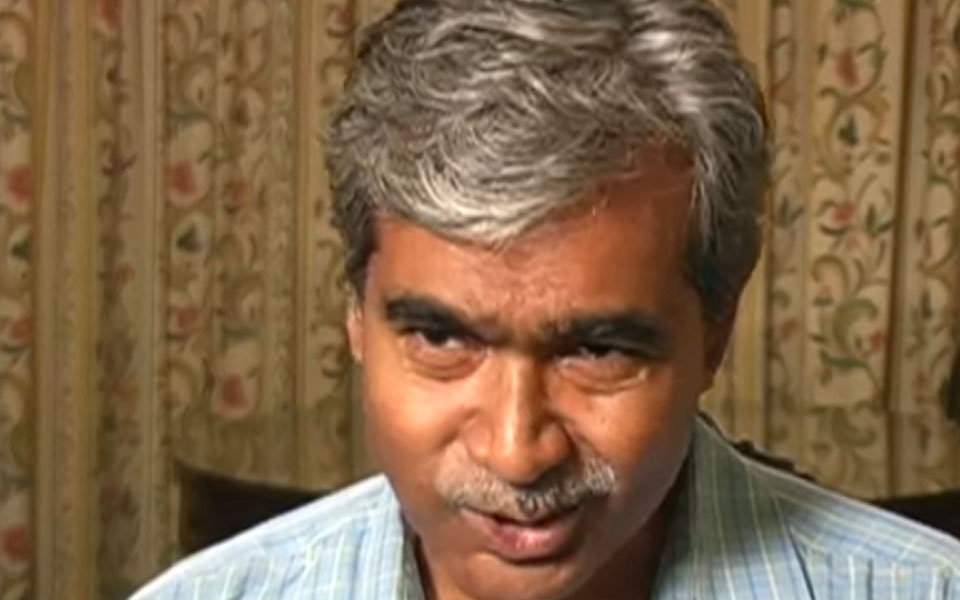
Close on the heels of releasing his book in Gujarati, "Bhed Bharat", which lists 319 cases of atrocities against Dalits and Adivasis across the country over the last five years, well-known Gujarat Dalit rights leader Martin Macwan has shot an open letter to Prime Minister Narendra Modi, telling him the reasons why he does not want vote for the BJP.
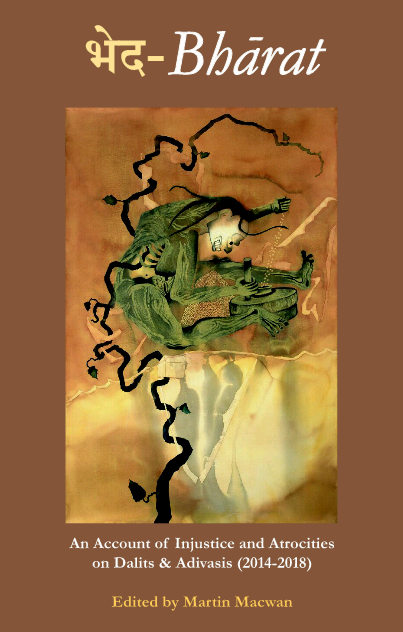
Giving graphic instances from the book, whose English edition was released on Friday, in order to give examples of how atrocities against Dalits and Adivasis have allegedly spiralled during the Modi rule, Macwan tells Modi, "It is a shame for the nation that your party has been intimidating common people and you are consciously silent."
The book seeks to answer the question as to why talk of atrocities when India is facing "serious problems post massacre of 40 security men by terrorists in Pulwama." According to Macwan, "It is not enough to merely condemn the attack at Pulwama", recalling a similar terrorist attack which took place in June 2016, in which eight jawans were killed in Kashmir.
While seven martyrs were laid to rest with full honours, Macwan says, one of them, Virsingh, "was not buried in the common village burial ground of his village simply because he was a Dalit." Wondering "why do we not brand Virsingh’s villagers ‘anti-national’,", he accuses Modi of remaining "completely silent" on the action of these non-Dalits, to whom he was an ‘Untouchable’.
Citing another instance, he asks Modi, "Do you have an answer to the question raised by Daivindran, a soldier with the Indian Army, who witnessed massacre of three Dalits, including his father and scores of other Dalits recuperating in the hospital with 40 to 80 injuries on their body in his village Kanchnatham of Shivgangei district of Tamilnadu on May 28, 2018? His only crime was, he asked with anger in his eyes: ‘I protect the nation; who will protect my family?'”
Titled "Why I do not want to vote for your party", and claiming a large number of followers, Macwan kicks off the letter by saying, he has addressed Modi as ‘respected’ in accordance to "our civilized Indian culture, which respects even those who may differ ideologically", even though Modi's behaviour as Gujarat chief minister towards the then Prime Minster, Dr Manmohan Singh, "was less than dignified, embarrassing the honour of Gujaratis."
Declaring that he is writing the letter as a citizen who is "not a registered member of any political party", Macwan recalls, he had also publicly critiqued former Prime Minister Atal Bihari Vajpayee, who had sent an all-party delegation, which included two Congress Dalit leaders, Sushil Kumar Shinde and Meira Kumar, "to protest the inclusion of caste in the agenda of UN World Conference against Racism."
Saying that he does not want to vote for BJP because he fears that "not doing this would amount to betrayal to the ideological inheritance of Lord Buddha, Mahatma Jyotiba Phule-Savitri Phule, St Kabir, Sahu Maharaj and Dr Ambedkar", adding, this open decision is based not "on the basis of pre-election propaganda marred by allurements, false promises and irrational claims", but on an evaluation of Modi "for a full five-year term."

Macwan says, though the BJP won 41 of the 84 Scheduled Caste (SC) reserved Parliamentary seats, and 26 of the 47 Scheduled Tribe (ST) seats, apart from several seats won by allies, taking the total tally to SC-ST seats to 83, the letter says, "This voluminous SC-ST gratitude was, unfortunately, rewarded by your government in the form of increased atrocities on them."
Referring to instances from his book “Bhed Bharat”, the letter says, not only has the Modi's utilisation of poorly allocated budgeted funds for SCs and STs has gone down, it has successively undermined post-matric scholarship for Dalits, even as failing to find enough funds for to coach to qualify for professional courses. "Is this not a systemic bias you hold against the Dalits?", it asks.
Citing how indifferent Modi's administration has become towards Dalits, Macwan says, in 1992 forest-police-revenue officials raided a tribal village Vachathi, distict Dharmapuri, Tamilnadu, to hunt for sandalwood, raping 18 women. A court convicted the accused 21 years later, "yet you did not ensure that the women were paid compensation."
The letter says, though the malnutrition rate among tribal children has remained unchanged at 55%, Modi government has enough money to "buy multi-billion-dollar fighter jets and missiles, as modern and sophisticated as the US, China or Russia", yet it does not have money to "feed tribal children to end their malnutrition." He adds, this suggests, "we are not a poor nation, but we do not have money for the poor in India."
Calling atrocities against Dalits and Adivasis "state-sponsored discrimination", the letter gives instances of starvation deaths from deprived communities -- including that of Santoshi, a tribal girls from Jharkhand, who died after she did not get food for seven days; and four-year old Shivram Manjhi from Saraguja district of Chhattisgarh, who died while migrating with his father to a town in search of a job.
Macwan tells Modi, "Your manifesto for 2019 elections, Sankalp Patra, does not mention abolition of untouchability or ending atrocities on Dalits and Adivasis." And while it does mention the need to protect sanitation workers, "It is silent on ending of manual scavenging practices."
Giving instances from the book ranging from how 63 Dalit labourers from Chhattisgarh, including children and pregnant women, were held captive in a brick kiln unit in Rajouri District of Jammu & Kashmir, to a racket of trading minor tribal girls from Chhattisgarh and Odisha in the name of supplying domestic servants in Delhi, Macwan says, these and other instances show that the poor have no place in the development map.
Pointing towards the "havoc" created by cow vigilantes assaulting Dalits, Adivasis and Muslims across the country, the letter says, "You had publicly said, 'Shoot me if you want, but don’t target my Dalit brothers', directing state governments to prepare dossier on cow vigilantes". It asks Modi, "How many dossiers have you made? How many people have you punished? One of your Ministers garlanded the cow vigilantes in public after they secured bail!"
Questioning his Swachh Bharat campaign, and Gujarat being declared as open defecation free, the letter says, "Not more than Rs 3,000 have been spent on each of these toilets in place of Rs 12,000 allocated", adding, "I have hundreds of photographs of these toilets which stand broken, dilapidated, unusable. They have no foundation. Many do not have tub or soak pit, and if they have, they are unconnected... With such toilets in their homes, people have only one option: To defecate in the open."
---
Click HERE for the letter
Courtesy: www.counterview.net
Let the Truth be known. If you read VB and like VB, please be a VB Supporter and Help us deliver the Truth to one and all.
Akeal Hosein bosses powerplay overs with 'skill and mental fortitude'
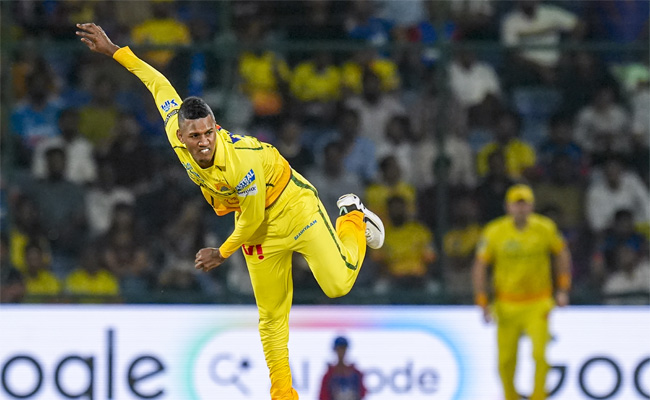
New Delhi (PTI): For a spinner who bowls majority of his overs in the powerplay, Chennai Super Kings' West Indian import Akeal Hosein relies as much on mental fortitude as his skills to excel in the most unforgiving phase of the game.
With just two fielders in the deep in the first six overs, the margin for error is miniscule and the pressure is sky high.
However, Hosein thrives in that tense environment. The left-arm spinner returned with frugal figures of 3-0-15-1 in the powerplay to play a crucial role in his team's eight-wicket win over Delhi Capitals in an IPL match here on Tuesday.
"You need both of them (skill and mental toughness). Especially when you come upon pitches that aren't conducive to spin and it's just about being disciplined as well," he said.
"Having two fielders out in the power play. It's not a job that you can go searching for wickets or you can be too greedy. It's just about sticking to the plan," he explained.
Hosein got the all-important wicket of an in-form K L Rahul, who was foxed by the West Indian as he stepped out to smash him for an inside out six.
Hosein's inclusion in the playing eleven after not being picked in the initial phase of the tournament has allowed CSK to win more games. On Tuesday, the pitch offered him a bit of help and he ended up dominating the batters.
After the win over DC, Hosein was asked about his recipe for success in the powerplay.
"...it's a bit scripted because you only have two guys out so it's just about being disciplined and trying to do the job for the team. At the end of the day if you don't get wickets and you bowl economically in the power play, that's a damn good job you've done for the team," said Hosein.
He has taken seven wickets in five games at an impressive economy rate of 7.25.
Fully aware that the batter is a mere couple of hits away from putting the pressure back on him, Hosein says practising for high-pressure situations helps him stay in the present.
"I think homework is very important. You want to have that head-start when you come up against whichever batter you're going to face. And like I say it's just about making assessments as quickly as possible.
"You might come up on a pitch that is spinning. You might come up against one that isn't spinning. Thankfully I can spin the ball. So it's just about picking which deliveries will give you the most success on a particular day and against a particular batter," said Hosein.
He got rid of Rahul first ball from the other end, something that was decided by captain Ruturaj Gaikwad. Post powerplay, Noor Ahmad took over the mantle from Hosein and maintained the pressure on DC batters.
"Getting the opportunity to bowl first for me is just about again making that assessment as quickly as possible and then passing on that information to Noor or even to the seamers as well if it was a bit of spin or if it's gripping or whatever the case is.
"So conversations with myself and Noor have been fantastic. Really happy for him that he's getting some success," he added.