5th ODI: Indian batsmen flop in last game before World Cup, lose series against Australia 2-3

New Delhi, Mar 13: India's quest to find right combinations for the upcoming World Cup ended with a 35 run defeat in the decisive fifth ODI against Australia as they lost the series 2-3 here Wednesday.
In what was their last game before the showpiece event in United Kingdom, the Indian innings folded for 237, exactly in 50 overs while chasing a 273-run target. Australia had put on board 272 for nine, built around Usman Khawaja's (100) second hundred of the series.
It was India's first ODI series defeat at home since losing to South Africa in 2015 as their big guns fell silent on the day when the series was on line.
India also became the only side in the world to lose an ODI series twice after leading 2-0.
The home side dropped K L Rahul from the game, tried Rishabh Pant at number four and Vijay Shankar at five in the last-ditch effort to find right batting order.
However, chasing a challenging target on a tricky Feroz Shah Kotla wicket, India were strangled in the middle overs by the Australian spinners.
History too was against India since the hosts have not successfully chased a 250-plus total at the Kotla in the last 37 years. It was way back in September 1982 against Sri Lanka when they overhauled a 278-run target.
On the other hand, Australia, who were trailing 0-2 initially, made a remarkable comeback to grab their first ODI series win in India since 2009.
It is only the fifth instance that a team has won a series after being down 0-2.
The Australian spin trio of Adam Zampa (3/46), Nathan Lyon (1/34) and part-timer Glenn Maxwell (0/34) kept the Indian batsmen on a tight leash.
Only Rohit Sharma (56) could score a half-century, which included two reprieves.
India could not make a flying start, losing last match's centurion Shikhar Dhawan (12) early and managed just 43 runs in the 10 Powerplay overs.
Rohit was again slow off the blocks, hardly rotating the strike but found some elegant boundaries off the pacers.
The assuring presence of skipper Virat Kohli (20) did not last long as he too departed early, caught behind while attempting a cut off Marcus Stoinis. He added 53 runs for the second wicket with Rohit.
India threw Pant (16) in the line of fire by promoting him to number four but the local boy, who desperately required a substantial performance to back his claim for a spot in the World Cup squad, lasted only 16 balls.
He smashed leg-spinner Zampa for a six but was undone by Lyon, who had the left-hander caught at first slip.
Rotating the strike was key on this Kotla wicket but the Australian spinners kept the pressure on India with dot balls.
The extravagance cost both Pant and Vijay Shankar (16) their wickets as they went after Lyon and Zampa respectively.
Reduced to 132 for six inside 30 overs, India were out of the contest and Kedar Jadhav (44) and Bhuvneshwar Kumar (46) just reduced the defeat margin. Their 91-run standoff 103 balls, however, showed that there were no demons in the wicket.
Earlier, opener Usman Khawaja, who had not scored a century before arriving to India for this series, hit an exact 100 off 106 balls as he shared two big partnerships at the top of the order to set platform for the visiting side.
Australia were placed comfortably at 175 for one and set for a kill in slog overs, but India came back when Bhuvneshwar got rid off Khawaja in the last ball of the 33rd over.
The visitors added only 97 runs in last 17 overs for the loss of seven wickets.
The left-handed Khawaja first raised a 76-run stand with Aaron Finch (27) after his skipper elected to bat in hazy and overcast conditions and followed it up with a 99-run partnership with Peter Handscomb (52).
Khawaja was yet again impressive with his footwork, handling the Indian spinners nicely before being caught at shot extra cover by Kohli off Bhuvneshwar. The left-hander hit 10 fours and two sixes before driving straight to Kohli.
Jadeja then got rid of Glenn Maxwell (1) and Shami sent back Handscomb as Australia lost three wickets in the space of 14 balls.
Jadeja, who replaced Yuzvendra Chahal, made a strong case for himself for inclusion in the World Cup squad with figures of 10-0-45-2.
Jasprit Bumrah was exceptional in his first eight overs giving just 14 runs but Jhye Richardson (29) spoilt his figures by creaming off four boundaries from his ninth over, providing one last push to Australian innings.
It turned out to be a forgettable day for chinaman Kuldeep Yadav who bled 74 runs in his 10 overs but he dismissed dangerous Ashton Turner (20) cheaply.
Brief Score:
Australia Innings: 272-9 (50)
India Innings: 237-10 (50)
Let the Truth be known. If you read VB and like VB, please be a VB Supporter and Help us deliver the Truth to one and all.
Bhojshala complex registered as 'mosque' in old revenue records: Muslim side to MP HC
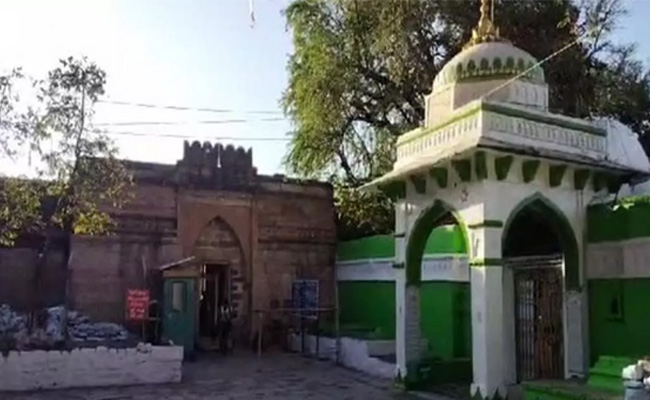
Indore (PTI): The disputed Bhojshala Temple-Kamal Maula Mosque complex has historically been registered as a 'mosque' in revenue records and available sources don't clearly mention any Saraswati temple established by then-king Raja Bhoj, the Muslim side has told the Madhya Pradesh High Court.
The Hindu community considers Bhojshala a temple dedicated to Goddess Saraswati, while the Muslim side calls the 11th-century monument Kamal Maula Mosque. The disputed complex located in Dhar district is protected by the Archaeological Survey of India (ASI).
During the hearing before the HC's Indore bench of Justices Vijay Kumar Shukla and Justice Alok Awasthi on Wednesday, Qazi Moinuddin questioned two PILs filed as intervenors in the Bhojshala case by an organisation named Hindu Front for Justice, one Kuldeep Tiwari and another individual.
Moinuddin claims to be a descendant of Sufi saint Maulana Kamaluddin Chishti and the 'Sajjadanashin' (spiritual head, guru, or successor of a Sufi shrine, khanqah, or religious site).
The PILs state that Bhojshala is actually a Saraswati temple and only Hindus should be granted the right to worship at the disputed complex.
Moinuddin's lawyer, Noor Ahmed Sheikh, claimed in the court that his client's ancestors, who are descendants of Maulana Kamaluddin Chishti, have historically held titles to the complex, and the site was also recorded as a "mosque" in government revenue records.
He contended that those associated with the management of the Kamal Maula Mosque, located within the complex, have been in "continuous and peaceful occupation" of the site for a long time.
Citing Muslim law, Sheikh argued that in the case of religious property, particularly a mosque or its related properties, officials such as the Sajjadanashin and Mutawalli (person entrusted with management, maintenance, and administration of a Waqf), and their descendants, not only have the right to intervene, but also have the right to manage and use such a structure.
Citing provisions of the Ancient Monuments Preservation Act 1904, the Muslim side's lawyer said the term "in-charge of the property" is used in this law, which makes it clear that the person or party who has been in charge of a property for a long time has rights over it.
During the hearing, Touseef Warsi, the lawyer representing the Maulana Kamaluddin Welfare Society of Dhar, claimed that Hindu parties in both PILs had made "misleading representations" regarding historical facts before the high court.
He further claimed that available historical sources do not clearly mention the existence of a Saraswati temple established by Raja Bhoj, the legendary king of the Parmar dynasty who ruled Dhar from 1010 to 1055.
The ASI, a central government agency, has adopted three different positions in the lawsuits filed regarding the Bhojshala dispute, changing its answers from time to time, and this situation raises serious questions about judicial scrutiny of the complex, Warsi submitted.
He raised objections regarding the ASI's process of scientific survey of the Bhojshala complex, carried out on the HC order in 2024, and the method of videography and requested the court to examine these objections.
The hearing in the Bhojshala case will continue on Thursday.
The HC has been regularly hearing four petitions and one writ appeal since April 6, contesting the religious nature of the monument.