Afghanistan player Mohammad Shahzad claims ACB has conspired against him, says he is fit to play
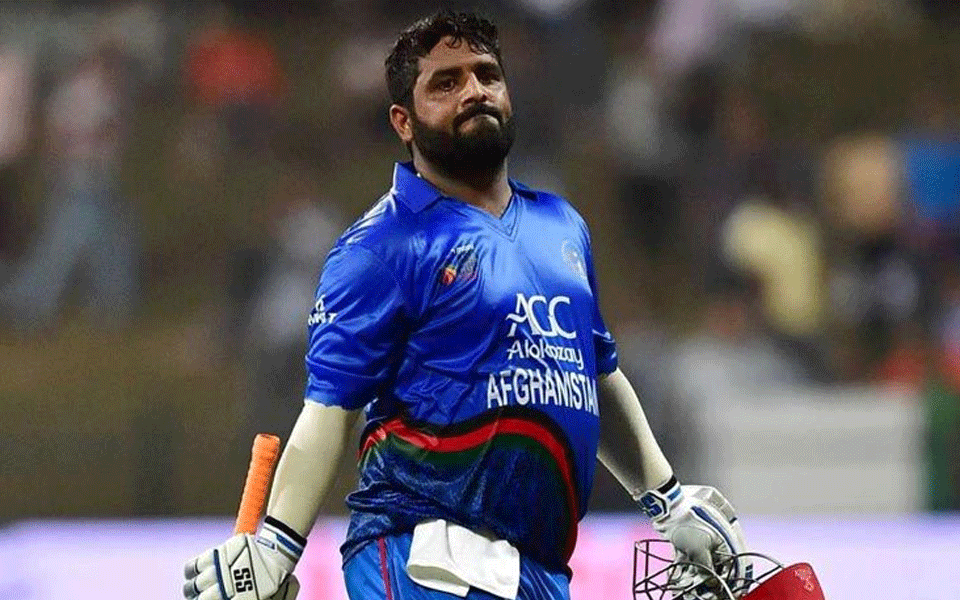
New Delhi, Jun 10: Afghanistan wicket-keeper batsman Mohammad Shahzad on Monday alleged that his country's cricket board conspired to throw him out of the World Cup squad even though he was fit enough to carry on in the mega-event.
Shahzad had aggravated the injury on his left knee during the World Cup warm-up clash against Pakistan but returned to play the team's first two games against Australia and Sri Lanka on June 1 and June 4 respectively.
However, the organisers announced ahead of the New Zealand game on June 8 that he was ruled out for the remainder of the World Cup due to a "knee injury".
"I still don't know why I was ruled unfit when I was fit enough to play. Some people in the board (ACB) have conspired against me. Only manager, doctor and the captain knew that I was going to be replaced. Even the coach (Phil Simmons) found out much later. It was heart-breaking," Shahzad, 32, told PTI from Kabul.
"I had finished my training (ahead of the New Zealand game) and only after I checked my phone, I found out that I have been ruled out of the World Cup due to a knee injury. None of the players in the team bus knew about it and just like me, they were in shock (at the news)," said the explosive opener.
Shahzad, one of Afghanistan's impact players alongside Rashid Khan and Mohammad Nabi, failed in the first two World Cup games against Australia and Sri Lanka but so did the majority of the batsmen barring Najibullah Zadran (51 and 43) and Rahmat Shah (43 and 2). Afghanistan ended up losing both the games before going down to New Zealand.
Skipper Gulbadin Naib had called Shahzad's being ruled out a big loss but said the burly batsman was struggling with his knee for the last two-three weeks and they were forced to call in teenager Ikram Ali Khil as his replacement. Khil has played one Test and three ODIs.
When asked to comment on Shahzad's startling claims, ACB CEO Asadullah Khan said the wicket-keeper batsman was unfit indeed and therefore was unable to give his best on the field.
"What he is saying is completely wrong. A proper medical report to the ICC was submitted and then only his replacement was announced. The team could not have fielded an unfit player. I understand he is upset at not being part of World Cup anymore but the team could not have compromised on his fitness," Khan told PTI.
Shahzad, on his part, admitted that his knee was in bad shape after the Pakistan game but he was fine after three days of rest.
"I have had knee issues for a while now but it gets fine with a little bit of icing. I took proper rest after the Pakistan warm-up and was fit to play again and I did come back to play the first two games and was looking forward to the New Zealand game until I received the shocking news from my manager.
"Suddenly I was replaced and I had no inkling of that. This not the way to treat a senior player. Under the current dispensation at ACB, I see more senior players getting a raw deal like I did. I really feel hard done by," added Shahzad.
Shahzad has played a significant role in Afghanistan's rise in world cricket and a was their star player in the triumphant campaign in the World Cup Qualifiers in Zimbabwe where they beat the West Indies twice including in the final.
Ahead of the World Cup, Shahzad hit his sixth ODI hundred in a game against Ireland at Belfast on May 21. The 32-year-old has played 84 ODIs, 65 T20 Internationals and two Tests.
Let the Truth be known. If you read VB and like VB, please be a VB Supporter and Help us deliver the Truth to one and all.
Rs 30,000 cr loss a month: Oil companies bleed as fuel prices on hold amid global energy spike
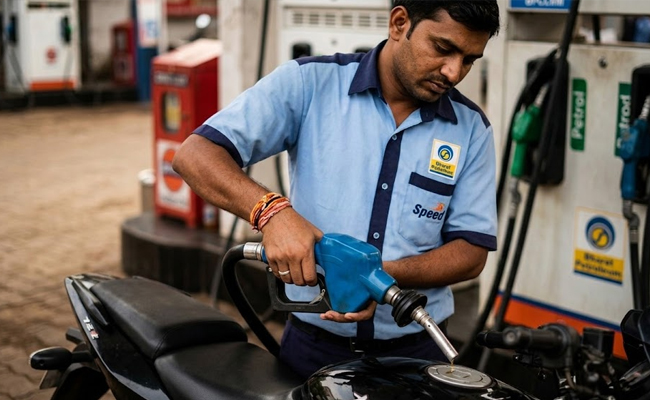
New Delhi (PTI): About Rs 700-1,000 crore loss per day. Rs 30,000 crore every month. India's state oil companies are quietly absorbing a massive financial hit to keep petrol, diesel and LPG prices unchanged even as global energy markets face a turmoil that is bigger than all previous crises combined.
While countries from Japan to United Kingdom have raised petrol and diesel prices by up to 30 per cent since the start of the West Asia conflict, fuel prices in India continue at two-year-old levels.
The war disrupted India's import of 40 per cent of crude oil (raw material for making petrol and diesel), 90 per cent cooking gas LPG and 65 per cent natural gas (used to generate electricity, make fertilizer, turned into CNG and piped to household kitchens for cooking), but state-owned oil companies have maintained uninterrupted fuel supplies with no rationing or shortage at any point in the last 10 weeks.
But this has come at a cost - Rs 30,000 crore under-recovery or loss every month for the three oil marketing companies - Indian Oil Corporation (IOC), Bharat Petroleum Corporation Ltd (BPCL) and Hindustan Petroleum Corporation Ltd (HPCL), two sources with direct knowledge of the matter said.
The under-recoveries - the gap between input costs and realised retail prices - rose sharply in March/April before tapering a bit. Daily under-recoveries during April were estimated at about Rs 18 per litre on petrol and Rs 25 per litre on diesel, translating into average losses of Rs 700-1,000 crore a day for OMCs, they said.
At a news briefing on developments in West Asia, Sujata Sharma, Joint Secretary in the Ministry of Petroleum and Natural Gas, said prices in the international markets, on which India relies to meet 88 per cent of its oil needs, have been volatile and supplies impacted.
Crude oil prices which were around USD 70 per barrel two months ago, are now at USD 120, she said. "It has been government's endeavour to keep prices stable so far and that there is no price increase for consumers," she said. "This has hit finances of OMCs... monthly under-recoveries are of the order of Rs 30,000 crore."
She, however, refused to say if retail petrol and diesel prices will continue to hold.
"As I said, the endeavour so far has been to see that there is no price increase," she said.
The three oil marketing companies (OMCs) have worked overtime to keep the supply lines running even when demand spiked due to panic buying.
The government intervention included excise duty reductions and absorption of part of the fuel cost burden. The special additional excise duty on petrol was cut to Rs 3 per litre from Rs 13, while excise duty on diesel was reduced to zero from Rs 10 per litre.
The under-recoveries would have swelled to nearly Rs 62,500 crore had the government not cut excise duty on petrol and diesel by Rs 10 per litre each.
The government, Sharma said, has taken a hit of Rs 14,000 crore a month in cutting the excise duty.
The Centre's effective absorption at peak crude prices was estimated at around Rs 24 per litre for petrol and Rs 30 per litre for diesel.
The February 28 strikes by the United States and Israel on Iran triggered a sharp escalation in West Asia tensions. Energy prices surged as the conflict widened and shipping risks intensified in the Strait of Hormuz - the shipping lane through which India and other countries imported crude oil, LPG and natural gas from Gulf countries. Tanker movement was disrupted.
The companies also faced additional costs from emergency crude sourcing, higher freight charges due to vessel diversions, elevated marine insurance premiums and refinery optimisation expenses. Despite these pressures, fuel and LPG supplies remained uninterrupted across the country.
The surge in crude prices and the decision to shield consumers from higher retail prices placed significant strain on OMC balance sheets and refining margins, sources said.
They added that the measures reflected a policy decision to prioritise consumer stability and economic continuity during a global energy shock.
Sources warned that a prolonged period of elevated crude prices could lead to higher working capital borrowings and force some recalibration of capital expenditure plans. However, investments linked to refining expansion, energy security infrastructure, ethanol blending, biofuels and transition fuels would continue with government backing, they said.
India's approach contrasted with measures adopted by several other economies, where fuel prices rose sharply after the conflict-driven energy shock.
Petrol prices increased by about 34 per cent in Spain, 30 per cent in Japan, Italy and Israel, 27 per cent in Germany and 22 per cent in the United Kingdom, according to estimates. Several countries also introduced rationing, conservation advisories, emergency relief packages or fuel caps.
In India, petrol prices remained Rs 94.77 per litre and diesel at Rs 87.67, with no rationing, mobility restrictions or supply disruptions, they added.
Sharma said the revenues that OMCs earn are used to buy crude oil, build infrastructure to process it into fuel and create channels that will take the fuel to consumers.
Their capex spending is all dependent on the revenues they earn, she added.