After New Zealand, England too calls off tour of Pakistan over security concerns
London(PTI): England on Monday called off next month's men's and women's tours of Pakistan, three days after New Zealand abandoned their white-ball series in the South Asian country over security concerns.
The England and Wales Cricket Board (ECB) arrived at the decision to withdraw after deliberating over the weekend, pulling out of what would have been the country's first tour of Pakistan since 2005.
"The ECB Board convened this weekend to discuss these extra England Women's and Men's games in Pakistan and we can confirm that the Board has reluctantly decided to withdraw both teams from the October trip," the ECB said in a statement.
It added, "The mental and physical well-being of our players and support staff remains our highest priority and this is even more critical given the times we are currently living in.
"We know there are increasing concerns about travelling to the region and believe that going ahead will add further pressure to a playing group who have already coped with a long period of operating in restricted Covid environments."
Minutes before their first match in Rawalpindi on Friday, New Zealand pulled out of their limited-overs tour of Pakistan because of a "security alert" from their government a decision that came as a setback to the host nation, which has not seen much international cricket since the terrorist attack on the Sri Lankan team bus in 2009.
The development was bound to have an impact on England's scheduled tour of the country.
"The ECB has a longstanding commitment to tour Pakistan as part of the Men's Future Tours Programme in 2022.
"Earlier this year, we agreed to play two additional T20 World Cup warm-up games in Pakistan in October, adding a short women's tour with double headers alongside the men's games," the ECB said.
"There is the added complexity for our Men's T20 squad. We believe that touring under these conditions will not be ideal preparation for the ICC Men's T20 World Cup, where performing well remains a top priority for 2021."
The England men's team had been due to play back-to-back T20 Internationals on October 13 and 14 as part of their preparations for the World Cup that starts in the UAE the following week, while the women's side were scheduled to play two T20 Internationals and three ODIs.
The ECB further said, "We understand that this decision will be a significant disappointment to the PCB, who have worked tirelessly to host the return of international cricket in their country.
"Their support of English and Welsh cricket over the last two summers has been a huge demonstration of friendship. We are sincerely sorry for the impact this will have on cricket in Pakistan and emphasise an ongoing commitment to our main touring plans there for 2022."
Pakistan Cricket Board's (PCB) new chief Ramiz Raja was left disappointed with the ECB's decision.
"Disappointed with England, pulling out of their commitment & failing a member of their Cricket fraternity when it needed it most. Survive we will inshallah. A wake up call for Pak team to become the best team in the world for teams to line up to play them without making excuses," Raja tweeted.
Let the Truth be known. If you read VB and like VB, please be a VB Supporter and Help us deliver the Truth to one and all.
Allahabad HC orders probe into 'reinstatement' of teacher in UP's Barabanki
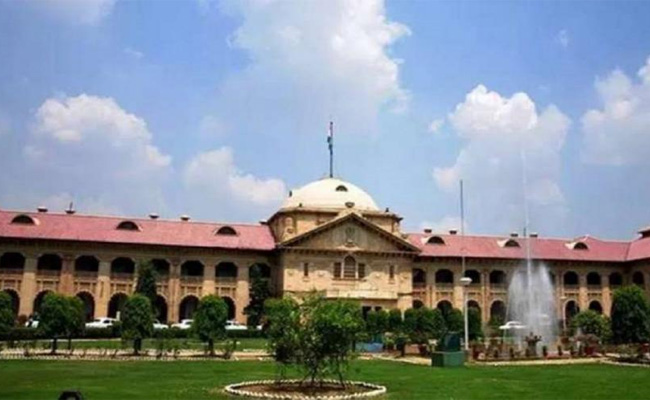
Lucknow (PTI): The Lucknow Bench of the Allahabad High Court on Friday ordered a probe by the special task force (STF) into alleged irregularities in the rejoining of a teacher at City Intermediate College in Barabanki, observing that the reinstatement appeared to be prima facie illegal.
The court also directed the recovery of the salary paid to the teacher during the disputed period.
A bench of Justice Rajeev Singh passed the order on a petition filed by the college management committee. The court expressed doubts over the roles of the District Inspector of Schools (DIOS), Barabanki, the college principal and the teacher concerned and hence, directed a detailed inquiry into the matter.
Taking note of alleged manipulation of records and misleading submissions, the court ordered the immediate transfer of the Barabanki DIOS to ensure a fair probe. It also directed the initiation of disciplinary proceedings against the then joint director of education of the Ayodhya division.
In its order, the court found that the teacher, Abhay Kumar, was initially appointed as an assistant teacher in 2018 but joined an Eklavya Model Residential School in Chhattisgarh as a lecturer in June 2024 without obtaining permission from the management. His subsequent request to retain the lien was rejected.
Despite this, he was allowed to rejoin the Barabanki College in September 2025 on the directions of the joint director of education and the DIOS, and was even paid the salary for October 2025. The court termed the rejoining "wholly illegal" and lacking any legal basis.
The bench also expressed concern over lapses in communication within the education department and directed the Uttar Pradesh chief secretary to ensure that official orders are communicated through email and WhatsApp as well, to prevent disputes.
The matter is next listed for hearing on May 28 when a compliance report is sought.